
















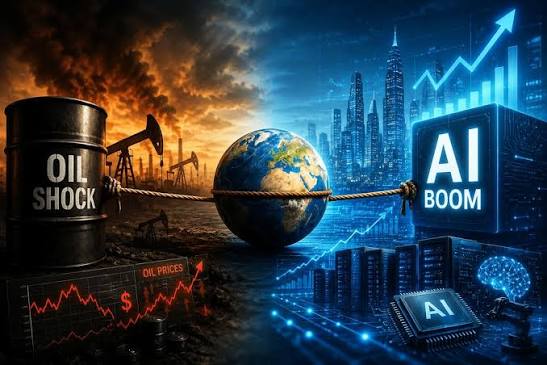
Global economy weathers war shock as AI boom keeps growth afloat
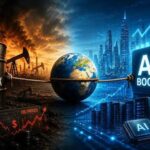
TLE Desk: The global economy is proving more resilient than expected in the face of war, higher energy costs and persistent inflation, but the latest data suggest that the recovery remains fragile and increasingly dependent on two forces pulling in opposite directions: geopolitical disruption and a powerful boom in artificial intelligence.
The Organisation for Economic Co-operation and Development (OECD) expects the world economy to grow 2.9 per cent in 2026 and 3.0 per cent in 2027. Global growth slowed to an annualised 2.6 per cent in the first half of this year, down from 3.6 per cent in the second half of 2025, as the Middle East conflict disrupted energy supplies.
Yet factories, technology companies and consumers have continued to keep parts of the global economy moving. The OECD says strong investment in AI-related technology, data centres and semiconductor production has partly offset the economic damage from the energy shock. The United States, Japan, South Korea and China have all benefited from stronger technology-related investment or exports.
The resilience is also visible in world trade. The World Trade Organisation’s latest Goods Trade Barometer stood at 102.0 in July, up from 101.7 in June. A reading above 100 indicates trade volumes are running above their recent trend. Electronic components recorded the strongest reading at 104.9, while export orders rose to 103.5, suggesting continued demand in coming months.
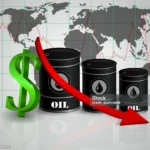
But for households, the global picture is less comfortable. Energy prices have moved sharply higher as conflict and attacks on shipping routes threaten supplies. Brent crude was trading around $106 a barrel on September 28, after rising more than 1 per cent as hopes for a rapid reopening of the Strait of Hormuz weakened.
That matters far beyond petrol stations. Higher crude prices feed into transport, electricity, food production and manufacturing costs. The OECD estimates that G20 headline inflation will average 4.1 per cent in 2026, before easing to 3.6 per cent in 2027. In several economies, households are already allocating more of their spending to fuel, leaving less room for other purchases.
The pressure is particularly significant for energy-importing countries. The OECD says global oil inventories in August were about 507 million barrels below their February level, a decline of just over 6 per cent. European gas inventories are also unusually low for this point in the year, increasing the vulnerability of businesses and households if supply disruptions persist.
At the same time, borrowing is becoming more expensive. Long-term interest rates have reached their highest levels in 15 years or more in many economies, reflecting inflation concerns, heavy government borrowing and rising fiscal risks. That creates a difficult choice for policymakers: supporting demand while keeping inflation under control becomes harder when energy prices are rising.
Trade policy adds another layer of uncertainty. The WTO estimates that strengthening the multilateral trading system could lift global GDP by about 2.9 per cent, or roughly $3 trillion, by 2050 compared with the baseline. By contrast, failure to modernise the system could reduce global output by as much as 10 per cent, according to its latest World Trade Report.
For now, the global economy is therefore neither in freefall nor on a smooth recovery path. Technology investment is providing a powerful cushion, while oil, war, trade restrictions and higher borrowing costs continue to test that resilience.
The immediate outlook may depend on something that economists cannot control: whether energy supplies and shipping routes return to normal. The OECD warns that a prolonged energy disruption could weaken global growth and push inflation higher, while a faster easing of oil and gas prices would provide a significant boost to economic activity.
For millions of households, that distinction is already being felt in everyday decisions—from how far they drive to what they buy at the supermarket. The global economy may still be growing, but the cost of that resilience is becoming increasingly visible in household budgets.
