



















The invisible system holding the economy together
TLE Desk: Money is so familiar that its economic importance is often overlooked. A banknote changes hands at a shop, a salary arrives in a bank account, a business makes a digital payment and a central bank changes its policy rate. Yet beneath these ordinary transactions lies a system that determines how economies exchange goods, save wealth, set prices and allocate resources.
The International Monetary Fund’s Finance & Development series describes money through three basic functions: it serves as a medium of exchange, a unit of account and a store of value. These functions may sound elementary, but together they explain why money is at the centre of almost every modern economic activity. Without it, much of the economy would have to fall back on barter, making specialisation and large-scale trade considerably more difficult.
Consider a mechanic who needs food. In a barter economy, the mechanic would have to find a farmer who both wants car repairs and is willing to exchange food for that service. Money removes that coincidence-of-wants problem. The mechanic can sell the service to one customer, receive money and use it to purchase food from somebody else. The same mechanism allows a farmer to sell wheat, a factory to sell garments and a journalist to sell professional labour without requiring every transaction to be directly matched with another specific need.
That apparently simple change transformed economic organisation. As people specialise, production becomes more efficient, but specialisation also creates greater dependence on exchange. Money provides the common language through which those exchanges take place. The more complex the economy becomes, the more important that common language becomes.
But money has never been simply pieces of paper issued by a government. The history of money is, in many ways, the history of society searching for something that people will accept as valuable. Cowry shells, barley, peppercorns, mobile-phone minutes, gold and silver have all served as money in different places and periods. The materials changed, but the underlying requirement remained remarkably consistent: people had to believe that others would accept them in exchange.
Gold and silver became particularly important because they combined several desirable characteristics. They were durable, relatively scarce, portable and divisible into standardised units. Their physical properties helped establish them as stores of value and mediums of exchange. But carrying large quantities of precious metal was inconvenient. Banks therefore became increasingly important as people deposited metal and used paper claims representing ownership of those deposits.
Eventually, money became detached from the underlying precious metal. This transition produced what economists call fiat money—currency whose value does not come primarily from the material from which it is made, but from collective acceptance and institutional credibility. In the case of government-issued money, the requirement to pay taxes in the national currency also creates a continuing source of demand.
This is where the modern monetary system becomes particularly interesting. A 1,000-taka note may have little intrinsic value as paper, but people accept it because they expect other people to accept it. A bank deposit works in much the same way. Its usefulness does not depend on the physical existence of banknotes corresponding to every taka in the account. It depends on the credibility of the banking and monetary system behind it.
That means trust is not a peripheral feature of money; it is part of money itself.
The IMF notes that most money today exists not as physical currency but as bank deposits. Official monetary statistics therefore look beyond notes and coins. Broad money can include currency, transferable deposits, other deposits and certain highly liquid financial instruments. The concept of liquidity is crucial because an asset that can quickly be converted into money and used for transactions is economically different from an asset that cannot readily be accessed.
This distinction matters when people talk about governments “printing money”. The phrase can give the impression that modern economies are driven mainly by printing presses producing physical banknotes. In reality, most money is already digital or recorded as deposits within the banking system. The deeper question is how much liquidity and purchasing power exists relative to the goods and services available in the economy.
That relationship becomes visible through inflation.
If the amount of money and spending power grows significantly while the supply of goods and services does not keep pace, the purchasing power of money can decline. People then need more money to purchase the same quantity of goods and services. This is inflation. Conversely, a severe shortage of money relative to economic activity can contribute to falling prices, or deflation. The IMF describes the balance between the demand for money and its supply as a difficult task precisely because changes in one affect the value of the other.
The problem is therefore not simply whether an economy has “more money” or “less money”. What matters is the relationship between money, production, spending, credit, expectations and confidence.
This also explains why monetary policy has such an important role. Once money became fiat currency, governments no longer faced the physical constraint imposed by the quantity of gold or silver available. That created flexibility, but it also created a new institutional challenge: deciding how much monetary expansion an economy can absorb without destabilising prices and expectations.
The IMF article points to a fundamental dilemma. Governments can have incentives to create more money because additional purchasing power can finance spending, employment and other economic activity. But excessive monetary expansion can raise prices. If households and businesses begin to expect continuing inflation, they may respond by raising prices and wages more aggressively, reinforcing the inflationary process. Once confidence in the currency begins to disappear, restoring it can become considerably harder.
This is one reason central-bank credibility matters far beyond financial markets. A credible monetary authority is not simply managing interest rates or banking liquidity; it is helping preserve confidence in the currency itself.
The consequences of losing that confidence can be severe. The IMF points to episodes in Latin America during the 1980s when high inflation eroded confidence in domestic currencies and encouraged people to use the US dollar instead. Such unofficial or de facto dollarisation illustrates what happens when people begin looking for an alternative store of value. Once a foreign currency becomes deeply embedded in domestic transactions and savings, reversing the process can be difficult.
The lesson extends well beyond Latin America. A currency does not maintain its purchasing power merely because a government declares it legal tender. Its durability depends on a much wider institutional ecosystem—credible monetary policy, functioning banks, confidence in payments, predictable economic institutions and public expectations about future prices.
This also changes the way money should be understood in the digital age.
Digital payments do not fundamentally eliminate the economic functions of money. They change the form through which those functions are delivered. A balance shown on a mobile banking application can serve as a medium of exchange just as a banknote can. A digital account can hold purchasing power just as a physical wallet can. Prices can still be denominated in the national currency even when almost no physical cash changes hands.
The more important transformation is therefore not from “cash to digital money” but from one form of monetary infrastructure to another.
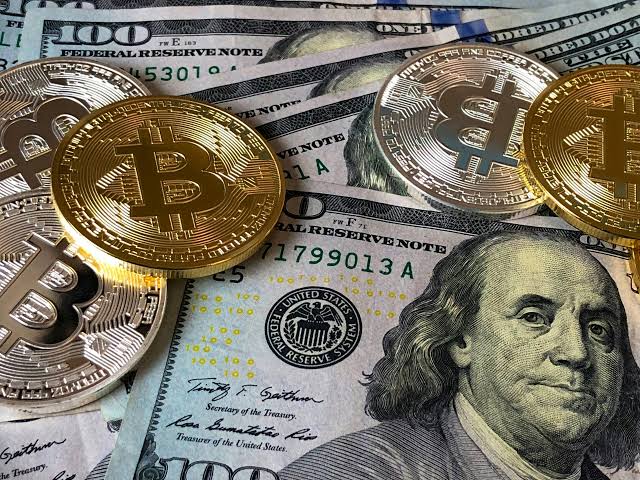
The same principle helps explain why cryptocurrencies present a different monetary question. The IMF article notes that cryptocurrencies, unlike government-issued fiat money, depend heavily on collective belief and acceptance rather than a government’s taxation system as a source of demand. Whether a particular digital asset can perform all three functions of money—medium of exchange, unit of account and store of value—depends on its acceptance, stability and usability.
Ultimately, money is a social institution supported by economic activity and confidence. Its physical form has changed repeatedly, from commodities to precious metals, from coins to paper, and increasingly from paper to electronic records. Yet its core functions have remained remarkably stable.
That is perhaps the most important insight from the IMF’s treatment of money. The real value of money is not contained in the paper, metal or digital code itself. It lies in the economic network that makes people willing to accept it today in exchange for something they produce, because they expect someone else will accept it tomorrow.
When that trust works, money makes specialisation, trade, saving and investment possible on a scale that barter could never support. When that trust weakens, the problem is no longer merely that prices are rising or a currency is losing value. The monetary system itself begins to lose one of its most important assets: credibility.
Money, therefore, is not simply what people carry in their wallets or see in their bank accounts. It is the shared economic belief that turns individual transactions into an organised economy.
