


















US freezes green-card applications at Microsoft and major IT firms
The United States has suspended Microsoft, Adobe and several major information technology companies from a key employment-based immigration programme, escalating President Donald Trump’s campaign to restrict skilled foreign labour. The move blocks the companies from submitting new applications for permanent labour certification and halts the processing of pending applications under the programme.
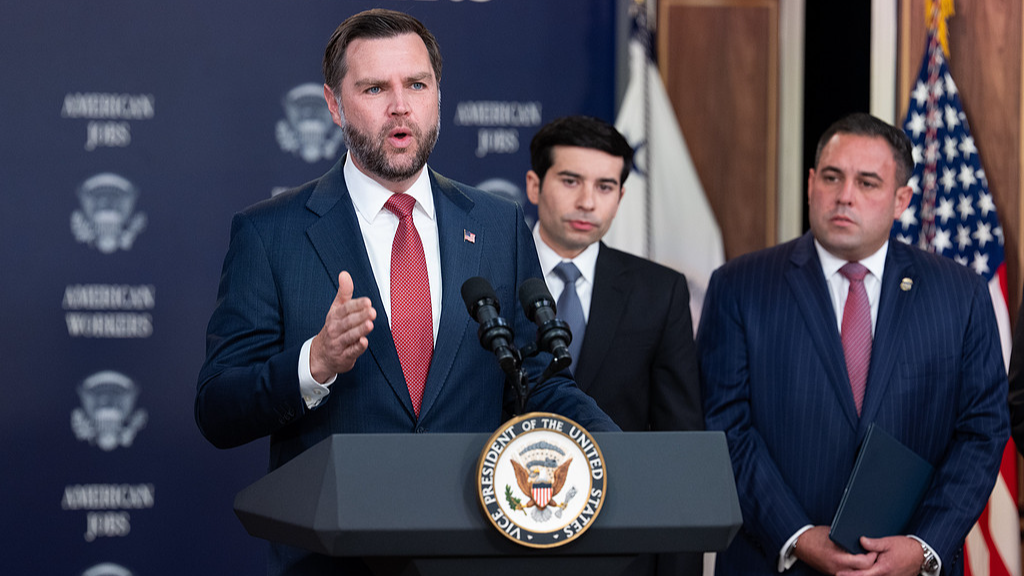
Reuters reported on Thursday that Vice-President JD Vance and Labour Secretary Keith Sonderling announced the suspensions, accusing companies of exploiting the system to hire foreign workers at the expense of American employees. The affected firms include Microsoft, Adobe, Cognizant, Infosys, Tata Consultancy Services (TCS), Wipro, HCL Technologies and Capgemini. The allegations have not, by themselves, established that the companies committed fraud.
The action targets the Permanent Labour Certification, or PERM, process, a key step employers generally need to complete before sponsoring eligible foreign workers for employment-based green cards. Employers must demonstrate that qualified and available US workers cannot fill a particular position and that hiring a foreign worker will not adversely affect the wages and working conditions of similarly employed Americans.
Vance singled out Microsoft, accusing it of laying off thousands of US employees while continuing to rely heavily on foreign-worker visas. He said the administration would maintain the suspension for as long as necessary to force changes in hiring practices. Sonderling said the department would neither accept new nor process pending PERM applications involving the named companies.
Microsoft disputed the implication that its visa filings primarily involved recruiting new foreign workers. The company said about 80 per cent of its H-1B applications in the last fiscal year were intended to extend or change the status of existing employees, rather than bring in new hires. It has also said that its H-1B employees receive the same pay as other employees doing comparable work.
The decision has particular significance for Indian technology professionals. TCS, Infosys, Wipro and HCL Technologies are among the affected firms, alongside US-based Microsoft and Adobe and France-based Capgemini. Indian IT companies have long used temporary work visas and employer-sponsored permanent residency pathways to place skilled employees in the US market.
According to Reuters, the affected companies had collectively sought nearly three million foreign workers since 2009 and received more than 230,000 H-1B visa approvals and over 100,000 permanent labour certifications. Those figures describe the scale of their participation in the immigration system; they do not independently prove the administration’s allegations of abuse.
The suspension could leave some employees waiting longer for permanent residency and make it harder for affected firms to recruit and retain international specialists. PERM is not the same as an H-1B visa: the former is a labour-certification step associated with many employment-based green-card applications, while the latter allows eligible foreign professionals to work temporarily in the US. The announcement does not, on its own, cancel existing green cards or automatically terminate current H-1B status.
The crackdown also widened beyond corporate hiring. Vance said the administration would investigate nine universities, including Harvard, Yale and Stanford, over alleged misuse of exchange-visitor visas and concerns about foreign influence, financial relationships and federally funded research. Labour Department officials said subpoenas had already been issued.
The twin actions place technology companies and universities under increased scrutiny at a time when the US continues to compete globally for expertise in artificial intelligence, research and advanced technology. Restricting employer-sponsored residency may serve the administration’s stated goal of prioritising domestic workers, but it could also increase uncertainty for skilled professionals whose long-term plans depend on remaining in the country.
The central issue will be whether the government can substantiate its allegations through evidence and enforce the rules without creating unintended consequences for American employers, research institutions and the skilled workers they rely on.
