














Delhi deploys up to 35,000 security personnel as India’s youth protest
Conflicting deployment estimates, transport curbs and competing accounts of detentions have intensified scrutiny of the government’s response to protests over voter-list revisions.
New Delhi’s response to a youth-led protest against India’s electoral-roll revision has become a story in its own right, with security deployments, transport restrictions and detentions raising questions about the balance between public order and the right to peaceful assembly.
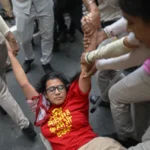
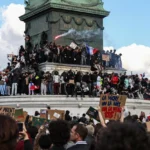
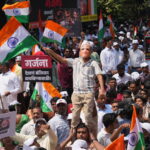
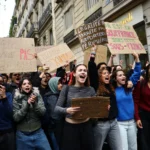
Authorities tightened security across the capital on 10 October ahead of a planned demonstration by the Cockroach Janta Party (CJP), which is demanding the resignation of Chief Election Commissioner Gyanesh Kumar. The movement alleges that changes to electoral rolls could exclude eligible voters and undermine confidence in elections.
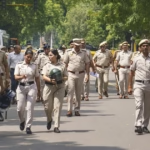
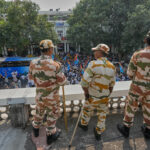
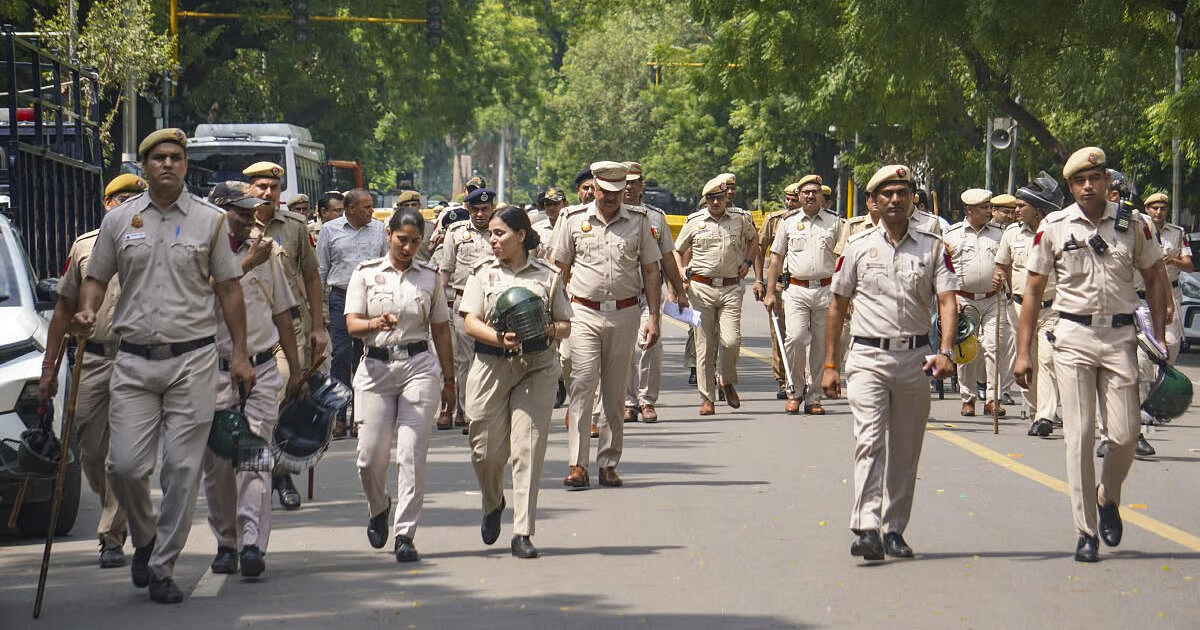
The scale of the operation remains subject to differing estimates. Reuters reported that thousands of police and paramilitary personnel were deployed, while The Indian Express reported more than 23,000 personnel and The Times of India cited an expected deployment of around 35,000. These figures should not be treated as directly comparable without clarification of their timing and coverage.
The restrictions extended beyond the protest site. Reuters journalists reported barricades, vehicle checks, closed metro stations and markets, and suspended mobile internet services in affected areas. The Indian Express reported that entry and exit gates at 57 metro stations had been shut. Separately, The Times of India reported that more than 250 trains had been cancelled, although the reported cancellations concerned services affected by the security arrangements and should not be interpreted as a shutdown of India’s railway network.
Detentions: different figures, different claims
Reuters reported that a police source put the number of protesters detained in the Delhi area at about 200. The Indian Express also reported around 200 detentions, including prominent YouTube personality Dhruv Rathee, who was detained in Gurugram, according to police reporting.
A separate claim circulated by the CJP was considerably larger. On 9 October, The Guardian reported that the movement said at least 10,000 people associated with its demonstrations, student organisations and affiliated political groups had been detained nationwide. The figure was an allegation by the movement, and police had not immediately responded to requests for comment at the time of that report.
The figures describe different geographic areas and reporting periods. The nationwide claim cannot be confirmed by the smaller number reported by police sources in the Delhi area, but neither should it be presented as an independently established total without further corroboration.
Delhi Police denied permission for the planned demonstration, citing public-order concerns and the timing and form of the application. The CJP rejected the restrictions and maintained that peaceful protest was a fundamental right. The group also issued an advisory urging supporters to remain peaceful, avoid breaking through barricades and refrain from damaging property, according to The Indian Express.
The numbers behind the electoral dispute
The protests follow reports that approximately 130 million names have been deleted from electoral rolls during the Election Commission’s Special Intensive Revision (SIR).
Reuters cited a breakdown comprising about 63 million entries associated with people who had relocated, 30 million whose whereabouts could not be established and 28 million recorded as deceased. Those categories total approximately 121 million, leaving a difference of around nine million against the rounded headline figure. The available reporting does not establish the composition of that difference.
More importantly, the deletion total does not establish that 130 million eligible voters have been denied their voting rights. The Election Commission says the figures include entries flagged during the draft revision process, that the exercise is incomplete and that voters wrongly removed can seek re-enrolment.
Opposition parties allege that the revision risks disproportionately excluding voters and could benefit Prime Minister Narendra Modi’s Bharatiya Janata Party (BJP). The BJP and the Election Commission deny claims of political manipulation, arguing that the exercise is intended to remove duplicate and ineligible entries.
The controversy has intensified following reports that officials within the election administration questioned aspects of the revision. The allegations have fuelled calls for greater transparency, but they do not, by themselves, establish that the process was deliberately manipulated.
From internet satire to political mobilisation
The CJP began as a satirical youth movement and gained national visibility through demonstrations against examination paper leaks. Those protests contributed to pressure that culminated in the resignation of the education minister. The movement has since expanded its focus to electoral administration and the independence of institutions responsible for safeguarding democratic participation.
The latest demonstrations have also attracted established opposition figures, giving the campaign a broader political reach. Yet the movement’s ability to sustain pressure will depend on whether it can move beyond viral messaging and produce evidence that supports its allegations.
The next test is institutional rather than rhetorical. Electoral authorities will need to explain the discrepancies in reported deletion figures, demonstrate that affected voters have accessible avenues of appeal and publish sufficiently detailed information for independent scrutiny. Authorities, meanwhile, face questions about whether restrictions imposed in the name of public order are proportionate to the risks involved.
The Delhi operation illustrates how a dispute over voter registration can expand into a wider confrontation over democratic accountability. The central issue is not whether every deletion was unlawful, but whether the electoral system can demonstrate that eligible citizens retain a meaningful opportunity to vote and that allegations of irregularities can be examined transparently.
