



















China’s economy grows 4.5pc in 3Q, export strength offsets domestic weakness
Strong overseas shipments lift growth from a three-year low, but a prolonged property slump and cautious consumers continue to challenge Beijing’s recovery.
China’s economy grew by 4.5% year on year in the third quarter of 2026, recovering from a more than three-year low as strong exports helped sustain activity despite persistent weakness in domestic demand and the property market.
Gross domestic product (GDP) expanded between July and September at a faster pace than the 4.3% recorded in the second quarter, according to data released by China’s National Bureau of Statistics on Monday. The result also exceeded the 4.4% growth forecast in a Reuters poll. On a quarter-on-quarter basis, the economy expanded by 1.2%.
The rebound offers some relief to policymakers as China seeks to meet its annual growth target of 4.5% to 5%. However, stronger headline growth does not necessarily indicate a broad-based recovery in household spending, private investment or the housing sector.
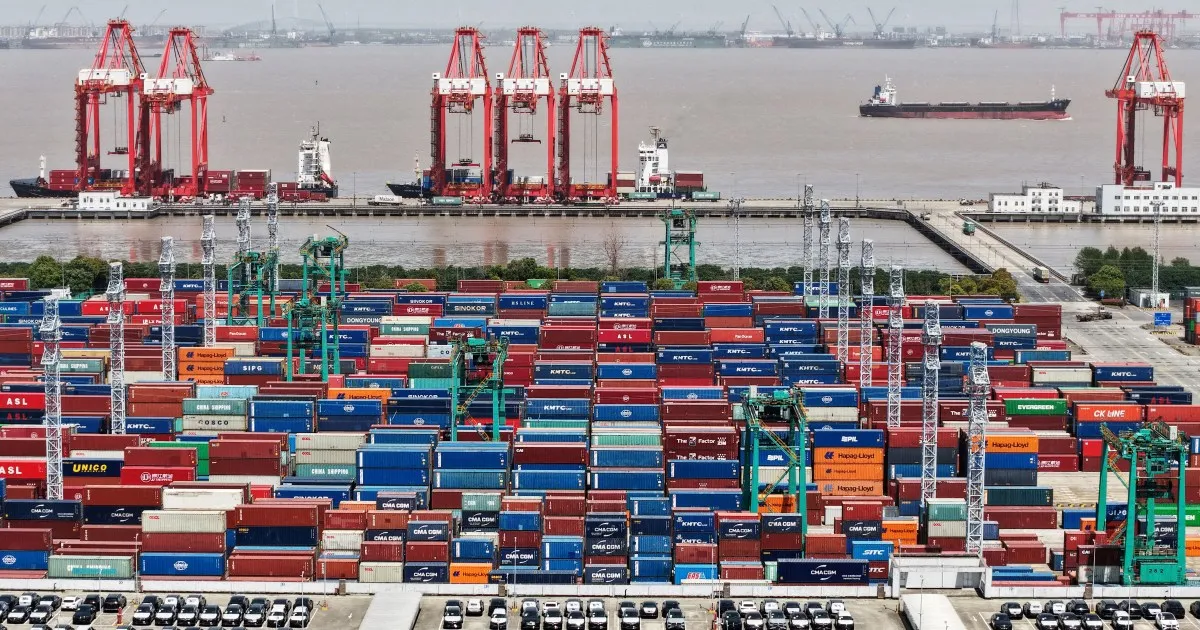
China’s overseas trade has emerged as a major source of economic momentum. Exports rose 36.3% year on year in September, according to figures reported by the Financial Times, reflecting strong demand for technology-related products, including semiconductors and data-processing equipment.
Official statistics showed that China’s total goods trade increased by 18.8% during the first nine months of 2026. Exports rose 16.4%, while imports increased by 22.3%, both measured in yuan terms.
The export performance highlights the strength of China’s manufacturing base and its ability to compete in international markets. Yet dependence on external demand also leaves the economy exposed to trade restrictions, protectionist measures and changes in demand among major trading partners.
The widening trade imbalance is likely to remain a source of friction with economies concerned about competition from Chinese manufacturers and the scale of China’s industrial output.
The growth figures conceal continuing pressure within China’s domestic economy. Reuters reported that September retail sales increased by just 1.1% year on year, while industrial output rose 5.5%. Investment and property-sector indicators remained weak.
The prolonged property downturn has weighed on household confidence and the broader economic outlook. For households, uncertainty surrounding housing values can discourage discretionary spending. For businesses, subdued domestic demand can limit incentives to expand investment even when export orders remain strong.
This creates a policy challenge for Beijing: maintaining industrial and export momentum while encouraging households and private businesses to contribute more consistently to growth.
China’s latest performance suggests that its manufacturing and export sectors continue to provide a buffer against domestic economic weakness. But the durability of that support will depend partly on conditions in overseas markets and the ability of policymakers to strengthen internal demand.
For trading partners, strong Chinese exports can provide access to competitively priced goods and industrial inputs. At the same time, sustained export growth may intensify disputes over market access, industrial subsidies and manufacturing capacity.
The third-quarter figures therefore point to a recovery in the pace of growth, rather than conclusive evidence that China’s structural economic challenges have been resolved. The next test will be whether household consumption and domestic investment strengthen enough to reduce the economy’s reliance on exports.
Sources: China’s National Bureau of Statistics, third-quarter 2026 economic data; Reuters, China’s economic growth accelerates to 4.5% in the third quarter; Financial Times, China’s exports surge 36% as AI-related shipments boom.
