



















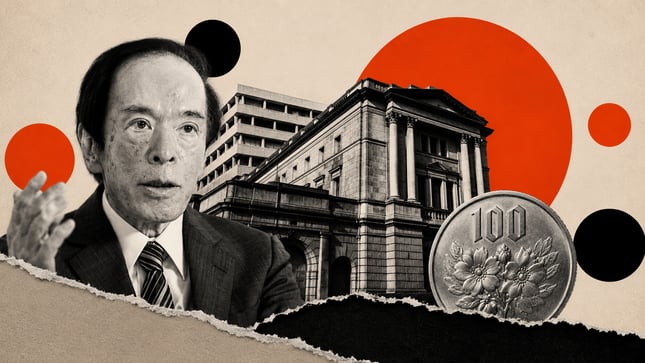
Governor Kazuo Ueda cites wage growth, tight labour markets and AI-driven demand as inflation risks, while warning that poorly calibrated policy could destabilise government bond markets.
Japan’s central bank is signalling a more delicate phase of monetary policy as underlying inflation approaches its 2% target, with Governor Kazuo Ueda highlighting stronger demand, rising wages and geopolitical energy pressures ahead of the Bank of Japan’s next policy meeting.
Speaking in parliament on Monday, Ueda said underlying inflation was “quite close” to the central bank’s target and stressed the growing importance of keeping price increases anchored around that level. His remarks reinforce expectations that the Bank of Japan could continue raising interest rates, although they do not establish a date for its next move.
Reuters reported that strong global demand for artificial intelligence-related products is boosting Japanese capital expenditure and exports, adding to price pressures from the country’s moderate economic recovery and tight labour market.
Japan has spent years trying to establish a sustainable cycle in which wage increases support consumer spending and allow businesses to raise prices without undermining demand.
Ueda pointed to signs of a positive relationship between wages and prices. If this cycle becomes more firmly established, inflation may increasingly reflect domestic economic conditions rather than temporary shocks alone.
Strong international demand, particularly for AI-related products, is also supporting investment and exports. This creates a different inflationary dynamic from one driven solely by higher imported energy costs: demand-led price increases can indicate stronger economic activity, although excessive inflation may still erode household purchasing power.
At the same time, the conflict in the Middle East is raising raw-material costs and adding to supply-driven inflation. For an economy that relies heavily on imported energy, sustained increases in oil and other commodity prices can place pressure on businesses and households even when domestic demand remains moderate.
The Bank of Japan faces a balancing act. Keeping interest rates too low as underlying inflation strengthens could encourage investors to demand higher long-term yields because of concerns that price pressures will exceed the central bank’s target. Raising rates too aggressively, however, could tighten financial conditions and weigh on economic activity.
Ueda said interest rates should be adjusted at an appropriate pace, arguing that a properly calibrated monetary-policy path could help prevent sharp increases in long-term government bond yields.
He also indicated that the central bank would continue assessing market conditions, including the speed of increases in long-term yields and signs of instability, before deciding whether intervention was necessary. The bank has not announced a fundamental change to its approach to reducing government bond purchases.
The distinction is important: a gradual policy-rate adjustment and emergency action to stabilise the bond market are separate decisions, each responding to different economic and financial conditions.
The US dollar traded at around 157.80 yen at the time of FXStreet’s report, with the dollar-yen pair down 0.13% on the day. Ueda’s remarks could support the yen if investors interpret them as a signal of further monetary tightening, but currency movements will also depend on interest-rate expectations in the United States and broader risk sentiment.
According to Reuters, the Bank of Japan’s next policy meeting is scheduled for 29–30 October. Investors will scrutinise the bank’s updated economic and inflation forecasts for clues about the timing of any further rate increase.
The central bank raised its policy rate to 1.25% in September, according to Reuters, taking it to a level not seen in 31 years. Market participants are assessing whether the latest inflation signals justify another increase before the end of the year.
Japan’s policy challenge illustrates a broader dilemma facing central banks: inflation caused by stronger demand can call for a different response from inflation driven by supply disruptions, even when both raise consumer prices.
Fiscal policy adds another layer. Government spending can support demand and wages in the short term, while investment that expands productive capacity may help ease supply constraints over time. The eventual effect depends on how spending is financed and whether it expands the economy’s ability to produce goods and services.
For Japan, the central test is whether wage growth, investment and domestic demand can sustain inflation near 2% without triggering excessive price increases or destabilising bond markets. Ueda’s message points towards continued vigilance and possible further rate normalisation, rather than an immediate commitment to a specific policy move.
Sources
