















Michigan Democrats feud over outside ad days before Senate vote
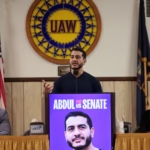
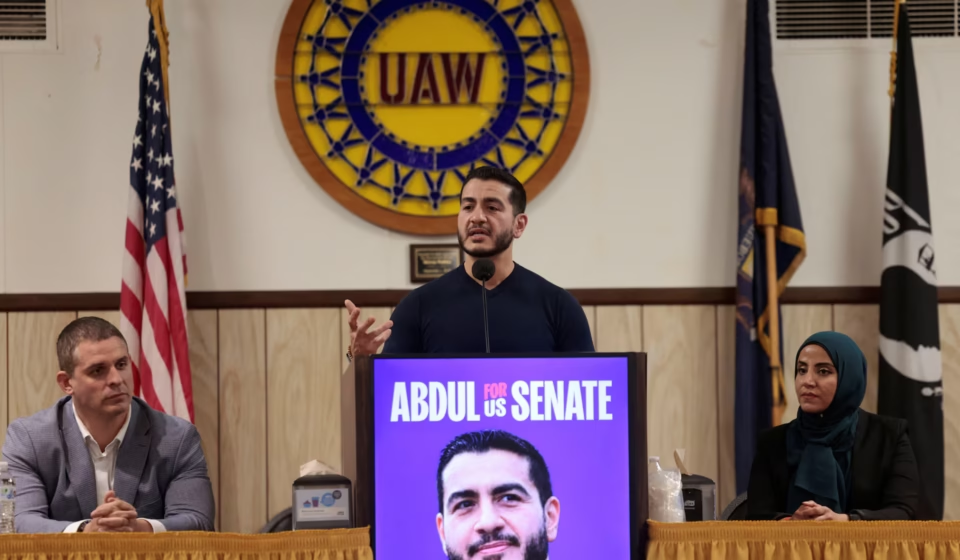
Abdul El-Sayed, the Democratic nominee in Michigan’s Senate race, has told Rep. Haley Stevens to stay away from his remaining campaign events, according to the Guardian, which cites Politico’s report on Friday.
The two had planned to appear together at a Detroit church service on Sunday with South Carolina Rep. Jim Clyburn. El-Sayed said he did not want “distractions,” and his campaign said Stevens was relitigating a primary that ended three months ago. The race is one of the closest in the country, and Democrats need the seat to win back the Senate, so the timing is awkward for the party.
The facts are consistent across outlets, though the order of events is disputed. Stevens defeated El-Sayed in Detroit’s Wayne County but lost the August primary, endorsed him afterward and told CNN this week she is still voting for him. Two days before Sunday’s event, she demanded he denounce an ad by Rebellion PAC, an independent left-wing group, which linked high grocery prices to US support for Israel’s war in Gaza. The AP reported on Friday that the two would campaign together, and CBS notes that El-Sayed’s announcement of the Clyburn appearance did not mention Stevens. The conservative Washington Free Beacon says Stevens withdrew from the event first after he refused to condemn the ad, then that he disinvited her. The Guardian and Politico describe the disinvitation, and Stevens told the Washington Post she would not discuss it further until after Tuesday’s election. So who pulled out first is unclear, and I would not rely on any one account of the sequence.
Characterizing the ad is where the two sides diverge most. Stevens, her fiancé Jason Turkish and a number of Jewish Democrats call it antisemitic or say it plays on dangerous stereotypes. El-Sayed’s campaign says he did not produce or approve it and has distanced himself from it. According to Newsweek, a spokesperson said no one speaks for him but himself and his campaign. He has not explicitly disavowed its message, which is the point in dispute, and he is a vocal critic of the Israeli government. Supporters of that view say blaming policy on prices is a political argument, not bigotry. His statement also noted that the American Israel Public Affairs Committee spent heavily to defeat him in the primary, and Metro Times separately reported a $2 million AIPAC-backed ad buy supporting Stevens. Both claims are consistent with public reporting, but whether the Rebellion PAC ad crosses a line is a judgment, not a fact, and readers will reach different conclusions.
The personal dimension adds heat. Turkish told the Detroit News he plans to vote for Republican Mike Rogers, citing El-Sayed’s rhetoric on Israel and Gaza and saying Jews receive threats when he uses the word genocide. Stevens told CNN they are “a household divided.” One outlet also reports that she demanded he apologise for earlier comments about Israel, as JNS puts it, and denounce a second ad featuring Tucker Carlson. I could only find the second item in a TMZ report, so I’d treat it as unconfirmed. State senator Mallory McMorrow criticised Stevens on CNN, saying voters are talking about gas and grocery prices, not ads, which reflects the argument inside the party: that the feud is a distraction.
What is at stake electorally is narrower than the headlines suggest. The AP says both candidates are courting Black voters in Wayne County, which is why the Clyburn church event mattered. A CNN poll cited elsewhere this week had El-Sayed ahead of Rogers 49% to 42%, but one poll is not a forecast and the Guardian calls the race tight. My own read is that a public rupture four days out could cost El-Sayed some moderate and Jewish voters who wanted visible party unity, while his stance may help with progressive and Arab American voters who see Stevens’s demands as pressure. That is analysis, not data, and I haven’t seen polling that isolates the effect. Republicans and conservative outlets, as the Free Beacon and Breitbart coverage shows, are using the episode to question El-Sayed’s handling of antisemitism.
What is established and what is not: El-Sayed’s campaign asked Stevens to stay away, the ad exists, and Turkish is voting for Rogers. Who withdrew first, whether the ad is antisemitic, and whether any of this changes the outcome are not settled. This is a news summary, not voting advice.
Sources: The Guardian, Politico, CBS News, AP via Fox 2 Detroit, Newsweek, The Detroit News, iHeart/WBHP, JNS, Washington Free Beacon, Breitbart, PoliAlert, Metro Times (Gaza divide), Metro Times (AIPAC-backed ads) and TMZ.
