


Police arrest 139 in London, Palestine Action ban heads to UK SC
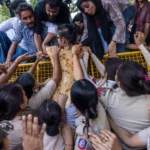
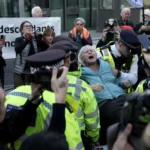
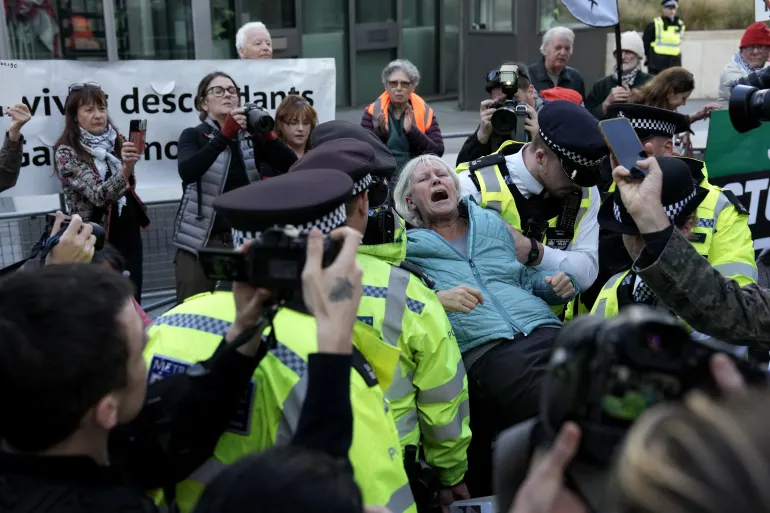
On Saturday, London police arrested at least 139 people at a protest outside the US embassy against Britain’s ban on Palestine Action, a direct-action group the UK government classifies as a terrorist organisation. The arrests came four days before the UK’s highest court hears a challenge to that ban. The case sits where three major debates meet: how far counter-terrorism law should reach, how free speech is protected during protests, and how the war in Gaza is shaping politics in Western countries.
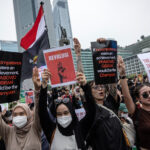
Hundreds of people gathered outside the American embassy in London, with a parallel gathering at the US consulate in Edinburgh. The organiser, a campaign group called Defend Our Juries, put the London turnout at about 400. Protesters held signs reading “I oppose genocide. I support Palestine Action.” London’s Metropolitan Police said it had arrested 139 people, up from 48 reported earlier in the day, and that most arrests were for expressing support for a proscribed organisation. Edinburgh saw no reported arrests. Defend Our Juries says more than 4,000 people have now been arrested for defying the ban since July 2025. That figure comes from the organisers, and I could not verify it independently, although other outlets report thousands of arrests.
Palestine Action began as a protest group that targeted companies it said supply weapons to Israel, often by spraying paint or damaging property. Britain banned it, or “proscribed” it, in July 2025 under the Terrorism Act 2000, after activists broke into an air force base on June 20 that year and damaged two military aircraft. The ban put Palestine Action on the same legal list as groups such as al-Qaeda and ISIL. Belonging to it or expressing support for it became a criminal offence, with maximum sentences of up to 14 years for membership or support, though the offence of displaying support, such as holding a sign, carries a lower maximum.
The ban has been tested in court twice. In February 2026, the High Court ruled it unlawful, finding that the then home secretary had misapplied her own policy and acted disproportionately toward rights to free expression and assembly. The ban stayed in force while the government appealed. On June 15, five Court of Appeal judges unanimously overturned that ruling, finding the ban lawful and proportionate. They described Palestine Action as a covert organisation operating through secret cells, and said it was not a peaceful civil-disobedience group. The group’s co-founder, Huda Ammori, is now appealing to the Supreme Court, which will hear the case on November 4 and 5.
The government’s position is that the ban follows the law. Home Secretary Shabana Mahmood has said it “does not affect lawful protest in support of the Palestinian cause,” and in October compared supporters of Palestine Action to people holding signs backing a neo-Nazi group, saying the law should apply the same way to both. Courts have accepted that the group is “concerned in terrorism.”
Critics say the ban is far too broad. Defend Our Juries calls the arrests “dystopian,” and Amnesty International UK’s Felix Jakens said the sight of “grandparents, teenagers and everyone in between” being taken away for holding placards is an attack on free speech. Labour MP John McDonnell said protesting against the ban cannot automatically be treated as supporting the group. Ammori has said the government accepted the ban was based on property damage, not violence against people. The Court of Appeal’s description includes violence to destroy property and cause injury, so the two sides characterise the group’s conduct differently.
The organisers also make a political claim: that Britain banned the group to appease US President Donald Trump and Israeli weapons companies, noting that the US designated the group as terrorist around the same time. The UK government has not accepted that, and I found no evidence presented for it beyond the organisers’ own argument. They also say enforcement is uneven, citing the case of a prominent supporter who faced no police action. The Met has not confirmed that claim.
The Supreme Court’s decision, due after the hearing, could either confirm the ban or force the government to reconsider it. Either way, it will shape how other democracies think about applying terrorism laws to groups that mainly cause property damage. In the meantime, the Saturday arrests suggest the confrontation between police and protesters is likely to continue. This is the first mass protest against the ban since Andy Burnham became prime minister in July, according to Al Jazeera.
The arrests, the court rulings and the hearing dates are documented. The total of 4,000 arrests, the claim of US pressure and the claim of uneven enforcement come from the organisers and are not independently verified. The Supreme Court’s decision, and whether the ban survives, is unknown.
Sources: Al Jazeera, Al Jazeera (protest preview), AP via WJLA, The Irish Times, AFP via Al-Monitor, Times of Israel, LBC, Jewish News, Express & Star (Court of Appeal), European Jewish Congress, 11KBW, Lawyer Monthly, The Jewish Chronicle, The Scotsman and Novara Media.
