




















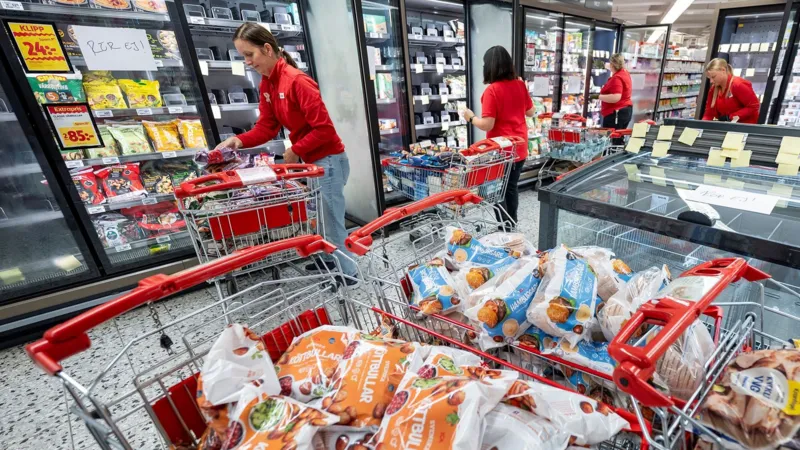
Cyber-attack disrupts supermarket refrigeration systems
A coordinated wave of intrusions has forced retailers to discard spoiled food, exposing vulnerabilities in internet-connected refrigeration equipment and raising concerns about the cybersecurity of critical retail infrastructure.
Supermarkets across seven European countries have suffered cyber-attacks targeting internet-connected refrigeration systems, disrupting food storage and causing significant losses as retailers scrambled to prevent further damage. The incidents have affected stores in Belgium, Luxembourg, Sweden, Ireland, the Netherlands, Estonia and Finland, with some refrigeration units reportedly reaching temperatures of up to 50°C.
The latest incidents appear to have exploited vulnerabilities in remotely managed cooling equipment. According to Belgian refrigeration manufacturer Sabcobel, affected units had their evaporators switched into defrost mode, preventing them from maintaining the required temperatures. The company said it had worked through the night to disconnect compromised equipment from its network.
The attack has renewed concerns following a similar incident in France in October, when hundreds of supermarkets reportedly experienced refrigeration failures and millions of euros worth of food had to be discarded. The recurrence suggests that vulnerabilities in connected cooling systems could expose retailers across national borders to disruption.
Belgium has reported substantial losses. Around 40 Delhaize supermarkets in Belgium and Luxembourg were affected, while a branch in Hoeilaart estimated that it had lost €100,000 worth of produce. Carrefour said 15 of its Belgian stores were affected, while Colruyt Group reported problems at five shops operating under its Spar franchise. Ikea also confirmed that refrigeration systems at its store in Mons had been affected.
In Sweden, several ICA and Coop supermarkets experienced disruptions. One ICA store in Sjöbo reported that its refrigerators and freezers had been hacked and their temperatures raised to 50°C. The store temporarily closed before reopening. Seven of Sweden’s approximately 800 Coop stores were also affected, although the company said the situation was contained.
The disruption extended to other markets. Thirteen SuperValu supermarkets in Ireland were affected by a cyber incident involving a specific refrigerator model. In the Netherlands, refrigeration and freezing systems at at least 17 businesses, including butcher shops and smaller retailers, were reportedly compromised. Finnish K-stores and an Estonian Selver supermarket also detected problems.
The incidents highlight a growing weakness in the digital infrastructure supporting modern retail. Internet connectivity allows supermarket operators and maintenance providers to monitor equipment, diagnose faults and adjust settings remotely. However, the same connectivity can create an entry point for attackers when devices, networks or remote-access arrangements are inadequately secured.
Sabcobel’s chief executive, Stephan Moelans, said that protecting customers after the French incident required physical modifications to the refrigeration units, rather than software updates alone. The company said many customers had moved to more secure internet connections, but the latest attacks indicate that further safeguards may be necessary.
The identity of those responsible remains unknown. Belgium and Sweden’s national cybersecurity agencies are monitoring the situation, while the UK’s National Cyber Security Centre said it was working with international partners and industry to understand the incident. No similar incidents had been reported in the UK at the time of the BBC report.
The wider implications extend beyond the immediate cost of spoiled food. Supermarkets depend on refrigeration to preserve perishable goods, maintain food safety and keep supply chains functioning. A prolonged disruption can result in inventory losses, temporary store closures, higher operating costs and potential interruptions to local food distribution.
The incidents also raise questions about responsibility across the technology supply chain. Retailers, refrigeration manufacturers, software providers and maintenance contractors all have a role in securing connected equipment. As more physical infrastructure becomes remotely accessible, cybersecurity must be treated as part of operational safety rather than solely an information technology concern.
For the retail sector, the latest attacks demonstrate how a vulnerability in an apparently routine piece of equipment can produce consequences across multiple businesses and countries. Protecting digital systems that control physical assets will become increasingly important as supermarkets and other essential services expand their use of connected technologies.
Sources: Reuters — New cyberattack on supermarket fridges sweeps across Europe (2 November 2026), Associated Press — Freezers at supermarkets in several European countries hit by apparent cyberattacks (2 November 2026), Sky News — Hackers target refrigerators in Ireland and European countries in new wave of cyber attacks (2 November 2026), Al Jazeera — Freezers in Sweden and Belgium overheat following possible cyberattacks (2 November 2026), Helsinki Times — Cyberattacks hit supermarket refrigeration systems across Europe (2 November 2026), The Times of India — Fridges hacked, food spoiled: Cyberattack disrupts supermarkets across Europe (2 November 2026), and TVC News — Cyberattacks disrupt supermarket refrigeration systems across five European countries (2 November 2026).
