












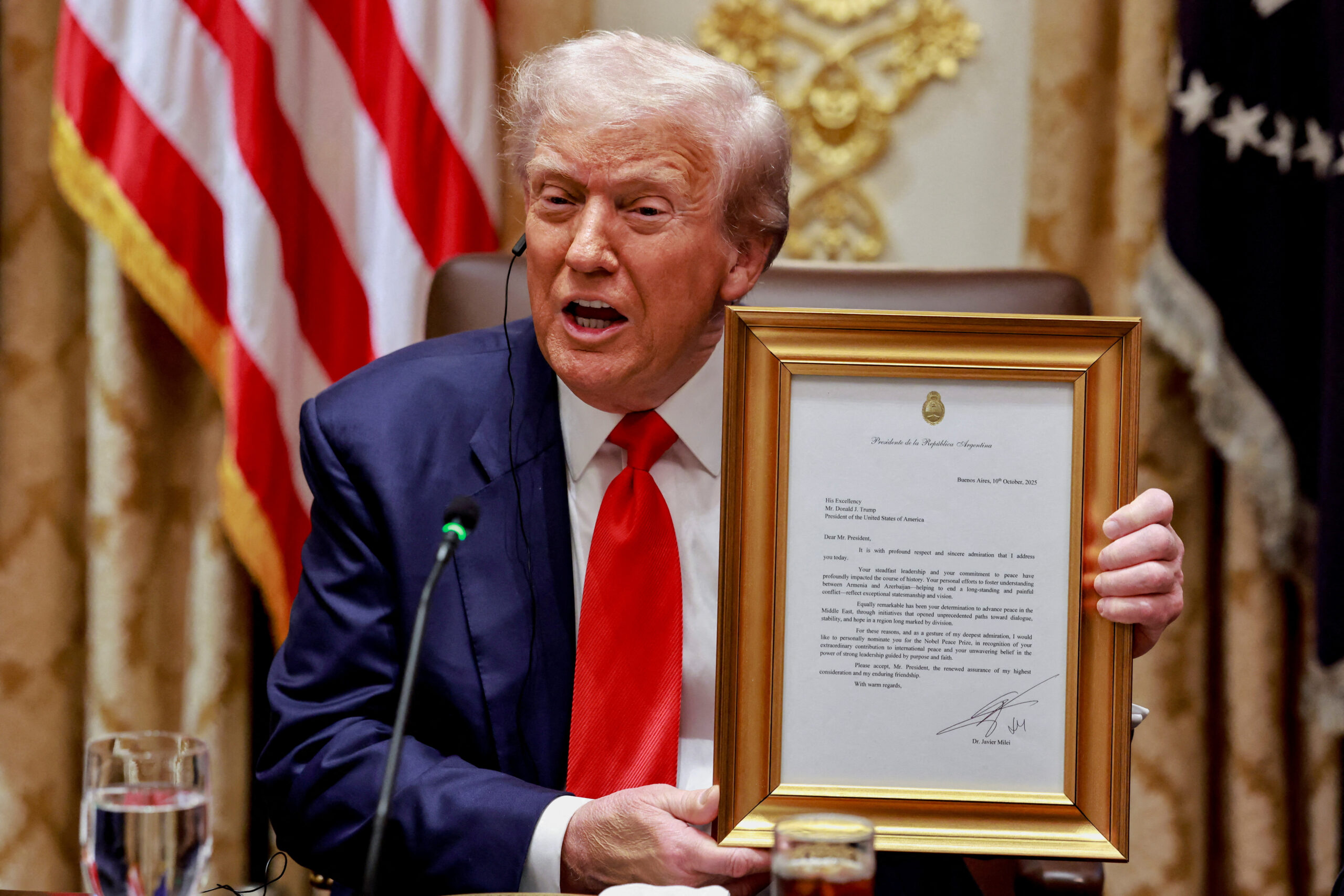
Trump attacks NPP decision, claiming award should have gone to him
The US president’s reaction to Navi Pillay’s selection has renewed questions about his pursuit of international recognition and the growing tension between his administration and institutions defending international law.
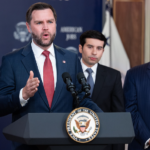
US President Donald Trump has criticised the decision to award the 2026 Nobel Peace Prize (NPP) to South African jurist Navi Pillay, describing the choice as “disgraceful” and accusing the Norwegian Nobel Committee of damaging the award’s reputation. His remarks have brought renewed attention to his longstanding ambition to receive the prestigious honour.
Speaking at a rally in Syracuse, New York, on Friday, Trump argued that the United States, represented by him as president, deserved the prize instead. He said he had never heard of Pillay and described the committee’s decision as an “indelible stain” on Norway.
Reuters reported that Trump made the comments after Pillay was announced as the 2026 laureate for her work promoting international law and accountability for serious human rights violations.
Pillay, 85, is a former United Nations high commissioner for human rights who has served in international judicial roles, including at the International Criminal Court and the International Criminal Tribunal for Rwanda. Her career has centred on human rights, international justice and efforts to hold perpetrators of war crimes and crimes against humanity accountable.
The decision has also highlighted the contrasting positions of the laureate and the Trump administration on international institutions. Washington has taken an increasingly confrontational approach towards several multilateral bodies, including the International Criminal Court, while Pillay has been associated with efforts to strengthen international legal accountability.
Trump’s pursuit of the Nobel Peace Prize has been a recurring feature of his public messaging. His supporters have pointed to his diplomatic initiatives as grounds for recognition, while critics have questioned whether his foreign policy and approach to international cooperation align with the principles the award is intended to recognise.
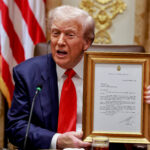
The controversy follows the 2025 award to Venezuelan opposition leader María Corina Machado, who presented her Nobel medal to Trump earlier this year. The gesture did not transfer the Nobel honour itself, which remains attached to the designated laureate.
Pillay responded to congratulations from colleagues with a light-hearted reference to Trump, joking that she might share the prize with him if the audience applauded more loudly. Her remark added a personal dimension to an already politically charged moment.
The Nobel Peace Prize includes a gold medal, a diploma and a monetary award of 11 million Swedish kronor, equivalent to approximately $1.2 million at the time of the announcement.
Beyond Trump’s objections, the episode raises a broader question about the relationship between political power and international recognition: whether a leader’s own assessment of diplomatic achievements should determine eligibility for an award whose recipient is selected independently by a committee.
