








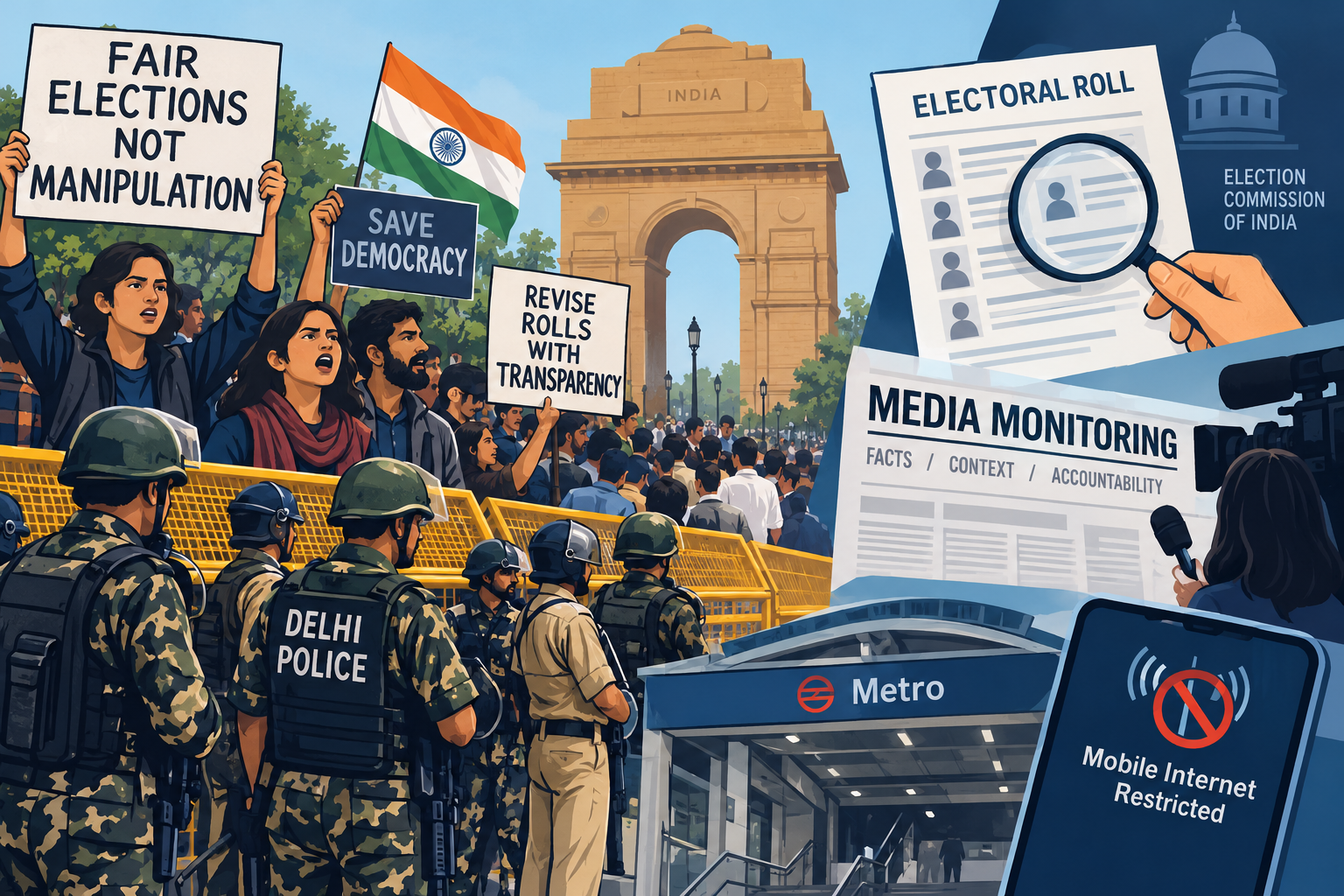
Delhi protests and electoral controversy, media narratives
A Regional Media Monitoring Report by the Regional Media Research Network (RMRN)
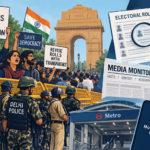
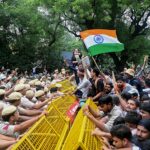
The protests in New Delhi against Chief Election Commissioner Gyanesh Kumar have brought electoral transparency, institutional accountability and the management of public demonstrations into sharp focus. Between 8 and 11 October 2026, the controversy intensified as opposition groups and the youth-led Cockroach Janta Party (CJP) mobilised against the Election Commission’s voter-roll revision process, while authorities introduced extensive security measures to prevent demonstrations in central areas of the capital.
Reporting published by Reuters and The Indian Express during this period documents preparations for large-scale protests, the deployment of security personnel, restrictions affecting public transport and mobile internet services, and the detention of demonstrators and political figures. At the centre of the dispute is the Special Intensive Revision (SIR) of electoral rolls, which critics argue could exclude eligible voters and undermine confidence in the electoral process. The Election Commission and the ruling Bharatiya Janata Party (BJP) have denied allegations of political manipulation.
For the Regional Media Research Network (RMRN), this episode merits examination beyond its immediate political and security dimensions. It offers an important case study of how electoral disputes are framed by different media organisations, how official explanations and opposition allegations circulate in public debate, and how the balance between public order and peaceful assembly becomes a subject of national and international scrutiny.
In its report published on 9 October, The Indian Express described extensive preparations by Delhi Police ahead of the planned demonstrations. Police anticipated a substantial gathering, including participants travelling from neighbouring states. The authorities called in additional central security personnel and introduced measures intended to prevent protesters from reaching Jantar Mantar and other sensitive locations in central Delhi.
The preparations reflected the authorities’ assessment of the potential scale of the mobilisation. However, they also raised questions about the consequences of preventive restrictions for peaceful demonstrators, commuters, businesses and journalists. The report’s emphasis on security arrangements illustrates how the protest was framed, even before the main gathering, as a significant public-order challenge.
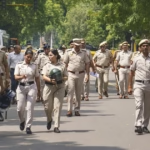
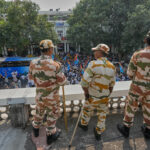
In its coverage on 10 October, The Indian Express described an extensive security deployment involving police and paramilitary personnel, restrictions on access to selected metro stations and temporary suspension of mobile internet services in a designated area. The measures were intended to prevent the planned rally from proceeding as organisers had envisaged.
These restrictions became an important part of the story in their own right. While authorities have a responsibility to maintain public safety, the implementation of restrictions also raises questions about proportionality, access to public spaces and the practical ability of citizens to exercise their right to peaceful assembly.
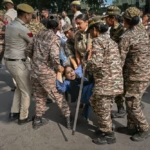
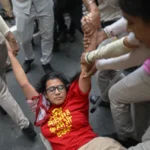
Reuters reported on 10 October that police had detained more than 2,000 people in Delhi as authorities sought to prevent the demonstration. Security forces were deployed across major routes and entry points, while the planned gathering at Jantar Mantar was obstructed by a substantial security presence.
The detention of CJP founder Abhijeet Dipke and other movement leaders became a prominent element of the coverage. Reuters also reported the temporary detention of opposition politicians and journalists during the wider operation. These developments broadened the controversy from the original dispute over electoral administration to questions about the treatment of political opponents, protest organisers and members of the press.
The response attracted international attention. Reuters reported that the United Nations human rights office called on Indian authorities to respect and fulfil the right to peaceful assembly and encouraged meaningful dialogue over the concerns being expressed. India’s mission to the United Nations in Geneva rejected the criticism as unwarranted interference in domestic affairs, maintaining that peaceful assembly is constitutionally protected but subject to reasonable restrictions in the interests of public order.
The disagreement illustrates two competing emphases: the authorities’ responsibility to manage security and the need to ensure that public-order measures do not unnecessarily restrict peaceful civic participation. Establishing whether particular measures were justified requires examination of their legal basis, implementation, duration and effects. The existence of a security operation alone does not establish either that all restrictions were necessary or that all of them were unlawful.
Reuters reported on 11 October that security personnel remained deployed across the capital as demonstrations continued for a second day. The same report stated that metro stations had reopened and mobile internet services had returned after the earlier restrictions. It also reported the release of several detained movement leaders under conditions relating to the maintenance of public order.
The sequence demonstrates why reporting should distinguish between the initial imposition of restrictions, their subsequent modification and the legal conditions attached to individual releases. Treating these developments as one continuous event can obscure important changes in the authorities’ response.
The central political dispute concerns revisions to India’s electoral rolls. Reuters reported on 9 October that approximately 130 million entries had been removed during the voter-verification exercise, citing data associated with the process. The categories discussed in the reporting included people reported to have relocated, people who could not be traced and people reported to have died.
The scale of the revision has fuelled opposition concerns about the possibility of eligible voters being excluded. Opposition figures have alleged that the process could disproportionately affect minority communities and voters less likely to support the ruling BJP. The BJP and the Election Commission have rejected allegations that the revision was designed to manipulate electoral outcomes.
These positions must be distinguished from independently established findings. The number of entries removed is an important indicator of the scale of the exercise, but it does not establish how many eligible voters were wrongly excluded or whether the removals produced a systematic political advantage.
A meaningful assessment requires more detailed evidence, including the reasons for individual deletions, the availability of correction and appeal mechanisms, the number of affected voters subsequently reinstated and the distribution of errors across states and constituencies. Without such evidence, claims of deliberate electoral manipulation remain allegations rather than established conclusions.
The controversy nevertheless raises a legitimate public-accountability question: how effectively can electoral authorities demonstrate that a large-scale revision has been carried out accurately, transparently and with adequate safeguards for eligible voters? The credibility of an electoral process depends not only on administrative procedures but also on whether those procedures can be scrutinised and explained to the public.
For media organisations, this distinction is particularly important. Reporting that repeats the aggregate number of deletions without explaining the categories involved may leave readers with an incomplete understanding. Equally, reporting that relies exclusively on official assurances without examining the experiences of affected voters may fail to identify errors that require investigation.
The coverage published during 8–11 October reveals different reporting priorities across the outlets examined.
Reuters placed considerable emphasis on the scale of the detentions, restrictions imposed across the capital, the position of the United Nations and the Indian government’s response. This approach situates the protests within a wider discussion of political accountability and civil liberties, while documenting the competing explanations offered by domestic and international actors.
The Indian Express provided more granular coverage of the preparations for the protests and the security arrangements implemented in Delhi. Its reporting helps reconstruct the sequence of restrictions and the operational response to the planned gathering. This local perspective is valuable for understanding the practical consequences of security measures, although it must be read alongside coverage of the underlying electoral dispute.
Neither approach, considered on its own, provides a complete account of the controversy. A security-focused narrative may give limited attention to the technical details of voter-roll revision, while a predominantly political narrative may understate the immediate consequences of restrictions for ordinary residents and journalists.
RMRN’s analysis therefore treats media framing as a question of emphasis, sourcing and context rather than assuming political bias from the choice of headline or subject. A more definitive assessment of editorial bias would require a broader sample of articles and systematic comparison of source selection, headline language, prominence given to competing claims and the treatment of corrections.
The most important question is whether readers receive enough verified information to distinguish the underlying electoral dispute from the political claims made about it, and whether reporting on the police response adequately explains both the stated security rationale and the consequences for public participation.
The reports reviewed establish that large-scale security measures were implemented, that demonstrators and political figures were detained, and that the electoral-roll revision remained the central issue behind the protests. They also document disagreements between the opposition, the BJP, the Election Commission and international representatives over the implications of the process and the authorities’ response.
However, reported detention figures require careful attribution. Reuters reported that more than 2,000 people were detained in Delhi on 10 October, while other reporting published during the same period gave different totals. Such figures should not be combined into a single number without clarifying their sources, geographical coverage, reporting times and counting methods.
Similarly, allegations that electoral-roll revision disproportionately disadvantages particular communities require evidence beyond political statements. Independent verification would need to examine the relevant voter-registration data, documented cases of wrongful deletion, correction procedures and any demonstrable pattern across affected constituencies.
The same standard should apply to accounts of police conduct and restrictions on journalists. Complaints, eyewitness accounts, police explanations and findings from subsequent investigations should be identified separately. A report should not convert an allegation into an established fact simply because it has been repeated by multiple outlets.
For RMRN, the appropriate methodology is to retain original publication dates, identify the source of each major claim, compare reports where figures conflict and state clearly where independent confirmation remains unavailable. This approach strengthens the report’s credibility and prevents the monitoring process from reproducing contested claims without sufficient context.
Although the events are unfolding in India’s capital, the issues have wider relevance for South Asian media and regional diplomacy. Electoral administration, public trust in institutions, restrictions on demonstrations and the protection of journalists are matters of public interest across the region.
The Delhi controversy illustrates how domestic political developments can become international media stories when questions of electoral integrity and civil liberties intersect with government responses and external criticism. It also shows how different news organisations may emphasise different aspects of the same event, influencing what audiences understand about its causes and consequences.
RMRN can contribute by comparing how regional and international outlets report such developments, identifying the evidence used to support competing interpretations and distinguishing documented facts from allegations and commentary. Such work should not presume that India’s experience is representative of every country in South Asia. Instead, it should identify questions that can be examined comparatively while respecting differences in national laws, electoral systems and political contexts.
A sustained monitoring approach would also help distinguish short-term developments from longer-term trends. The immediate story concerns protests, detentions and restrictions; the broader questions concern public confidence in electoral administration, the transparency of voter-verification procedures and the ability of news organisations to scrutinise institutions during politically sensitive events.
The developments reported between 8 and 11 October 2026 demonstrate how a dispute over electoral-roll revision can expand into a broader controversy involving political accountability, public order and civil liberties. The protests against Chief Election Commissioner Gyanesh Kumar have brought competing claims about electoral integrity into public debate, while the security response has raised questions about the proportionality and effects of restrictions on public assembly.
The available reporting establishes the broad sequence of events but does not, on its own, resolve allegations of deliberate electoral manipulation or determine whether every security measure was justified. Those questions require further documentary evidence, official records and independent investigation.
For the Regional Media Research Network, the priority should be a transparent, evidence-led examination of the competing narratives. This means checking original sources, preserving the distinction between event dates and publication dates, attributing conflicting figures and avoiding conclusions that exceed the available evidence.
The objective is not to endorse any political actor or institutional position. It is to strengthen public understanding of how significant regional events are reported, how contested claims are verified and what remains uncertain. Through this approach, RMRN can contribute to more rigorous regional media monitoring and a better-informed discussion of electoral accountability, public participation and media responsibility.
Sources used, restricted to the monitoring period of 8–11 October 2026:
Reuters, 10 October 2026, India detains thousands, locks down Delhi to foil election chief protest.
Reuters, 11 October 2026, Indian capital braces for second day of protests against poll chief.
The Indian Express, 9 October 2026, Central forces called, entry points under watch: Delhi braces for protests over weekend.
The Indian Express, 10 October 2026, Delhi locks down to block protests seeking CEC Gyanesh Kumar exit.
