

















Houthi attacks put Saudi Arabia’s Vision 2030 at risk
Strikes on strategic infrastructure and disruption to investment events threaten investor confidence in Saudi Arabia, raising fears that a confrontation involving Iran could expand into a wider Gulf conflict.
Saudi Arabia is facing mounting security and economic pressure as Houthi attacks threaten critical infrastructure and disrupt high-profile investment events, exposing vulnerabilities in the kingdom’s ambitions to diversify its economy beyond oil.
The attacks are also unfolding within a wider confrontation involving Iran, the United States and Israel. According to a Reuters analysis published on 15 October, Saudi, Iranian and regional sources view the campaign as an effort to pressure Crown Prince Mohammed bin Salman to meet Houthi demands in Yemen and encourage US President Donald Trump to ease Washington’s blockade on Iran.
The strategy places Riyadh in a difficult position: military escalation could widen the conflict, while concessions could strengthen the Houthis’ political and territorial position.
The latest wave of attacks has reportedly targeted Riyadh’s King Khalid International Airport and Saudi Aramco facilities. The strikes have also disrupted major business gatherings, including a flagship oil conference, while organisers of the Future Investment Initiative (FII) have offered remote participation.
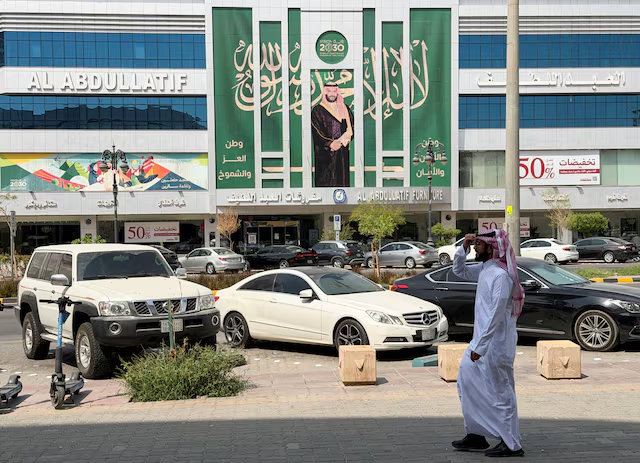
The significance extends beyond immediate physical damage. Saudi Arabia has invested heavily in presenting itself as a secure destination for international capital, tourism, technology and large-scale infrastructure projects. Attacks on prominent facilities can undermine that image even when the direct economic losses remain uncertain.
The pressure is particularly relevant to Vision 2030, the kingdom’s long-term programme to diversify economic activity, develop new industries and reduce dependence on oil revenues.
Investor confidence is a critical component of that agenda. Persistent security threats can increase the perceived risk of projects, complicate business travel and encourage companies to reconsider their exposure to the region.
Saudi Arabia has experienced similar vulnerabilities before. In September 2019, attacks on Aramco facilities temporarily disrupted a substantial share of global oil production, demonstrating how strikes on energy infrastructure can have consequences well beyond the immediate location.
Reuters cited regional sources and analysts who said Iran and the Houthis may be seeking to raise the economic and political costs of US pressure on Tehran by targeting a strategically important American partner.
Iran has faced mounting economic and military pressure during the wider conflict. Disrupting Saudi stability could increase the costs for Washington and its regional partners while giving the Houthis additional leverage in negotiations over Yemen.
However, the relationship requires careful qualification. The United States considers the Houthis dependent on Iranian political, financial and military support, but the movement has its own objectives and has denied acting at Tehran’s direction.
Houthi spokesperson Mohammed Abdulsalam told Reuters that the group’s demands were centred on longstanding humanitarian issues. These include lifting restrictions on Yemeni ports and airports, easing economic restrictions and ensuring that public-sector salaries are paid from Yemen’s own resources.
The group’s broader demands, as described by Reuters sources, include an end to Saudi military operations, regular flights to Iran, war compensation and an end to Riyadh’s support for Yemen’s internationally recognised government.
Those demands would have significant political implications for Yemen and could consolidate Houthi control over territory the movement already holds.
Saudi leaders must weigh the risks of escalation against the consequences of allowing repeated attacks to continue.
Abdulaziz Sager, chairman of the Saudi-based Gulf Research Center, told Reuters that Saudi leaders had reached a point where they saw military pressure as their only viable option. Other analysts warned that a sustained campaign might not deliver a decisive outcome.
The Houthis have demonstrated an ability to use drones and missiles against targets far from Yemen. Their position near the Bab el-Mandeb Strait, a strategic passage linking the Red Sea to the Gulf of Aden, also gives the conflict a maritime dimension.
The imbalance in economic exposure is central to the strategy described by analysts. Saudi Arabia has valuable infrastructure, major energy assets and an ambitious investment programme to protect. The Houthis, by contrast, operate with a different economic and military cost structure, potentially allowing them to sustain disruption without facing equivalent losses.
That asymmetry does not guarantee Houthi success. It does, however, complicate any strategy based primarily on military retaliation.
The current escalation threatens to undermine a Saudi-backed peace roadmap developed in 2023, which offered a potential path towards political arrangements and reconstruction funding in Yemen.
According to Reuters, the roadmap envisaged Saudi assistance with public-sector salaries and rebuilding. The widening regional conflict has complicated those prospects as the Houthis deepen their alignment with Iran and military operations intensify.
A collapse of the peace process could deepen Yemen’s humanitarian crisis while drawing additional regional actors into the conflict. It could also make a negotiated settlement more difficult by hardening positions on both sides.
The Saudi government and Iran’s foreign ministry did not immediately respond to Reuters’ requests for comment at the time of publication. The Houthis rejected the claim that their campaign was being directed by Iran.
The implications extend beyond Saudi Arabia and Yemen. A broader conflict could threaten energy infrastructure, maritime routes and investor confidence across the Gulf, while increasing the risk of disruption to international trade.
The Strait of Hormuz and the Bab el-Mandeb Strait are strategically important to global energy and shipping networks. Any sustained disruption around these waterways could raise transport costs, complicate supply chains and add to volatility in oil markets.
The political consequences could also reshape regional security arrangements. Reuters cited analysts who argued that Gulf cooperation, particularly between Saudi Arabia and the United Arab Emirates, would be essential to managing the threat. Yet regional partners do not always share the same priorities in Yemen, making coordination difficult.
For Saudi Arabia, the central challenge is no longer solely how to defend individual facilities. It is how to protect the economic transformation agenda while avoiding a conflict that could consume the resources and stability required to deliver it.
The attacks demonstrate how economic infrastructure can become a pressure point in geopolitical confrontation. Whether the crisis leads to renewed negotiations or a wider military campaign will depend on the calculations of Riyadh, Tehran, the Houthis and Washington.
Sources
