




Albania’s student protests escalate as Edi Rama rejects calls to resign
Six days of demonstrations over alleged corruption, unemployment and education standards have intensified clashes in Tirana, putting Albania’s political stability and EU accession ambitions under renewed scrutiny.
Albanian Prime Minister Edi Rama has rejected calls to resign as student-led anti-government protests entered their sixth consecutive day, with clashes between demonstrators and police highlighting growing public discontent over governance, employment prospects and education.
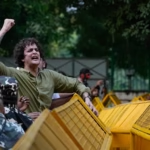
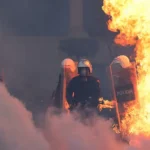
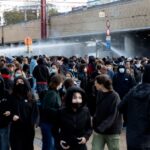
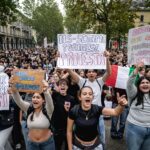
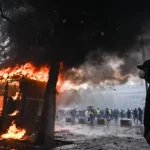
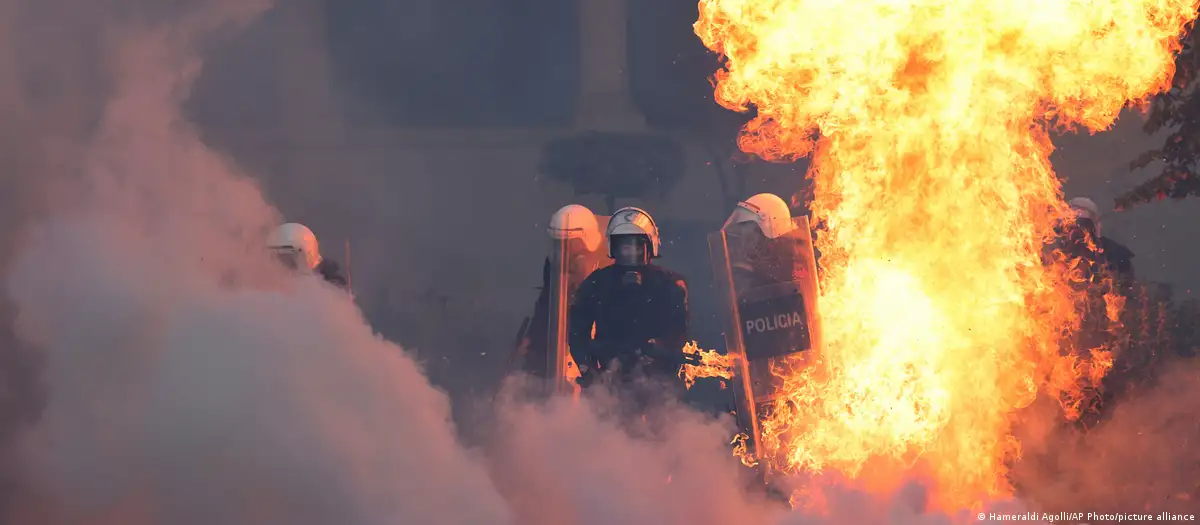
According to a report by Deutsche Welle (DW), citing Reuters and AFP, demonstrators gathered outside Albania’s Education Ministry in the capital, Tirana, on Sunday, chanting “Rama, resign!” Some protesters threw rocks at riot police, who responded with tear gas, water cannon and rubber bullets. Earlier confrontations also involved fireworks and petrol bombs.
The protests have spread beyond the capital, creating a political challenge for Rama’s government at a time when Albania is seeking to advance its ambition of joining the European Union.
Rama has ruled out stepping down, arguing that governments should be changed through elections rather than street demonstrations. In a live address on Facebook, he said the protests were challenging Albania’s European path rather than his government’s authority.
He also alleged that the demonstrations were the “work of an outside hand”, although he did not provide further details in the remarks cited by DW.
The prime minister’s response places the country’s EU ambitions at the centre of the political dispute. Albania is among several Western Balkan countries seeking EU membership, with 2030 cited as an accession goal.
However, protesters’ demands reflect domestic concerns that extend beyond the question of European integration. Alleged government corruption, unemployment, education costs and poor university conditions have contributed to public frustration, according to DW’s reporting on the demonstrations.
Hundreds of demonstrators gathered outside the Education Ministry on Sunday, continuing a movement that has brought students and other protesters into the streets over the past week.
Police used crowd-control measures as confrontations escalated. The clashes followed earlier demonstrations in which a fire broke out at the Education Ministry, according to a separate DW report published on 14 October.
The repeated confrontations raise questions about how the authorities will manage continued demonstrations while protecting the right to peaceful protest. The use of force against demonstrators, particularly where students are involved, may also intensify scrutiny of the government’s response.
The available report does not establish the full number of people injured or detained during the latest clashes, nor does it provide a comprehensive account of the protests outside Tirana.
The European Commission condemned the use of violence in Tirana and other Albanian cities on Sunday, while welcoming the Albanian authorities’ commitment to protecting the right to protest, DW reported.
The EU faces a delicate balance. It has an interest in Albania’s political stability and progress towards membership, but accession also involves expectations concerning democratic institutions, the rule of law and fundamental rights.
Continued unrest could complicate the government’s efforts to present Albania as a stable candidate for membership. At the same time, the political significance of the protests will depend on whether the authorities address the underlying grievances and ensure that demonstrators can exercise their rights without disproportionate force.
Rama’s refusal to resign suggests that the immediate confrontation is unlikely to be resolved simply by the protests continuing. His position is that electoral processes, rather than demonstrations, determine who governs.
For the protesters, however, the demonstrations provide a means of expressing dissatisfaction with issues they believe have not been adequately addressed through existing political channels.
The movement’s longer-term impact will depend on its ability to sustain public participation, maintain coordination and translate its demands into political pressure or policy changes. The government’s response—particularly on corruption concerns, education and employment—will also shape whether the unrest subsides or deepens.
Albania’s challenge is therefore twofold: managing public demonstrations without undermining civil liberties, while addressing the domestic concerns fuelling the protests. Its progress towards EU membership will be judged not only by its declared ambitions but also by how effectively its institutions respond to public dissent.
Sources
- Deutsche Welle — Albania’s Prime Minister Edi Rama ignores calls to resign
- Deutsche Welle — Can Albania’s student protests bring political change?
- Deutsche Welle — Albania: Fire at Education Ministry as students protest
s
