
















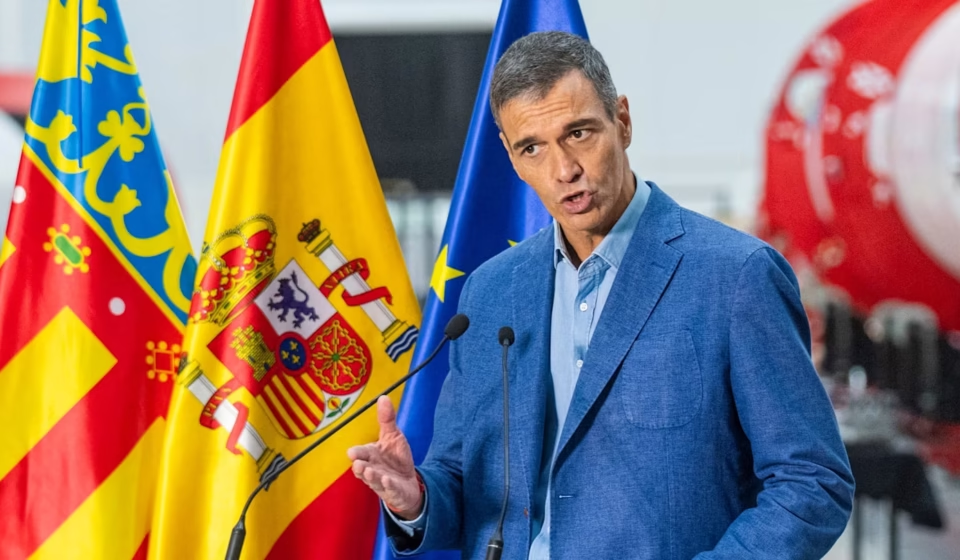
Sánchez bets on housing, warning about the far right while polls favour right
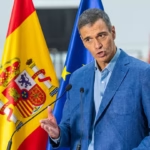
In his El País interview, Prime Minister Pedro Sánchez framed the November 29 election as a choice between the past moving forward and Spain moving forward. He called the vote at the start of October after parliament rejected his government’s housing decrees. The interview is a campaign document, so most of it is argument rather than reporting. What can be checked shows a mixed record: some of his points are well supported, some are one-sided, and some are claims I couldn’t verify.
The political backdrop is the least disputed part. Polls show the Popular Party (PP) leading and Vox rising. The most recent CIS survey, conducted October 22 to 24, put the PP at 32.9%, with its lead over the Socialists narrowed from 9.1 to 7.1 points. SocioMétrica has the PP at 32.6% against 26.2% for the PSOE, and projects 205 seats for the PP and Vox together, 29 above an absolute majority. Reuters reported that two earlier polls also pointed to a combined PP–Vox majority. The interviewer said the right leads by up to 15 points. I could not find that figure in the polls I checked, which show a PP lead over the PSOE of roughly 6 to 9 points, so the 15 may refer to the combined right-wing bloc. Sánchez’s answer, that pollsters have been wrong before, has some basis: in 2023 the PP won the most seats but fell short of a majority and Sánchez was reinstated.
On the economy and housing, his central claims are partly supported. Inflation is 4.9%, as the interviewer said: the INE confirmed that figure for September, the highest since February 2023, and the October flash estimate held steady. Sánchez links it to the Iran war, which fits the fuel-price driver reported in September. The housing protests are also real. The unions called a general strike for November 11, and it is the first jointly backed by Spain’s two largest unions in 14 years. His claims that one million homes were built under his government, with 13% social housing, that rents fell 5% in Barcelona, and that the opposition blocked his decree four times are plausible but unchecked. His argument that the PP, Vox and Junts voted down his measures is consistent with the defeat that triggered the election.
The Ceuta answers are where the record is least comfortable for him. About 72,000 people crossed into the exclave on July 30 and 31, and he told parliament in September the death toll was 141, although neither his office nor the interior ministry explained how that figure was reached, according to the AP. Earlier estimates were lower, at 96. In the interview he said no security service anticipated the scale. But on September 3 he also acknowledged that Moroccan police “allowed the border to be crossed” for ten hours, and a leaked police report alleged “total permissiveness” by Moroccan forces. He told El País he cannot escalate diplomatically on “conjecture,” which is consistent with his refusal to say Morocco orchestrated it, since he has said there is no “solid proof.” Both positions can be true at once, but the interview does not resolve why 90% of Spaniards, according to El País’s own survey, believe Morocco was behind it. His claim that irregular arrivals have fallen by 70% is unverified.
The most contested legal point is the Grandchildren Law. The Supreme Court suspended the voting rights of 163,020 people who obtained citizenship under the law, and it confirmed the suspension for November 29. The Constitutional Court then rejected the Ombudsman’s appeal. Sánchez says the government will comply but disagrees, and that doubts about the vote reflect “lies and hoaxes” from the far-right international. That describes how the PP and Vox have used the issue, but the court’s concern was the legality of how the registry was expanded. One report notes the debate is about “the legality and reliability of registrations, rather than evidence that votes have been manipulated.” So both sides are arguing different things: Sánchez about political motives, the court about legal eligibility.
The corruption and personal questions are the part to read most carefully. He named former minister Ábalos’s corruption as his biggest mistake, said he had asked for forgiveness and cooperated with the courts, and described the cases against his brother and his wife as attacks on relatives. He declined to say whether he would call on Zapatero to return gifts, said his party has treated the Leire Díez case as a matter of “legal strategies,” and said a pardon for the former chief prosecutor will be decided once the procedure ends. I did not independently verify these cases beyond what he said, and the interview presents his side. Readers should check court records for each.
The analytical point is that Sánchez is running on the strongest ground he has, social policy and economic growth, while trying to shift attention away from Ceuta, corruption and the polls. His warning about a PP–Vox government is a legitimate campaign argument, and it is also the only route for a smaller PSOE to rally the left. The train crash two days later added a new test. What the interview shows is a leader who expects to be asked about trust.
What is established and what is not: the election date, the poll lead, inflation, the general strike, the Ceuta crossing and the Supreme Court suspension are documented. His housing statistics, the 70% fall in arrivals and the details of the legal cases are claims from one side. This is a news summary, not voting advice.
Sources: El País (interview, October 26), Reuters via The Star, The Local Spain (polls), Majorca Daily Bulletin (DYM), Reuters factbox, Helsinki Times, RTT News (inflation), dpa-AFX (October flash), Al Jazeera (general strike), AP via ABC News (Ceuta), Hespress/AFP, Africanews, ARA (Grandchildren Law), Catalan News and Euro Weekly News.
