













China’s CP fills CC seats outside usual order, record numbers expelled
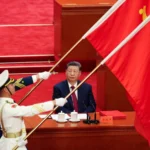
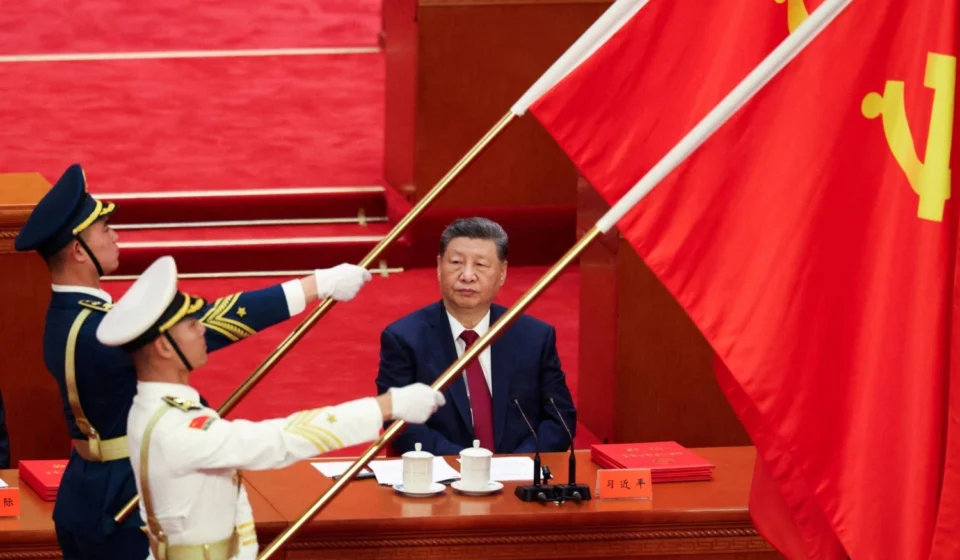
China’s ruling Communist Party (CP) has just held one of its most closely watched meetings of the year, and the details suggest that Xi Jinping’s campaign against corruption and disloyalty is changing how the party itself runs.
At the fifth plenum of the 20th Central Committee, which ended on Thursday, officials were expelled in record numbers, attendance hit a low, and replacements were chosen in a way that broke with a long-standing rule. For readers outside China, the meeting is a rare window into how the party manages power ahead of its next five-yearly congress.
The Central Committee (CC) is the party’s top governing body, with 205 full members and a larger group of alternate members who wait to replace anyone who leaves. It meets in a “plenum,” a closed-door session held about once a year, and the real decisions are rarely explained in public. According to the official communique, the fifth plenum ran from October 26 to 29, with 162 full members and 117 alternates attending. That is 79% of full members, and 279 people in total, compared with 315 at the fourth plenum last October. Analysts quoted by the Taipei Times say it is the first time in Xi’s 14 years in charge that plenum attendance has fallen below 300, and one expert described the turnout as a record low in the post-Mao era.
Behind the empty seats is a purge. The South China Morning Post says the communique confirmed that 24 full members and 11 alternates were expelled, the highest number in recent years. Other outlets, including the Press Trust of India and the Taipei Times, report a record 33 expulsions, and say 16 of them came from the military. The numbers differ, and I could not see the full list, so the safest reading is that more than 30 members were removed and the exact tally is unsettled. Taiwanese and Hong Kong media had predicted roughly 30 to 45 expulsions before the meeting.
The new part is who replaced them. Normally, empty seats are filled by alternate members in a fixed order, set by the votes they received at the last party congress and, in a tie, by the number of strokes in their family names. This week, five alternates were skipped, according to the SCMP. Ten were promoted to full membership, including regional leaders such as Shanxi governor Lu Dongliang and Zhejiang governor Liu Jie, both seen as candidates for higher office. Those passed over included Cong Liang, director of a State Council research centre, and two lieutenant generals from the People’s Armed Police. None was shown on state television at the meeting, and no reasons were given. The SCMP says it understands Cong has been in poor health for two years, which I could not confirm.
The SCMP argues this is part of a trend. It traces the first skipped promotion to the 2022 plenum, and says seven more officials missed out last year. Some of those overlooked in 2025 have since been expelled or investigated, while others still appear in public and were moved to ceremonial posts. The paper notes that most of those passed over had either fallen out of favour or were already under investigation, which means a skipped promotion can be an early warning. It also points out that only 10 of the 24 vacated full seats were filled, and that the last comparable case, in which a seat stayed empty for almost two years, followed a death.
There are two ways to read this. One is that Xi is using the discretion to reward loyal regional officials and sideline anyone he distrusts, with the party tightening its control ahead of the 21st National Congress, which the communique says will be held in the second half of 2027. The other is that the party’s rule-based succession system is wearing down, because the purge has been so wide that few suitable candidates remain, as some analysts told the Taipei Times. The meeting also promoted Gen. Zhang Shengmin, the military’s discipline chief and a vice chairman of the Central Military Commission, to the Politburo, according to the Taipei Times. That shows how much the military purge is shaping the leadership, since two of its most senior figures were removed last year. The meeting’s official focus was discipline and anti-corruption work, which fits both readings.
What is known and what is not: the dates, attendance figures and the promotion of 10 alternates come from the communique and are reported by several outlets. The exact number expelled, the reasons for skipping five alternates and whether this signals a lasting change are not known. Official explanations are unlikely, so much of what is said about motives is analysis.
Sources: South China Morning Post, China.org.cn (Xinhua, communique), Beijing Review (communique), Chinese embassy in Sri Lanka (communique), PTI via ETV Bharat, Taipei Times (expulsions), Taipei Times (extended rule), ANI via The Tribune, Fakti.bg, The Standard (preview), Herald Business (Ming Pao) and SBS News Korea.
