


















Switzerland’s “Brexit moment”: population cap referendum raises EU collision risk
TLE DESK: Switzerland is voting in a closely watched referendum on Sunday that could cap the country’s population at 10 million—an initiative widely seen as a potential turning point in its relationship with the European Union.
The proposal asks voters whether Switzerland should formally limit population growth. If approved, it would be the first European country to impose a legal population ceiling. Switzerland currently has just over 9 million residents, up from about 8.3 million a decade ago, with more than a quarter of the population born abroad.
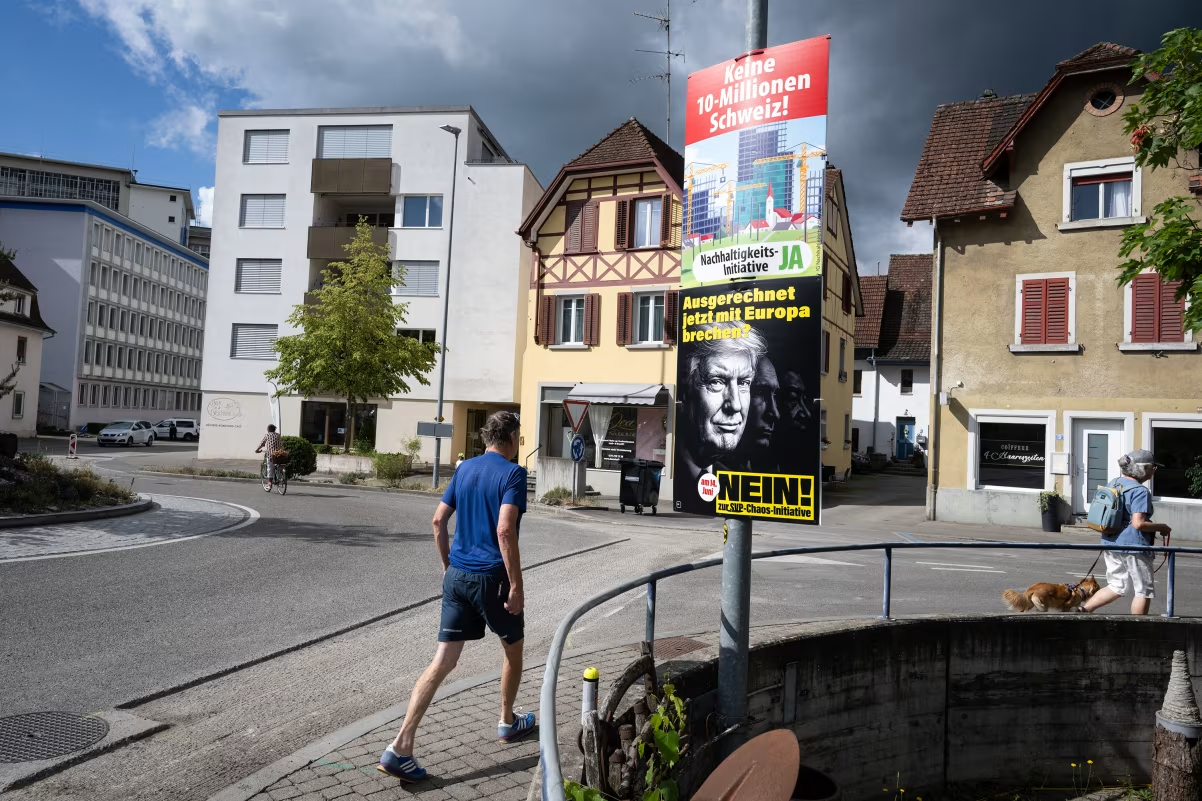
The initiative is led by the right-wing Swiss People’s Party (SVP), which argues that immigration-driven growth is straining housing, infrastructure, and public services. The party frames the measure as a response to what it calls “uncontrolled immigration” and declining social cohesion.
Opponents—including major business groups and much of Switzerland’s political establishment—warn that the cap would destabilize the economy and trigger a constitutional clash with EU agreements, particularly the free movement framework that underpins Swiss access to European labor markets.
Under the proposed mechanism, the government would first restrict new entries, including asylum seekers and family reunification cases, once the population hits 9.5 million. If the population reaches 10 million, Switzerland would be forced to terminate its free-movement agreement with the EU.
Economists and industry groups argue the consequences could be severe. Switzerland relies heavily on foreign labor in healthcare, hospitality, and high-skill sectors, with nearly half of its foreign residents coming from neighboring EU states such as Germany, Italy, Portugal, and France. Business associations warn the policy could intensify labor shortages and raise costs across key industries.
The debate has become increasingly political, with critics accusing the SVP of exploiting public anxiety over immigration. Some campaign messaging has drawn controversy for linking migration to cultural and security concerns, further polarizing an already tight referendum race.
Recent polling suggests a near-deadlock, with slight momentum toward the “No” camp, but the outcome remains uncertain.
Swiss officials have warned that a “Yes” vote could trigger what they describe as Switzerland’s “Brexit moment,” forcing a strategic break with the EU framework that has underpinned its economic model for two decades.