



















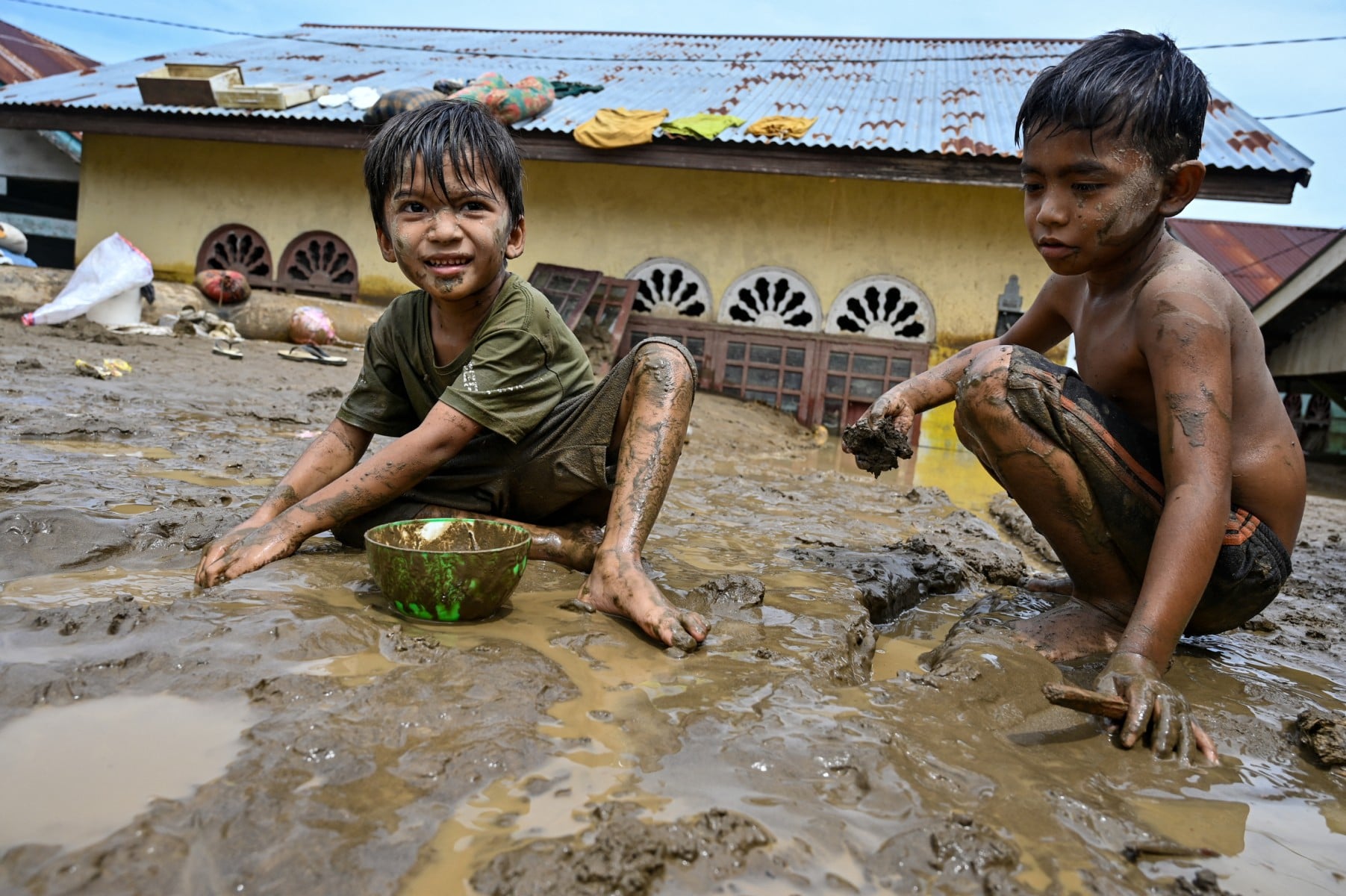
Nearly half the world’s children exposed to three or more climate risks: UNICEF
TLE DESK: More than one billion children face at least three overlapping climate hazards, UNICEF warned, highlighting the disproportionate impact in certain regions. The UN agency cross-referenced the locations of the world’s roughly 2.4 billion children with the geographic spread of eight major climate risks including coastal flooding, river flooding, drought, tropical storms, heat waves, extreme heat, wildfires and sandstorms.
The report focuses on the 1.1 billion children exposed to at least three risks, with the most common combination — drought, extreme heat above 35 degrees Celsius and heat waves — affecting 296 million children, including 74 million in Nigeria, 34 million in Pakistan and 32 million in India. The number in this category has risen sharply over the past two decades. Almost all children, some 2.3 billion, face at least one risk, two billion face at least two, and 364 million face at least four. Of the 123,000 exposed to seven or more hazards, around 46,000 are in Myanmar.
“Children are at the forefront of the impact of climate change,” said UNICEF chief Catherine Russell. Hot spots are concentrated in Sub-Saharan Africa and parts of South Asia. Countries with large child populations such as Bangladesh, India, Nigeria and Pakistan top the list in absolute numbers, while nations in the Sahel region show the highest proportions, often worsened by limited government capacity. In Chad, more than 95 percent of children are exposed to at least three hazards.
Thirty-nine island states also face heightened vulnerability due to limited resources and isolation. No country is entirely spared, though small pockets in the northern hemisphere, particularly parts of Scandinavia, show lower exposure to these specific risks. The report notes that children in those areas may still face other climate threats not covered in the study.