


















Hundreds of thousands in Nepal face continuing threat from floods
Hundreds of thousands of people in Nepal remain exposed to potentially catastrophic floods originating in the country’s high mountain regions, highlighting the growing challenge of protecting communities as warming temperatures destabilise Himalayan glaciers, ice and rocky slopes. The danger persists even as authorities shift from rescue operations to reconstruction after August’s devastating floods.
NBC News reported Thursday, citing research on downstream populations and glacial flood hazards, that around 294,000 people live in areas facing extreme flood risk, with about 108,000 living downstream of glacial lakes where ice could fail and trigger sudden surges of water. Researchers warned that the actual exposure could be higher because detailed flood-hazard mapping remains unavailable across much of Nepal.
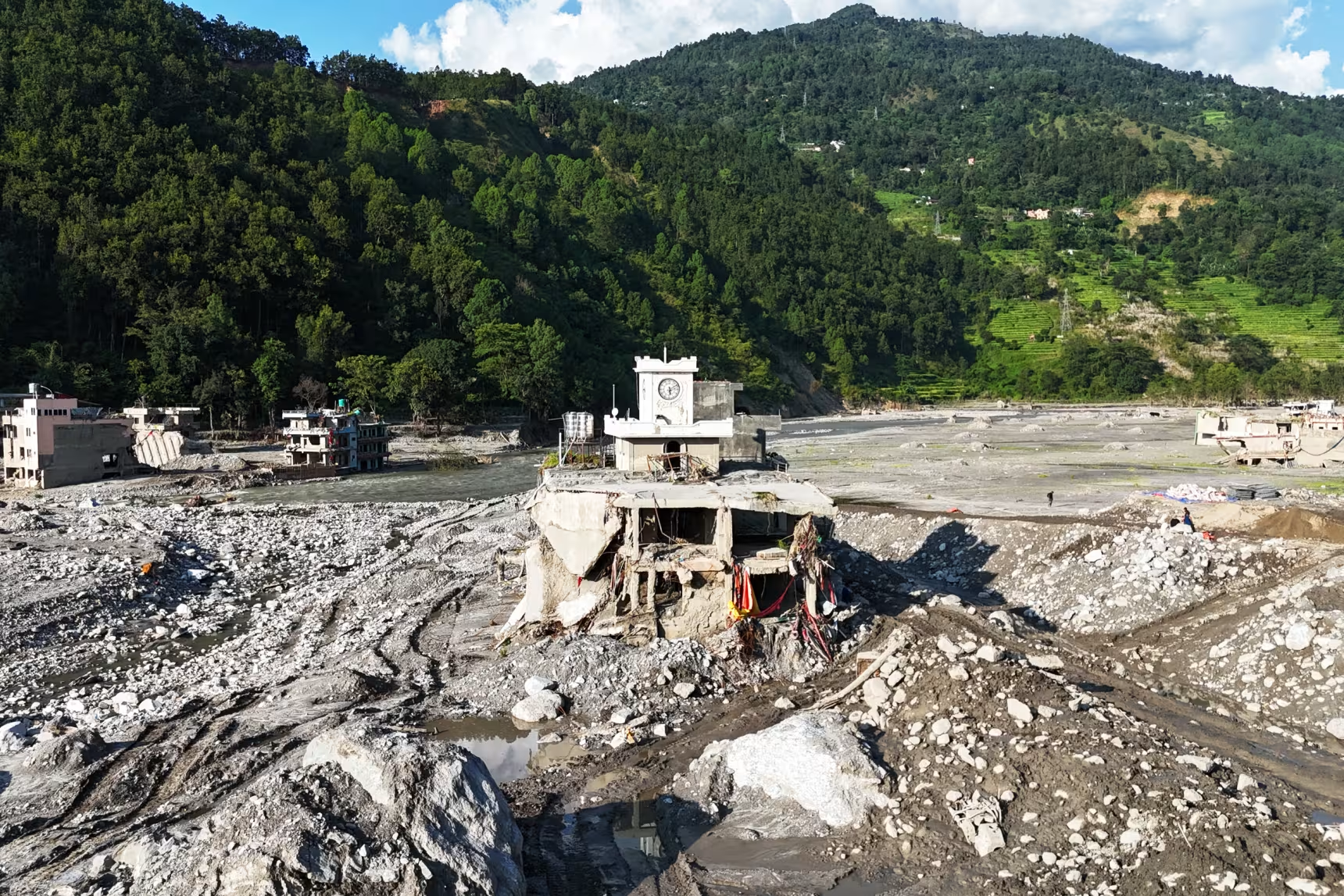
The findings underscore the vulnerability of settlements situated along rivers draining the Himalayas. When rock, ice or unstable mountain slopes collapse, enormous volumes of water and debris can race downstream, destroying homes, roads, bridges and essential infrastructure with little time for evacuation.
Nepal experienced the consequences on August 26, when a major collapse involving rock and glacier material on Langtang Lirung triggered a destructive cascade of water, ice and debris. The flooding travelled far downstream, devastating communities and damaging infrastructure. Researchers say the disaster cannot be explained by a single weather event: geological instability, glacier retreat, permafrost thaw and rising temperatures combined to create the conditions for the catastrophe.
A rapid analysis by World Weather Attribution identified rapid warming, thinning glaciers and permafrost degradation as important contributing factors. Scientists have cautioned that the precise contribution of climate change to the individual collapse remains difficult to quantify, but warming is making high-mountain environments increasingly unstable.
The human toll has been immense. The Associated Press reported that Nepal had recovered at least 1,455 bodies after the August disaster, while 5,285 people remained missing in the latest figures it cited. The government has ended search-and-rescue operations and shifted towards rehabilitation and reconstruction, leaving families still waiting for information about missing relatives.
The financial burden is also substantial. Nepal has estimated that reconstruction will cost nearly $4.8 billion, placing pressure on a country with limited resources to rebuild damaged communities while investing in measures to prevent another disaster.
Authorities have begun planning preventive action. Reuters reported that Nepal intends to drain four high-risk glacial lakes—Thulagi, Lower Barun, Lumding Tsho and Hongu II—by mid-July 2027. The proposed $50 million initiative is expected to include drainage infrastructure, monitoring sensors, flood forecasting and community-resilience measures. The wider project could take several years to complete.
Yet engineering projects alone cannot eliminate the danger. Communities need reliable early-warning systems, clearly mapped evacuation routes, accessible risk information and coordinated planning across river basins. These measures are particularly important where settlements lie far downstream from high-altitude hazards and where detailed risk assessments remain incomplete.
The threat also extends beyond Nepal. The Himalayan region crosses national boundaries, and floods, landslides and glacial-lake outbursts can affect interconnected river systems and communities across South Asia. Better monitoring and information-sharing between neighbouring countries are therefore essential to reducing the risk.
Nepal’s challenge is no longer limited to rebuilding after one devastating flood. It must also prepare for a future in which unstable mountain environments may expose more people and infrastructure to sudden disasters. The number of people at risk, researchers warn, makes climate adaptation and disaster preparedness an urgent public-safety priority rather than a long-term environmental concern.
