



















Iran drives global executions to 44-year high, EU to abolish death penalty
Amnesty International recorded at least 2,707 executions worldwide in 2025, with Iran accounting for roughly four in five documented cases; EU raises concerns over drug-related capital punishment
Global executions rose by 78% in 2025, reaching their highest recorded level since 1981, as Iran carried out more executions than any other country for which reliable figures were available, according to Amnesty International. The findings have renewed pressure on governments to suspend capital punishment and strengthen safeguards against its use.
In a joint statement marking World Day against the Death Penalty on 10 October, the European Union and the Council of Europe called on countries that retain capital punishment to establish a moratorium and move towards abolition. They highlighted Iran’s exceptionally high execution tally and increases in several other countries, including Egypt, Kuwait, Saudi Arabia, Singapore and Yemen.
Amnesty International’s annual report, published in May 2026, recorded at least 2,707 executions in 17 countries during 2025, compared with at least 1,518 in 2024. Iran accounted for at least 2,159 executions—more than double its recorded total for the previous year and approximately 80% of the worldwide figure documented by the organisation.
The figures represent a documented minimum, not a complete global total. Amnesty excludes thousands of executions it believes took place in China, where the figures remain classified, and says information from some other countries is also incomplete.
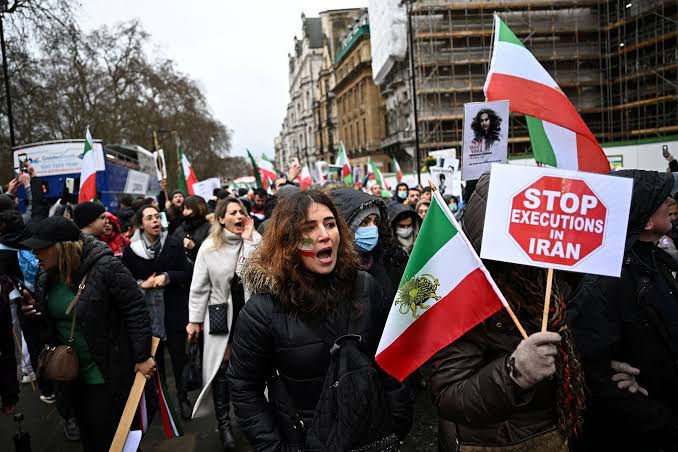
Iran’s execution figures have placed the country at the centre of international criticism over capital punishment. Amnesty said the 2025 total was the highest it had recorded for Iran since 1981, reflecting a sharp increase in the state’s use of the death penalty.
Human rights groups have also raised concerns about executions in Iran linked to drug offences, political charges and cases involving alleged national-security violations. Such cases have drawn scrutiny over due process, access to legal representation and the treatment of defendants.
Separately, the Human Rights Activists News Agency (HRANA) has reported deaths during Iran’s protests spanning late 2025 and early 2026. Those figures concern a different reporting period and should not be conflated with Amnesty’s annual execution tally. Claims about protest-related deaths require careful attribution and independent corroboration, particularly where access to reliable information is restricted.
The EU’s condemnation reflects a broader concern that capital punishment remains in use despite international pressure to restrict it. However, execution totals alone do not establish the circumstances or legality of every individual case.
The EU and Council of Europe also criticised the use of the death penalty for drug production and trafficking, arguing that such offences do not meet the international human rights standard of “most serious crimes” for which capital punishment may be retained.
Amnesty’s 2025 report documented at least 1,257 executions for drug-related offences in five countries: China, Iran, Kuwait, Saudi Arabia and Singapore. Iran accounted for at least 998 of those cases, while Saudi Arabia recorded at least 240. These figures are minimums and exclude countries where reliable offence-specific data were unavailable.
The findings raise questions about the use of capital punishment as a response to drug trafficking. Severe penalties have not, by themselves, demonstrated that governments can eliminate illicit drug markets, while the irreversible nature of executions heightens concerns about wrongful convictions and disproportionate punishment.
Iraq is another country where drug-related offences can carry the death penalty. Iraqi authorities have reported death sentences in such cases, although the number of sentences must be distinguished from the number of executions actually carried out.
The EU welcomed Lebanon’s decision in August 2026 to abolish the death penalty, a significant legal change in a region where several countries continue to retain capital punishment.
Reuters reported that Lebanon’s parliament approved the abolition of the penalty, replacing existing death sentences with life imprisonment. The country had already observed a de facto moratorium on executions since 2004, although courts continued to issue death sentences.
Lebanon’s decision demonstrates that legal abolition remains possible in the Middle East. It does not, however, indicate that other governments in the region have adopted the same position.
The latest figures reveal a striking contrast: the recorded number of executions has increased sharply, even as many countries continue to move towards abolition. Amnesty said 113 countries had abolished the death penalty in law by the end of 2025, while 145 had abolished it either in law or in practice.
The EU’s latest appeal therefore faces a persistent challenge. Governments that retain capital punishment continue to defend it as a tool of criminal justice, while abolitionists argue that it is irreversible, can be applied unfairly and conflicts with the protection of the right to life.
The immediate concern is the scale of executions in countries such as Iran and Saudi Arabia, alongside the use of capital punishment for drug offences. The longer-term question is whether international pressure and domestic legal reforms can reverse the latest rise in executions.
Sources: Amnesty International; European Union and Council of Europe; Reuters.
