


















Israel’s election ended in deadlock; seat arithmetic shows why each way out hard
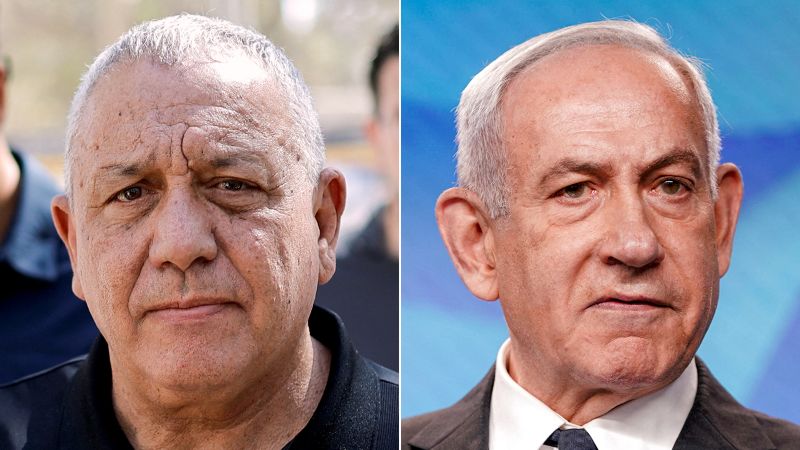
Israel’s Central Elections Committee released final results on Friday, and they match the projections reported earlier in the week. Prime Minister Benjamin Netanyahu’s Likud-led bloc won 53 seats, the opposition bloc led by Gadi Eisenkot’s Yashar party won 48, and the two Arab parties won 19, according to IANS, whose report says they are the Joint List with 12 and Ra’am with 7. A majority needs 61 of the 120 seats.
The results are due to go to President Isaac Herzog on November 4, after the committee finishes checking complaints, and he will then consult party leaders. CNN says the parties will have up to 12 weeks to form a government before the country returns to the polls, and the 12 weeks fits Israeli law, which allows 28 days plus a possible 14-day extension for the first candidate, 28 days for a second and 14 days for a third.
The numbers explain why the first scenario in CNN’s list, an opposition government, is harder than it looks. The opposition bloc and the Arab parties add up to 67 seats, as Reuters notes. But the opposition bloc includes Naftali Bennett’s Together party (about 12 seats, according to one tally of the committee’s data) and Avigdor Liberman’s Yisrael Beytenu (about 7). Without those 19 seats, Yashar and the Democrats plus the Arab parties reach only about 48. CNN reports that Bennett and Liberman oppose any government that depends on the Arab parties, either as members or as outside supporters of a minority government. So the route that looks surest on paper is blocked by the opposition’s own right flank. Reuters adds that only the Democrats have so far called for including the Arab parties, while both Arab parties have signalled they would cooperate with Eisenkot’s camp. Eisenkot himself has been described by the AP as open, with conditions, to working with them. The only precedent is the 2021 coalition that included Ra’am and collapsed after about a year.
The unity government is the second option, and sources contradict each other on it. CNN says Eisenkot has ruled out sitting with Netanyahu, and that doing so would be seen by many voters as a betrayal. CNN also reports that Netanyahu is believed willing to drop far-right minister Itamar Ben-Gvir but not Bezalel Smotrich or the ultra-Orthodox parties. A RedState piece, citing the committee’s data, says Eisenkot is “expected to be willing” to join a unity government, which contradicts CNN and the other reporting. Treat that claim with caution until Eisenkot says so himself.
The third scenario, defectors, depends on a simple gap. Netanyahu’s bloc is eight seats short. All four opposition bloc leaders, Eisenkot, Bennett, Liberman and Yair Golan, have said they will not sit with him, so he would need eight individual lawmakers to cross over, which CNN calls a high bar.
The fourth scenario, another election, is not only a fallback but, in CNN’s reading, a structural advantage for Netanyahu. He remains caretaker prime minister throughout. If Herzog asks Eisenkot first, which CNN expects because the Arab parties are expected to back him, and Eisenkot fails, the mandate would likely pass to Netanyahu. If he fails too, a repeat election would come no earlier than next spring, with Netanyahu staying in office meanwhile. It would be the seventh election in eight years. The AP notes that Herzog is not required to pick the biggest party’s leader, and that he and Eisenkot both want to avoid a repeat vote.
Two other developments could change the picture. The first is the fraud claim: Likud has alleged, without public evidence according to the AP, that Arab-led parties stole votes, while the committee has described irregularities as low. The second is the Shin Bet inquiry into foreign interference requested by the committee chief, with findings due within the week. Either could shape how parties justify cooperating or refusing to cooperate with Arab-led parties, and Netanyahu has already used the Shin Bet request to argue against it.
What is established and what is not: the final seat counts, the November 4 handover and the legal timetable are documented. Which leader Herzog picks first, whether Bennett or Liberman soften their opposition to Arab-party support, and whether Eisenkot’s position on unity changes are unknown. The seat figures for individual parties come from a partial source, so check the committee’s official release for exact numbers.
Sources: CNN (Israel deadlock explainer), IANS, The Hans India, Reuters via Merimbula News Weekly, Reuters via Queanbeyan Age, Reuters via Goulburn Post, AP via ITV News, AP via WRAL and RedState.
