















India’s voter-list protests grow, challenge removal of 130mn names
Across India, opposition parties, students and a youth-led online movement are protesting against a nationwide revision of the voter rolls that has removed about 130 million names, more than the population of Japan.
They want the old lists restored and the head of the Election Commission, Gyanesh Kumar, to resign. Prime Minister Narendra Modi’s government and the commission reject the claim that the exercise is rigged. For readers outside India, this is a fight over who counts as a voter in the world’s largest democracy, and an opinion piece by Nabiya Khan in Al Jazeera adds a sharper question: whom the protest is really defending.
The exercise is called the Special Intensive Revision, or SIR. It began in the state of Bihar in June 2025 and has since reached most states and territories. It is a house-to-house check in which voters must prove they belong on the list, often with old documents, and the Election Commission says its aim is to remove people who have died, moved away, appear twice or cannot be traced. The numbers are contested in a specific way. Reuters, AFP and AP describe about 130 million names as removed. The commission says that figure covers voters marked absent, shifted, dead or duplicate at the draft stage, not final deletions, and that wrongly removed voters can re-enrol with a Form 6. The BJP, citing commission data, gives a breakdown of about 28 million dead, 63 million who relocated, 10 million duplicates and 30 million who could not be traced. The opposition says the numbers show mass disenfranchisement that favours the ruling party, a charge both the commission and the BJP deny.
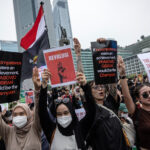
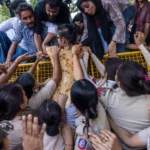
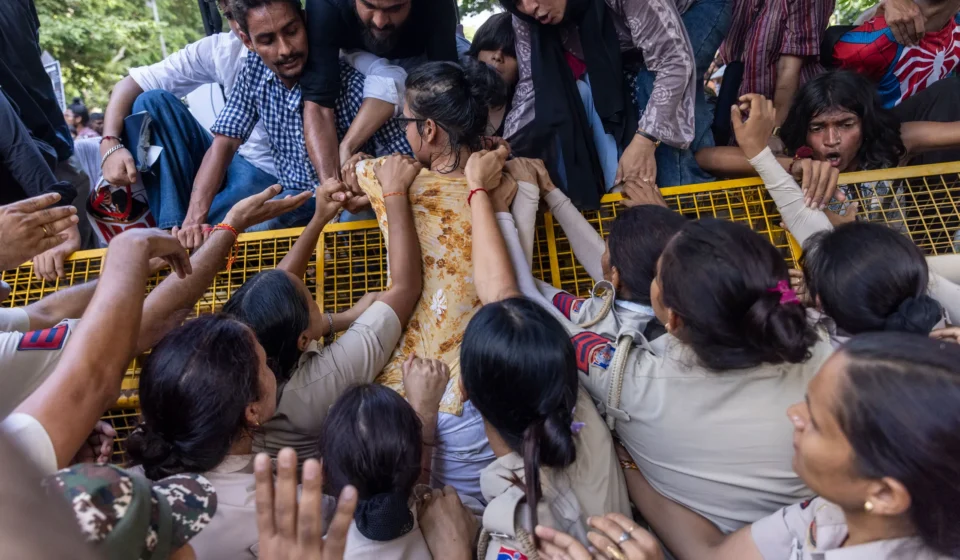
The protests have escalated through October. Opposition parties led by Rahul Gandhi marched to the Election Commission and to the Supreme Court, and Gandhi was briefly detained. A separate youth movement that calls itself the Cockroach Janta Party has held near-daily rallies, and police have detained hundreds, including more than 100 at a march in Delhi on October 23. Two of its leaders, Ashutosh Ranka and Saurav Das, were held for days before a court ordered their release, and the Supreme Court has told authorities not to detain peaceful protesters illegally. The opposition’s INDIA alliance has scheduled a large rally in Delhi’s Ramlila Maidan for today, November 1, though I could not yet confirm how it went.
The courts are involved. The Supreme Court issued notice to the commission on October 16 over a plea by Gandhi and the INDIA bloc, and on October 28 it asked the commission to find a way to reach 4.7 million of Delhi’s 14.5 million voters whose names were struck, saying the right to vote cannot be lost just because a voter was absent. It also said it had not approved a modified version of Form 6 used for new voters. Those orders suggest judges share some of the concern, though they are not rulings on the whole exercise.
The opinion piece makes a different argument from the opposition’s. Khan, a researcher and PhD student, says the movement’s demands, such as removing the commission chief and restoring the old rolls, leave untouched the citizenship law that Muslims protested against in 2019. That law, the Citizenship Amendment Act, fast-tracks citizenship for persecuted members of six religious groups from three neighbouring countries and leaves out Muslims. She argues that the SIR works like a back-door national citizenship register, citing the commission’s own reasons for the Bihar revision, which listed “foreign illegal immigrants,” and statements by Home Minister Amit Shah about removing infiltrators. These are her interpretations, and the government says the revision only cleans voter lists.
The strongest evidence she offers is from West Bengal, and the main numbers check out. About 90.8 lakh (9.08 million) names were removed there, around 11.9% of the electorate, according to commission data, ahead of the April elections. Of these, 63.66 lakh were removed at the first stage as absent, shifted, dead or duplicate, and 27.16 lakh more were removed after judicial officers reviewed about 60 lakh voters flagged for “logical discrepancies,” such as mismatched parents’ names. Analyses by the Sabar Institute and civil-society groups estimate that 65% to 70% of those in the second stage were Muslim, against a share of about a quarter of the electorate. Khan’s figure for the second stage, 70%, sits at the top of that range, and her claim that most first-stage removals were Hindu matches the pattern of proportional removal that she describes, though I could not verify the booth-level count. Appeals have been slow: one report says 38.1 lakh appeals had been filed with only about a lakh decided by September, while a separate right-to-information reply says 75,339 of 82,000 decided appeals restored names, which suggests many removals were mistaken.
The first stage of the opposition’s argument and Khan’s critique are therefore not in conflict, but they point in different directions. If most removed voters are simply dead, moved or duplicated, the protest is about administration. If a large share are eligible citizens removed through discretionary checks that fall more heavily on one community, it becomes a question of discrimination. The evidence so far, especially from West Bengal, supports the second concern more than the government admits, but it does not show that the whole 130 million are wrongly removed.
The New Yorker’s piece “Inside India’s Cockroach Protests,” which I was asked to consider, was behind a paywall and only its headline and summary were available, so I did not use its contents.
What is known and what is not: the scale of the revision, the court orders, the detentions and the West Bengal figures are documented. How many of the 130 million are final deletions, how many will be restored, and what the rolls will look like when the final list is published are not known. This is a news summary, not an endorsement of any side.
Sources: Al Jazeera (Nabiya Khan opinion), Reuters via Tribune Pakistan, Reuters via The Star, AP via NY1, Channel 4 News, New Straits Times, National Herald, Kuwait Times (AFP), Kuwait Times (court order), Khaleej Times, Outlook India, The Hitavada, Asia News Network, Devdiscourse, Scroll.in (Sabar Institute), Scroll.in (West Bengal data), The Week, The Wire, National Herald (RTI reply), PUCL and The New Yorker.
