










Tehran presses Washington to reopen Strait of Hormuz
Iranian negotiators have left Qatar after talks with regional mediators, while a revised two-day proposal to restore shipping through the strategic waterway offers a possible diplomatic route out of the eight-month conflict. However, competing demands and threats of renewed military action continue to cloud prospects for a settlement.
Efforts to end the eight-month war between the United States and Iran remain uncertain, as Tehran awaits Washington’s response to a revised peace proposal aimed at reopening the Strait of Hormuz and ending the US naval blockade of Iranian ports. Although indirect negotiations involving Qatar and Pakistan have continued, no agreement has been announced, and both sides remain divided over the conditions for ending hostilities.
Iranian Foreign Ministry spokesperson Esmaeil Baqaei said on Monday that the next move rested with Washington, describing Tehran’s demands as clearly communicated and reasonable. Foreign Minister Abbas Araghchi separately said negotiations were proceeding intensively through mediators but that their outcome depended on the US administration’s willingness to pursue what he called rational diplomacy.
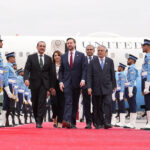
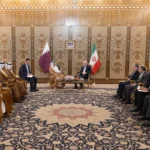
Iranian negotiators left Doha on Sunday after discussions with Qatari mediators. However, an official familiar with the talks told Reuters that their departure did not reflect a breakdown in negotiations. A draft proposal was being circulated, with the possibility of another meeting remaining open. Deputy Foreign Minister Kazem Gharibabadi had also travelled to Doha to facilitate the exchange of messages between Tehran and Washington.
The discussions are based on a seven-step proposal Iran originally presented in September. Tehran is seeking an end to the US naval blockade on its ports, the release of frozen Iranian financial assets, sanctions relief and a halt to hostilities across the region. In return, Iran has offered to reopen the Strait of Hormuz and resume negotiations on other outstanding issues, including its nuclear programme.
A significant change in Iran’s proposal concerns the timetable for restoring commercial shipping through the Strait of Hormuz. Araghchi said consultations involving Qatar and Pakistan had helped reduce the proposed implementation period from seven days to two.
Under the revised arrangement described by Iranian officials, the United States would take initial measures on the first day, while the strait would reopen to maritime traffic on the second day. The original proposal envisaged reopening the waterway on the sixth day, followed by further negotiations.
The proposal remains conditional on Washington meeting Tehran’s demands. Iran has not indicated that it is prepared to abandon its existing conditions, and there is no public confirmation that the US administration has accepted the revised timetable.
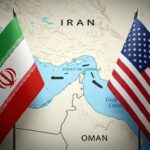
The Associated Press reported that the proposed arrangement would also involve shipping using a route agreed with Oman and operating under Iranian supervision. The details of how such an arrangement would work, particularly in relation to freedom of navigation and maritime security, remain unresolved.
US President Donald Trump has continued to signal that diplomacy remains possible while refusing to rule out further military action. Speaking on Sunday, he said the war would end soon, either through an agreement or by other means. He also suggested that the United States still had potential targets to address in Iran.
Trump said he had held a positive conversation with Israeli Prime Minister Benjamin Netanyahu about the conflict. However, reporting by Axios cited by CBS News indicated that Netanyahu was pressing for renewed US strikes, while Trump preferred to allow negotiations to continue.
The possibility of renewed attacks remains a major concern as the United States approaches its midterm elections on 3 November. Trump has indicated that Washington would not launch another attack before the vote, although he has left open the possibility of military action afterwards.
Iran has also warned that any renewed offensive would prompt a strong response. Its officials have said that Tehran is prepared to defend itself if diplomatic efforts fail.
The Strait of Hormuz remains a central point of contention because of its importance to international energy trade. Before the conflict, approximately one-fifth of global oil supplies passed through the waterway, which connects the Persian Gulf with the Gulf of Oman and the Arabian Sea.
Iran has sought to restrict shipping through the strait, while the United States has maintained a naval blockade on Iranian ports. The resulting uncertainty has increased risks for commercial vessels, shipping companies and energy traders.
On Sunday, Iran’s Islamic Revolutionary Guard Corps Navy said two oil tankers had exploded after hitting sea mines while travelling through what it described as an unauthorised route in the strait. Reuters reported the claim, which was carried by Iranian state media. The circumstances surrounding the incidents and the identities of the vessels were not independently established in the report.
Iranian state broadcaster IRIB separately claimed that 11 tankers had caught fire in or near the waterway over nine days. That figure has not been independently verified. The United Kingdom Maritime Trade Operations centre, meanwhile, reported 30 attacks on commercial vessels in the region during October, according to CBS News.
A separate incident involving a Qatari liquefied natural gas carrier has added to concerns. Nakilat, the vessel’s operator, said the LNG tanker had been struck by unidentified objects while travelling through Gulf waters. The crew were unharmed, and no environmental damage was reported.
The continuing security risks have consequences for freight costs, insurance premiums and energy prices. Reuters reported that oil prices fell by nearly 4 per cent on Monday as renewed diplomatic efforts raised hopes of a possible settlement. However, the decline does not eliminate the risk of further volatility if shipping disruption or military escalation resumes.
The conflict is also adding pressure to Iran’s domestic economy. First Vice-President Mohammad Reza Aref warned on Monday that the country could face natural gas shortages as winter approaches, urging households to conserve supplies.
Aref attributed the pressure to longstanding imbalances in the energy system and damage caused by the war. He also warned that consumers who failed to reduce consumption could face higher prices. Iran’s parliament speaker had previously called for a 10 per cent reduction in national gas consumption.
The warning highlights the economic challenges facing a country already weakened by years of international sanctions. Damage to infrastructure, restricted access to international markets and the costs of sustaining the conflict are adding to pressure on public finances and household living standards.
Regional governments are increasingly concerned about the consequences of renewed fighting. The United Arab Emirates has expressed support for diplomatic efforts while preparing for the possibility of further escalation.
Presidential adviser Anwar Gargash said at a security forum in Bahrain that the UAE hoped for a diplomatic breakthrough but was also preparing for the worst. He described the year as a turning point for regional security following Iranian attacks on Gulf countries.
China has also urged the parties to pursue a political settlement. Foreign Minister Wang Yi said on Monday that the Gulf region had reached a critical crossroads between war and peace. Beijing’s position reflects concern about the wider consequences of prolonged instability for energy supplies, trade and regional security.
For international markets, the immediate question is whether the revised proposal can produce an enforceable arrangement that restores safe passage through the Strait of Hormuz and reduces the threat of further military action. Even without a complete closure of the waterway, persistent uncertainty can raise transport and insurance costs and keep energy prices exposed to geopolitical developments.
The diplomatic process remains open, but the departure of Iranian negotiators from Doha has not yet produced a breakthrough. Tehran is waiting for Washington to respond to its conditions, while Trump continues to keep both negotiations and military action on the table. Whether the two sides can turn indirect discussions into a lasting agreement will have implications not only for the future of the conflict but also for the stability of global energy markets.
Sources: Reuters — Iran says contacts over ending war continue after Doha talks conclude without breakthrough (2 November 2026); Associated Press — Where things stand on Iran after tense weekend as its delegation leaves Qatar (2 November 2026); The Washington Post / AP — Iran has a two-day plan to reopen the Strait and resume nuclear talks (2 November 2026); Radio Free Europe/Radio Liberty — Iranian negotiators leave Qatar as draft proposal circulates (2 November 2026); Reuters — Iran and Qatari mediators hold third day of talks to end US-Iran war (1 November 2026); Reuters — Iran says contacts continue as talks end without breakthrough; oil prices fall (2 November 2026); Reuters — Iran says latest mediation proposals remain unacceptable (28 October 2026); and CBS News — Tanker incidents and maritime security developments in the Strait of Hormuz (updated 30 October 2026).
