










Kim signals sovereignty-first diplomacy
North Korean leader uses rare diplomatic ceremony to reinforce Pyongyang’s foreign policy priorities, highlighting closer international engagement as Washington’s proposed dialogue produces no meeting.
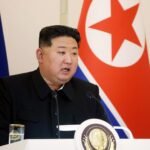
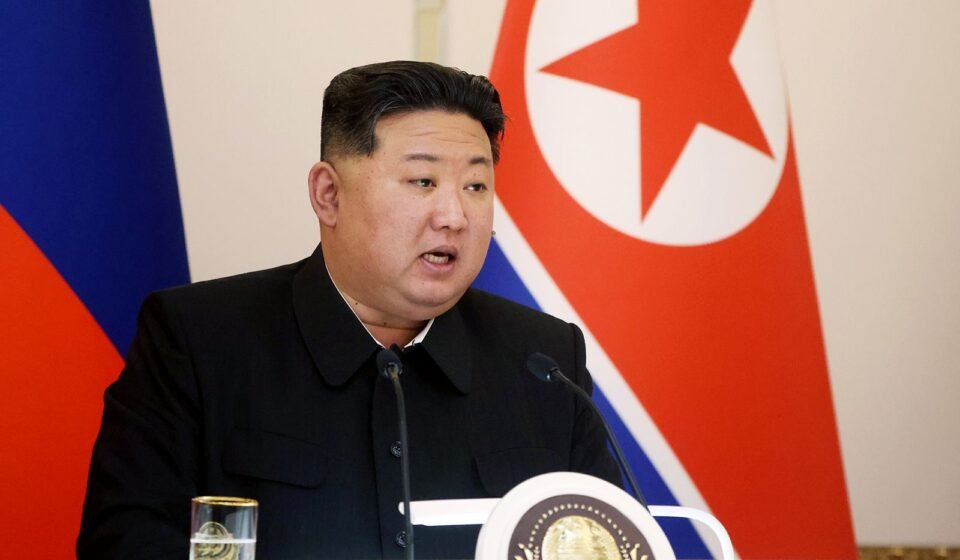
North Korean leader Kim Jong Un has signalled a renewed emphasis on sovereignty and independent foreign relations, using a rare diplomatic ceremony in Pyongyang to outline his country’s international priorities following US President Donald Trump’s departure from Asia without a meeting between the two leaders.
Speaking on Sunday at a ceremony to receive credentials from newly appointed foreign ambassadors, Kim said North Korea would expand its diplomatic relations based on independence, peace and friendship while protecting its national sovereignty and security, according to the state-run Korean Central News Agency (KCNA).
The ceremony was attended by ambassadors from 10 countries: Russia, Sweden, Indonesia, Vietnam, Brazil, the Czech Republic, India, the Philippines, Thailand and Bangladesh. Foreign Minister Choe Son Hui was also present.
Kim’s decision to personally receive the ambassadors’ credentials was particularly significant. It marked the first time in more than three decades that a North Korean leader had directly performed the diplomatic function, which had traditionally been handled by the chairman of the Standing Committee of the Supreme People’s Assembly.
However, the move was not simply a departure from diplomatic protocol. A constitutional revision in March transferred the authority to receive foreign ambassadors’ credentials to the chairman of the State Affairs Commission, a position held by Kim. His participation therefore demonstrated the exercise of his newly formalised constitutional authority while reinforcing his position as the country’s head of state.
In his address, Kim described the international environment as increasingly unstable, citing security tensions and political and economic uncertainty. He insisted that Pyongyang had no ambitions of regional domination or territorial expansion, declaring that the country sought to protect its sovereignty rather than impose its influence on others.
“The DPRK neither pursues supremacy nor expansion,” he said, referring to North Korea by its official name, the Democratic People’s Republic of Korea.
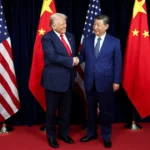
His remarks came after Trump concluded his Asian visit on Thursday without meeting Kim, despite repeatedly expressing interest in holding talks during his visit to China for the Asia-Pacific Economic Cooperation (APEC) summit in Shenzhen.
Although Trump had suggested that a meeting was possible, neither Washington nor Beijing confirmed that a formal invitation or arrangement had been made. North Korea’s absence from the summit therefore does not, by itself, establish that Kim deliberately rejected a direct diplomatic offer.
The missed opportunity nevertheless highlights the difficulties facing renewed US-North Korea engagement. Their previous meetings during Trump’s first presidential term, including the 2018 Singapore summit and the 2019 Hanoi summit, failed to produce a lasting agreement on Pyongyang’s nuclear programme or sanctions relief.
North Korea has since continued developing its nuclear and missile capabilities, while repeatedly rejecting denuclearisation as a precondition for diplomatic engagement. Its leadership has increasingly presented nuclear weapons as central to national security, making a return to negotiations on Washington’s previous terms particularly difficult.
Meanwhile, Pyongyang’s relationship with Moscow has become an increasingly important part of its foreign policy. The two countries signed a comprehensive strategic partnership treaty in June 2024, which includes a mutual defence commitment. North Korea subsequently confirmed that it had deployed troops to support Russian forces in the war against Ukraine, while also supplying military equipment and ammunition.
The presence of Russia’s newly appointed ambassador among the diplomats received by Kim is therefore politically significant. It reflects the growing importance of bilateral relations at a time when both countries face extensive international sanctions and diplomatic pressure. Their cooperation has also raised concerns among Western governments about the exchange of military resources, technology and battlefield experience.
The inclusion of ambassadors from nine other countries, including Bangladesh, also illustrates that Pyongyang’s diplomatic engagement extends beyond its increasingly close relationship with Moscow. However, the ceremony alone does not establish a major shift in relations with those countries or indicate the level of practical cooperation they may pursue.
For regional observers, Kim’s statements suggest an effort to position North Korea as an independent actor in an increasingly fragmented international order. Lim Eul-chul, a professor at Kyungnam University’s Institute for Far Eastern Studies, described the approach as a form of multipolar, sovereignty-based diplomacy, suggesting that Pyongyang intends to engage with different international partners without placing itself under the influence of a single power.
That interpretation is consistent with North Korea’s expanding engagement with Russia and its continued strategic relationship with China. However, whether this approach will translate into broader diplomatic or economic opportunities remains uncertain.
Kim’s latest diplomatic appearance ultimately sends two messages: Pyongyang is prepared to expand relations with countries that respect its stated sovereignty priorities, but it is unlikely to compromise on the security and nuclear positions that have long shaped its foreign policy. For Washington, the absence of a meeting with Kim is another reminder that expressions of interest in dialogue alone are insufficient to revive negotiations that have remained stalled for years.
Sources: Yonhap News Agency – Kim says Pyongyang seeks no regional dominance, defends arms build-up as self-defence, 23 November 2026; Yonhap News Agency – Kim receives Russian ambassador’s credentials in protocol shift after more than 30 years, 22 November 2026; Reuters – Trump-Kim meeting on APEC sidelines appears more likely, analysts say, 17 November 2026; Yonhap News Agency – Trump concludes Asian visit without meeting Kim Jong Un, 19 November 2026; Congressional Research Service – Russia-North Korea Relations, updated 18 September 2026; UK House of Commons Library – North Korea in 2026: Frequently asked questions, 18 September 2026; Reuters – North Korea confirms troop deployment to Russia, 27 April 2025.