









Iran seeks to press advantage after truce but major challenges remain
TLE DESK: Iran is seeking to capitalise on gains made under a newly signed interim peace agreement with the United States, accelerating oil exports and pushing for an end to Israeli military operations in Lebanon, while facing mounting economic and political pressures at home.
Tehran has projected confidence since the agreement was signed this week, with state media portraying the outcome as a victory following weeks of conflict involving the United States and Israel.
The deal provides Iran with long-sought sanctions relief, including waivers allowing the export of crude oil. Iranian oil shipments have already increased significantly since restrictions were eased, providing a vital source of revenue for an economy battered by war and years of sanctions.
The agreement, however, requires Iran to scale back parts of its nuclear programme, including diluting its stockpile of highly enriched uranium. The move has drawn criticism from hard-line factions, while Washington continues to press for a complete halt to uranium enrichment.
Analysts say Iran’s leadership views the agreement as a means of securing economic breathing space while maintaining its grip on power.
“It is too much to say that Iran has emerged a victor, but it could have been much worse,” said Iran analyst Farzan Sabet. “The real victory for Iran was survival.”
Despite the prospect of increased oil revenues, Iran faces severe economic difficulties. Inflation remains high, the national currency has lost much of its value and many households continue to struggle with rising living costs.
Economic hardship has fuelled public discontent in recent months, with widespread protests earlier this year exposing growing frustration over inflation, corruption and economic mismanagement.
The political landscape has also been transformed following the deaths of several senior leaders during the conflict, including former Supreme Leader Ayatollah Ali Khamenei. His son, Ayatollah Mojtaba Khamenei, now faces the challenge of balancing hard-line demands with the need to secure economic recovery.
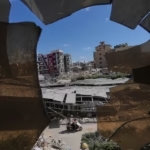
The agreement’s future remains uncertain as tensions persist in Lebanon. Planned talks in Switzerland were postponed after renewed fighting between Israel and Hezbollah heightened concerns over regional stability.
Iran has insisted that a lasting settlement must include an end to hostilities in Lebanon and the withdrawal of Israeli forces from occupied areas.
At the same time, negotiations over Iran’s nuclear programme are expected to prove difficult. While Tehran has agreed to reduce its stockpile of highly enriched uranium, major differences remain over the future of its enrichment activities.
Political observers warn that opposition from hard-line groups within Iran could complicate efforts to reach a broader and more permanent agreement with the United States.
For now, Iran is attempting to turn the ceasefire into an economic and diplomatic opportunity, but significant domestic and regional challenges continue to threaten the fragile progress achieved so far.