








G7 leaders hail Iran deal, back tougher stance on Russia ahead of AI talks
TLE DESK: Leaders of the Group of Seven (G7) nations on Wednesday welcomed the US-Iran agreement aimed at ending the Middle East conflict and pledged stronger pressure on Russia over its war in Ukraine, as the summit shifted focus to artificial intelligence and online security.
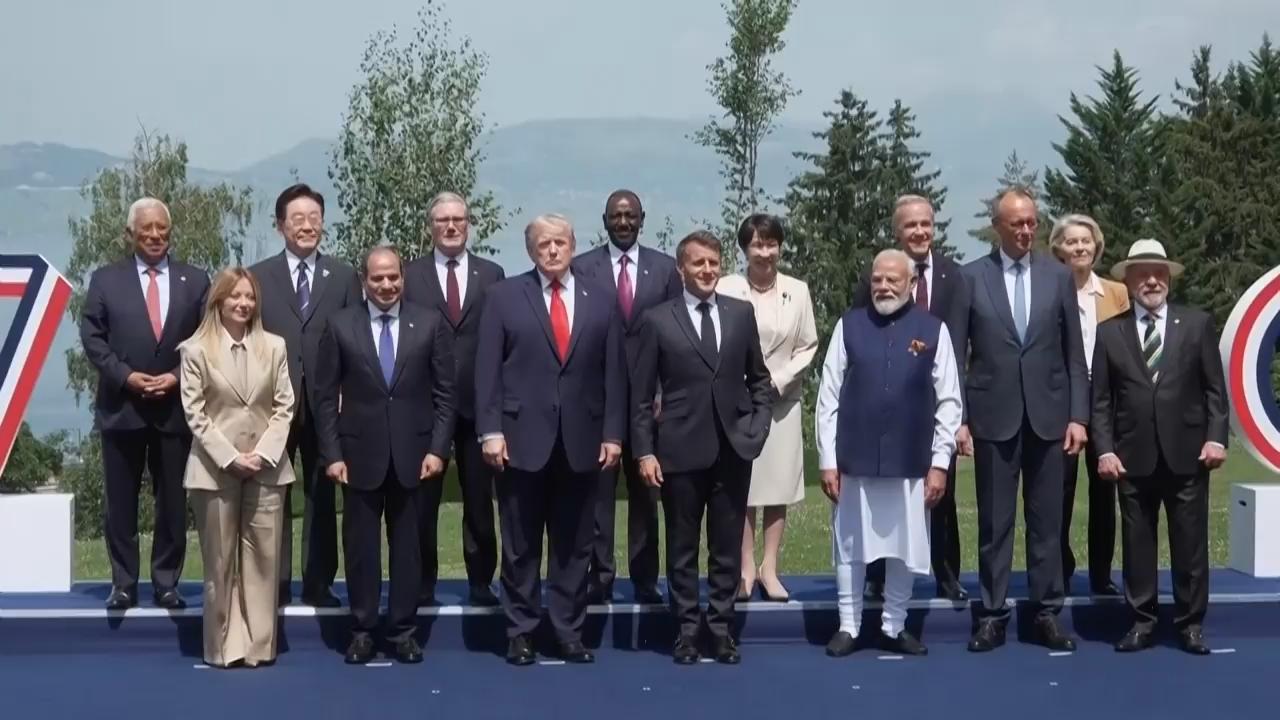
The three-day summit in Evian, France, brought together leaders from Britain, Canada, France, Germany, Italy, Japan and the United States. Discussions were dominated by efforts to consolidate the US-brokered deal with Iran and coordinate support for Ukraine.
In a joint communiqué released by host France, G7 leaders described the upcoming US-Iran memorandum of understanding as a “historic opportunity” to prevent Iran from acquiring nuclear weapons and to address concerns over Tehran’s regional activities and ballistic missile programme.
The agreement, scheduled to be signed in Switzerland on Friday, is expected to launch a broader diplomatic process aimed at ending hostilities across the Middle East.
The communiqué also noted that a multinational maritime mission led by France and the United Kingdom could help restore shipping through the Strait of Hormuz, a critical global energy route disrupted during the conflict.
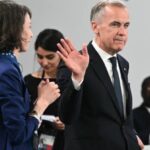
Canadian Prime Minister Mark Carney said the agreement had the potential to become a “game changer” for regional stability and international security.
On Ukraine, G7 leaders agreed to increase military assistance, particularly air defence systems, while strengthening sanctions on Russia, including measures targeting its oil and gas sectors.
The leaders said the reopening of the Strait of Hormuz created an opportunity to impose additional economic pressure on Moscow without risking further disruption to global energy markets.
Carney also pointed to what he described as a shift in the US approach towards Ukraine, saying President Donald Trump appeared more willing to take a firmer line against Russia and increasingly frustrated by the continuing human cost of the war.
Trump recently urged Moscow to reach a peace agreement and indicated Washington could consider reimposing sanctions that had previously been eased.
Later on Wednesday, the summit agenda turned to artificial intelligence and digital security.
A special session brought together leading technology executives, including OpenAI chief Sam Altman, Anthropic CEO Dario Amodei, DeepMind founder Demis Hassabis and Mistral AI chief Arthur Mensch.
French President Emmanuel Macron said discussions would focus on strengthening cybersecurity and protecting children and democratic institutions from online threats.
The debate comes as several European governments move toward stricter regulation of social media. British Prime Minister Keir Starmer recently announced plans to ban children under 16 from using social media platforms, while France is considering similar measures.
Trump remained the central figure throughout the summit, with French officials welcoming his decision to stay for the entire event and endorse the final communiqué, unlike at the previous G7 summit in Canada, where he departed early.
Following the summit, Macron is scheduled to host Trump for a private dinner at the Palace of Versailles. Trump said he accepted the invitation because Versailles was “the real deal,” while Macron stressed the gathering would not be a formal gala event.