









US, Iran reach deal to end war, reopen Strait of Hormuz
TLE DESK: The United States and Iran have reached an agreement to end hostilities across the Middle East, including in Lebanon, and reopen the strategically vital Strait of Hormuz, marking a major diplomatic breakthrough after months of conflict that claimed thousands of lives and disrupted global energy markets.
According to announcements from Washington and Islamabad, the agreement is scheduled to be formally signed in Switzerland on Friday. The deal aims to halt military operations on all fronts while paving the way for broader negotiations on unresolved issues, including Iran’s nuclear programme.
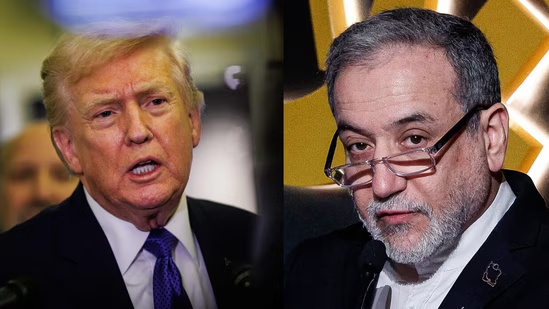
US President Donald Trump confirmed the breakthrough on social media Sunday, declaring that the Strait of Hormuz would reopen following the signing.
“The Deal with the Islamic Republic of Iran is now complete. Ships of the World, start your engines. Let the oil flow!” Trump wrote.
Iranian Deputy Foreign Minister Kazem Gharibabadi later said the agreement would bring an immediate end to the war and establish a two-month period of negotiations aimed at securing a final settlement.
Pakistani Prime Minister Shehbaz Sharif announced that both sides had agreed to the “immediate and permanent termination of military operations on all fronts, including in Lebanon,” while thanking Qatar, Saudi Arabia and Türkiye for supporting mediation efforts.
Details remain unclear
Despite the announcement, many key provisions remain undisclosed.
Iran’s Mehr News Agency reported that the United States would release billions of dollars in frozen Iranian assets as part of a 14-point memorandum of understanding. The report claimed that $12 billion would be released immediately, while up to $24 billion could become available during a 60-day negotiation period following the signing.
The Trump administration has not publicly confirmed those details.
One of the most contentious issues remains Iran’s nuclear programme and its stockpile of highly enriched uranium. In an interview with The New York Times, Trump said negotiations were continuing over whether Iran would suspend uranium enrichment for 20 years, while indicating that a shorter 15-year suspension could also be considered.
Global relief
The agreement was welcomed by world leaders and financial markets.
Antonio Guterres described the development as a “critical step” toward ending conflict in the Middle East.
The governments of United Kingdom, France, Germany and Italy signaled readiness to lift sanctions on Iran and pledged to work with regional partners to secure a long-term diplomatic settlement.
Markets reacted positively, with oil prices falling more than 4 percent in Asian trading and Japan’s benchmark stock index rising sharply amid expectations that global energy supplies would normalize.
US Vice President JD Vance said reopening the Strait of Hormuz would help lower energy costs globally and support economic stability.
Israeli strike briefly threatened progress
The agreement appeared at risk earlier Sunday after Israeli forces launched airstrikes in Beirut’s southern suburbs targeting positions linked to **Hezbollah>.
Trump publicly criticized Israeli Prime Minister Benjamin Netanyahu, saying the strike had delayed the signing process and expressing frustration over the timing of the attack.
Iran has long insisted that any agreement ending the conflict must also address fighting in Lebanon, where Israel has continued military operations against Hezbollah.
The signing ceremony is expected to take place in Geneva later this week, with senior officials from both countries expected to attend. The agreement is viewed as the most significant diplomatic breakthrough between Washington and Tehran in years and could reshape security dynamics across the Middle East.