




















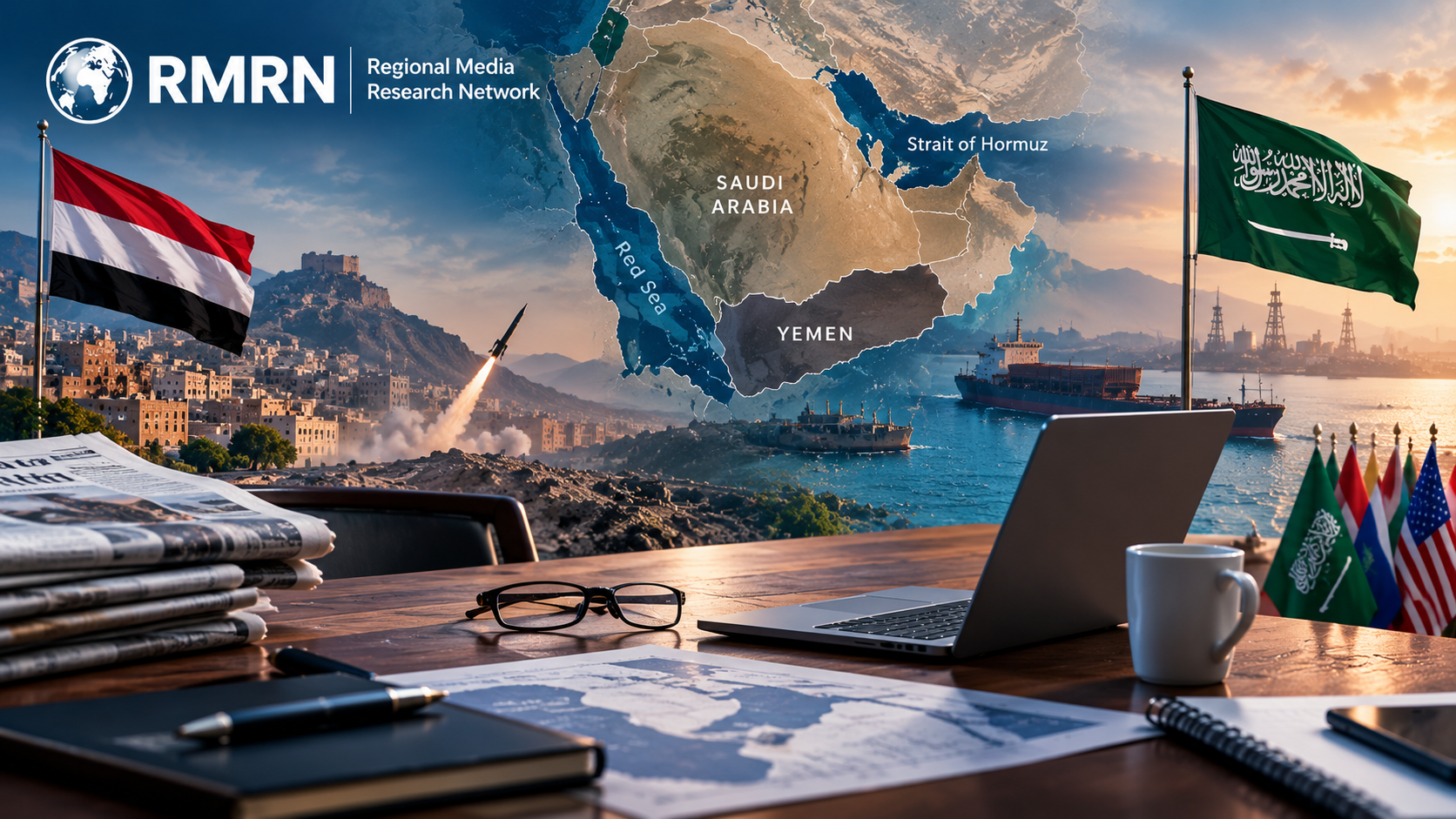
RMRN discusses wider regional impact of Houthi–Saudi conflict
The Regional Media Research Network (RMRN) has brought together regional perspectives to examine the Houthi–Saudi conflict and its wider implications for the Middle East, South Asia and Southeast Asia, highlighting the links between regional security, economic stability, humanitarian concerns and media narratives.
The 2nd Focus Group Discussion (FGD) on 16 October, explored how developments in the Middle East extend beyond the immediate conflict zone through energy supplies, international shipping routes, trade, investment and diplomatic relations. Participants emphasised the importance of examining these connections to understand how regional instability can affect countries far beyond the Middle East.
The discussion was facilitated by Hafsa Qadri, FGD Manager, following opening remarks by RMRN Convenor and Team Lead Md Tarek Hossain.
Opening the discussion, Tarek emphasised that the network’s purpose extends beyond sharing news to examining how regional narratives are formed, framed and communicated. He encouraged participants to connect developments in the Middle East with their own regional experiences, particularly the implications for South Asia and Southeast Asia.
He also underlined that RMRN discussions should lead to practical outcomes, including further research, analytical reporting and stronger cross-border media collaboration.
Abdel Halim, sharing his perspective from Egypt, noted that regional instability and tensions in the Gulf can have economic consequences for countries that are not directly involved in a conflict. He also stressed the importance of understanding the Middle East beyond its political and security challenges, including its diverse cultures, societies and traditions.
Rama Daru, speaking from Indonesia, observed that media coverage in parts of Southeast Asia often associates the Middle East primarily with war, political tensions and humanitarian crises. He argued that such conflict-focused narratives can overshadow the region’s cultural, social and economic dimensions.
Discussing Saudi Arabia’s regional significance, Shamorita highlighted the country’s importance as a major energy power and emphasised the need for regional cooperation. She pointed to the roles of institutions such as the Arab League and the United Nations in addressing regional challenges, while underscoring the importance of diplomatic solutions, humanitarian protection and preventing further military escalation.
The discussion also highlighted the need for responsible reporting on fast-moving geopolitical developments. Participants stressed that regional analysis should distinguish verified facts from allegations and interpretations, rely on credible sources and official statements where appropriate, and cross-check information before presenting it as established fact.
For RMRN, the discussion forms part of a broader effort to connect media monitoring with research and analytical publications. Potential areas for further work include the economic implications of Middle Eastern instability for South Asia, energy security and Gulf–Asia relations, maritime trade disruption, Southeast Asian media coverage of Middle Eastern conflicts, and the humanitarian consequences of prolonged regional instability.
The discussion reinforced RMRN’s approach to regional media analysis: examining geopolitical developments through multiple perspectives while considering their security, economic, humanitarian and societal dimensions. It also highlighted the importance of moving beyond conflict-centred portrayals of the Middle East to develop a more comprehensive understanding of the region.
RMRN aims to use such discussions to inform future research, analytical reports and cross-border media collaboration across South Asia, Southeast Asia and the Middle East.
