


















Japan’s weak yen fuels calls for faster interest-rate rises
Economist Koichi Hamada argues that the Bank of Japan should tighten monetary policy more aggressively as currency depreciation raises import costs. Recent inflation data and central bank signals underline the policy dilemma facing Tokyo.
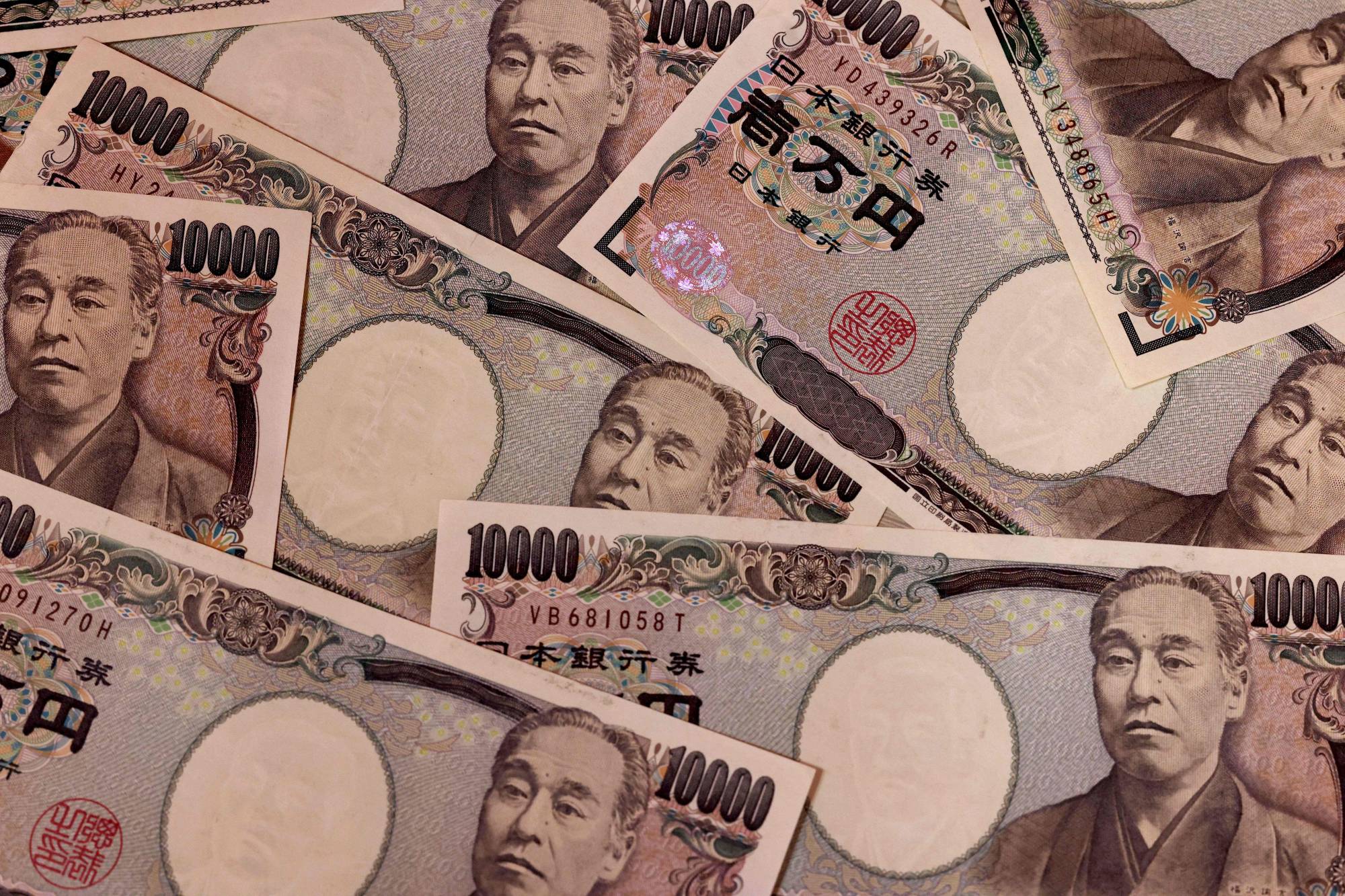
Japan’s prolonged currency weakness is intensifying debate over whether the country’s central bank should raise interest rates more quickly to contain inflation and ease pressure on households. A weaker yen can improve exporters’ price competitiveness and overseas earnings, but it also makes imported energy, food and other goods more expensive.
In a commentary published by The Japan Times on 20 October, economist Koichi Hamada argued that the Bank of Japan (BOJ) should pursue more aggressive monetary tightening. Hamada, a professor emeritus at Yale University and former special adviser to Prime Minister Shinzo Abe, said the current interest-rate differential between Japan and the United States continued to encourage investors to borrow in yen and invest in higher-yielding assets elsewhere.
The argument comes as Japan’s benchmark policy rate stands at 1.25%, following the BOJ’s September decision to raise it to the highest level in 31 years. The central bank’s official guidance confirms that it is targeting an overnight call rate of around 1.25%.
The yen’s depreciation has helped some Japanese exporters by making their products more competitive in overseas markets and increasing the yen value of foreign-currency earnings. However, the same exchange-rate movement raises the domestic cost of imported commodities and intermediate goods, potentially squeezing businesses that depend on overseas supplies.
Consumers can also face higher prices when importers and domestic producers pass increased costs through the supply chain. The effect is particularly important for an economy that relies on imported energy and raw materials.
The BOJ’s foreign-exchange data recorded the dollar at approximately ¥158.07–¥158.09 at 5pm Tokyo time on 20 October. The rate illustrates the yen’s weakness against the US currency, although a single day’s exchange rate does not establish the longer-term equilibrium value of the yen.
Hamada compared the market exchange rate with a purchasing-power-parity estimate, which attempts to measure the exchange rate at which comparable baskets of goods and services would cost the same in different countries. Such estimates can provide useful long-term context, but they are not precise targets for central banks and do not necessarily indicate where a currency should trade in the short term.
Japan’s monetary-policy challenge has changed considerably since the years of persistent deflation that shaped its economic policy for decades. After years of exceptionally low interest rates, the BOJ has begun raising borrowing costs as inflationary pressures have returned.
Japan’s Statistics Bureau reported that headline consumer prices rose 1.9% year on year in August 2026, while the index excluding fresh food increased by 1.7%. The figures showed that inflation was easing towards the central bank’s 2% target at that point, although the outlook remained exposed to energy prices and exchange-rate movements.
More recent commentary from BOJ Governor Kazuo Ueda indicates that the central bank sees underlying inflation approaching its 2% objective. Reuters reported on 19 October that Ueda identified tight labour-market conditions, global demand for artificial-intelligence-related products and higher raw-material costs as factors influencing price pressures. He also signalled that further interest-rate increases could be appropriate if economic conditions evolve as expected.
However, a faster tightening cycle is not assured. Reuters reported on 20 October that the BOJ was expected to leave rates unchanged at its 29–30 October meeting while considering an updated inflation outlook. A subsequent increase remained possible, with economists surveyed by Reuters expecting a potential move in December. These are forecasts, not announced policy decisions.
Hamada’s argument also focuses on the interest-rate gap between Japan and the United States. When borrowing costs are substantially lower in yen than in another currency, investors may borrow yen to finance investments offering higher returns elsewhere. This strategy, commonly known as the carry trade, can add to selling pressure on the yen, although exchange-rate movements are influenced by many other factors.
A wider interest-rate differential does not guarantee further depreciation, just as a rate increase does not guarantee a stronger currency. Investors also consider expected future policy, inflation, risk appetite and changes in global financial conditions.
Japan’s policymakers must therefore weigh the potential benefits of higher interest rates against their domestic economic costs. Tighter monetary policy can help limit inflationary pressure and support the currency, but it can also raise borrowing costs for households, businesses and the government.
Hamada’s recommendation is that the BOJ should respond to Japan’s current economic conditions rather than allowing US monetary policy to determine its decisions. The central bank must balance inflation control, economic activity and financial stability while assessing whether further rate increases are justified by incoming data.
The wider policy challenge is to reduce the pressure of imported inflation without unnecessarily weakening domestic demand. A stronger yen could ease the cost of overseas purchases, but the exchange rate alone cannot resolve Japan’s structural challenges or guarantee lower prices.
For now, the BOJ’s 1.25% policy rate marks a significant departure from the ultra-loose monetary conditions that defined much of Japan’s recent economic history. Whether policymakers tighten further will depend on the persistence of inflation, wage growth, energy costs and the behaviour of the yen.
Hamada’s call for faster rate rises reflects one view of how Japan should respond. The central bank’s forthcoming decisions will show how far policymakers agree that the risks of continued currency weakness outweigh the costs of tighter monetary conditions.
Sources
The Japan Times, Koichi Hamada, “Japan needs higher interest rates”, 20 October 2026: commentary and policy argument.
Bank of Japan, daily foreign-exchange rates, 20 October 2026: https://www.boj.or.jp/en/statistics/market/forex/fxdaily/fxlist/fx261020.pdf
Bank of Japan, monetary-policy guidance: https://www.boj.or.jp/en/
Reuters, “BOJ raises interest rates to 31-year high in widely expected move”, 18 September 2026: https://www.reuters.com/world/asia-pacific/boj-raises-interest-rates-31-year-high-widely-expected-move-2026-09-18/
Reuters, “BOJ chief says underlying inflation ‘quite close’ to price goal”, 19 October 2026: https://www.reuters.com/world/asia-pacific/boj-governor-ueda-says-underlying-inflation-quite-close-2-target-2026-10-19/
Reuters, “Bank of Japan may raise inflation forecast, stand pat on rates, sources say”, 20 October 2026: https://www.reuters.com/world/asia-pacific/bank-japan-may-raise-inflation-forecast-stand-pat-rates-sources-say-2026-10-20/
Japan Statistics Bureau, Consumer Price Index: https://www.stat.go.jp/english/data/cpi/
