



















Google’s first orbital TPU satellite working; space data centres are still long-term bet
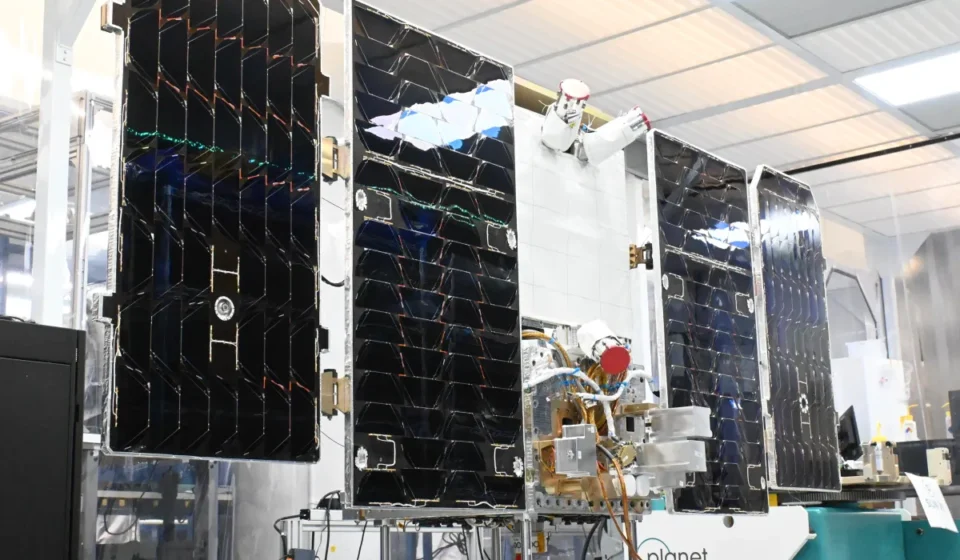
Google’s prototype satellite for Project Suncatcher is online and talking to the ground, according to TechCrunch, which says a spokesperson described it as operating nominally. The satellite was built by Planet Labs and launched on a SpaceX Falcon 9 on Thursday, October 1, as part of the Transporter-18 rideshare mission. The TechCrunch story is today’s news, but the launch was a month ago, so what is new is the confirmation that the commissioning phase worked. After about three weeks of subsystem tests, engineers sent their first prompt this week, and the onboard model wrote a space-themed haiku. I haven’t reproduced the poem, which is the least important part of the story.
The meaningful facts are modest, and Google itself frames them that way. The satellite carries four Tensor Processing Units, the same type of chip Google uses in its data centers on Earth, and generates up to 1 kilowatt of power, about as much as a microwave. TechCrunch’s correction notes it can run only one TPU at a time, and only for short bursts. Reports differ on how short: TechCrunch says about 20 minutes, while NPR and others say 15. Google’s Travis Beals called the launch “a very minimal test” to confirm the chips can run in space, according to NPR, and the mission is meant to last about a year. The prototype is also not what some early coverage said. NPR later corrected its initial claim that the satellite is in a sun-synchronous orbit and needs no batteries, and said the prototype uses a standard orbit and batteries. That is the plan for future satellites, and some outlets still repeat the error.
The test campaign targets the main unknowns. On Earth, Google tested its Trillium TPUs in a 67 MeV proton beam, and PPC Land reports results were more favourable than anticipated, though other reporting says some error rates rose. TechCrunch explains the key risk: radiation can cause “bit flips” that corrupt data without tripping normal monitoring. Ground tests suggested the effect would be small for inference, running a trained model, and a bigger problem for training. Now Google can check that with real hardware. Cooling is the other problem. With no air or water, chips rely on heat pipes and radiators, which NPR says are among the heaviest parts of the satellite and therefore expensive to launch.
The economics are the long game. Google’s own research paper estimates launch costs could fall below $200 per kilogram by the mid-2030s, compared with roughly $1,500 per kilogram in 2021, but only if learning-driven cost cuts continue. TechCrunch adds that the researchers estimated SpaceX would need to fly Starship 1,800 times to get the same cost curve as its earlier vehicles. That makes the plan dependent on a rocket that is still in development. One summary also says Google expects space data centers to stay more expensive than ground ones for at least five years, which is consistent with calling Suncatcher a moonshot aimed at the 2030s. Environmental questions remain too, because the rockets burn carbon-based fuels even if the data centers run on solar power.
Next comes the harder part. Google and Planet plan to launch two more satellites in early 2027, with higher power generation and laser links between spacecraft. This is where Suncatcher differs from rivals, according to TechCrunch: it plans high-speed links between close-flying satellites for coherent distributed workloads, whereas SpaceX’s expected laser-linked systems would orbit too far apart to share processing effectively, and Starcloud and Cowboy Space expect to run inference on single satellites. SpaceX has talked about deploying orbital AI compute satellites as early as 2028, and Alphabet holds a stake in SpaceX, so the two visions are partly aligned.
The timing is awkward for Google. This week Alphabet shares fell 12.6%, a record, after it reported that AI features in search are hurting ad revenue growth and cash flow turned negative. TechCrunch makes the connection explicitly: a 2030s moonshot depends on how the rest of the company handles near-term AI pressures. Investors are asking for cash returns now, and an experiment in orbit cannot answer them. That is not a criticism of the science, only a reminder that research programs live inside quarterly results.
What is established and what is not: the launch, the four-TPU design, the successful contact and the 2027 follow-up are documented. The radiation results, the true cost of orbital computing and the 2030s economics are not, and the satellite has only just begun its test campaign.
Sources: TechCrunch, NPR via WNYC, NPR via WUNC, NPR via GPB (correction), Mobile World Live, PPC Land, TechNews Taiwan, Gulf Daily News, ProPakistani, SmartWorld and Ecosistema Startup.
