










Cost-of-living protests sweep Europe for 3rd weekend; France, Germany and Italy brace for violence
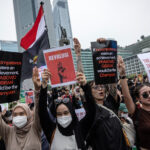
On Saturday, October 31, hundreds of thousands of people took to the streets across Europe over the cost of living, schools and public services, in protests led largely by young people. In France, the movement is in its third weekend and has already produced some of the worst rioting in decades, while Germany, Italy and Spain are seeing their own versions. For readers outside Europe, this is a story about a generation squeezed by prices, and about how quickly a student protest can turn into a national political crisis.
The French movement began in early October, when high-school students protested over the state of the education system. It widened into a broader revolt over living costs and social security as university students, trade unions and the Yellow Vests, a grassroots movement that began in 2018 as a revolt against fuel taxes, joined in. NBC News reported that the demonstrations began after the government opened budget talks for 2027. It called Emmanuel Macron “Prime Minister,” but he is France’s President, so that line looks like an error.
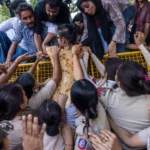
Turnout has been falling, but the unrest has not. The Interior Ministry counted 550,000 people nationwide on October 17, the day looting and rioting erupted, then 410,000 a week later and 320,000 on Saturday, including 70,000 in Paris. Unions give higher figures: the CGT put last week’s turnout at nearly 800,000. Police reported more than 560 arrests on Saturday night, according to NBC, after more than 1,300 arrests the previous week, when 53 officers were injured, 75 fires were reported and 24 cases of looting were recorded. Interior Minister Laurent Nuñez deployed about 70,000 police and gendarmes, said the risk of disorder was “very high,” and banned protests in city centres, allowing marches only on the outskirts. AP and NBC report that Saturday’s marches were largely peaceful, with fires and clashes in cities such as Marseille after dark. Unions and students have called a nationwide strike for November 5.
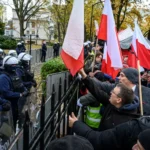
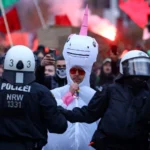
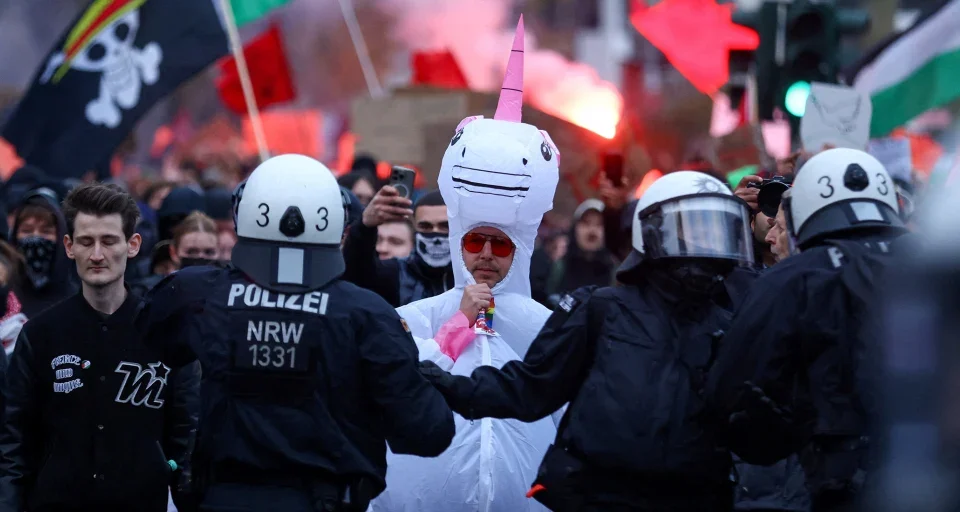
In Germany, a campaign group called “Gen Z regelt,” meaning “Gen Z takes charge,” organised demonstrations in 34 cities, including Berlin, Frankfurt and Munich, according to Reuters. Police estimated as many as 18,000 protesters. The group wants more spending on schools, health, climate protection and housing, and opposes plans to bring back compulsory military service. Most rallies were peaceful, but in central Frankfurt rioters smashed shop windows and looted stores, and police said Molotov cocktails were thrown at emergency services. NBC reports that weapons were stolen from a gun shop and later recovered. Hesse’s interior minister, Roman Poseck, said everyone had the images from France in mind, with looting, burning houses and attacks on police.
In Italy, Prime Minister Giorgia Meloni’s government sent 500 soldiers to Milan after rioters, many of them minors, looted shops in the fashion capital on October 17 and 18. Police said more than 100 officers were hurt over two days and that about 2,000 young people took part, with 45 arrests including 34 minors. NBC says the troops will stay until the end of the year. Tens of thousands marched in Rome on Friday during a general strike called by grassroots unions, and police used a water cannon and charged to break up groups. A 20-year-old medical student told NBC that wages are not keeping up with inflation. In Spain, a large tent encampment has occupied Madrid’s Puerta del Sol for weeks and unions have called a general strike for November 11. Thousands also marched in Lisbon, and police in Brussels used tear gas and water cannon on masked protesters.
The common thread is the cost of living: wages that lag behind prices, housing that young people cannot afford, and services they see as declining. But these are separate movements with different organisers and demands, and governments are answering differently. France is relying on heavy policing and bans on city-centre marches, Italy on soldiers and tougher penalties for minors, and Germany on local police. NBC’s roundup also mentions the Palestine Action protest in London, but that is about terrorism law and Gaza, so it should not be counted as part of this wave. NBC and Reuters point to Serbia, where student activism helped remove a long-time leader at the ballot box, as a sign that youth movements can change politics.
Governments and police provide turnout figures, arrests, and deployments, while organisers’ counts are higher. It is unclear how much of the violence is organised, who the looters are, or whether the movement will grow or fade, and the French strike on November 5 will be the next test. This is a news summary of a fast-moving story.
Sources: NBC News (Freddie Clayton), AP via KSL, AP via WRAL, NPR via WNYC, WION, AP via KRQE, Times of Israel, Reuters via Arab News, Reuters via Korea Times, The Guardian via AOL, AP via News4Jax, Boston Globe and DTNext.
