















Trump unlikely to resume Iran strikes, Gulf shipping attacks continue
The US president says further military action is highly unlikely if negotiations produce a strong agreement, but reported attacks on commercial vessels in and around the Strait of Hormuz underscore the fragility of the diplomatic process.
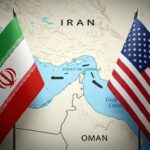
US President Donald Trump has said he is highly unlikely to order further attacks on Iran if negotiations to end the conflict continue to make progress. His remarks offer a possible opening for diplomacy, even as both countries report incidents involving commercial shipping in and around the strategically important Strait of Hormuz.
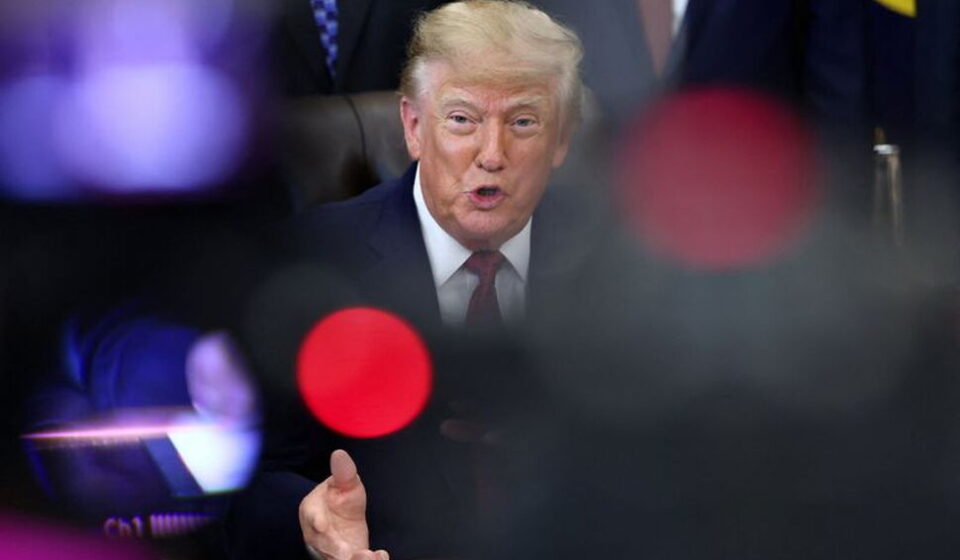
In a telephone interview with CNN on Sunday, Trump said the likelihood of renewed strikes depended on whether Tehran agreed to a “very strong agreement”. “The answer is, highly unlikely it’s going to be necessary,” he said, according to Reuters. CNN did not specify the question that prompted his remarks.
Trump also warned that the United States had identified potential infrastructure targets if military operations resumed, including 38 bridges that he said could be destroyed within an hour. His comments followed indications last week that Washington might consider renewing major attacks after the US midterm elections. However, Reuters reported no sign of a large-scale US military operation at the time of publication.
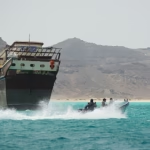
The diplomatic signals came amid continuing reports of attacks and damage involving vessels in the Gulf region. The US military said on Saturday that its air force had fired at the stern of a commercial vessel in the Gulf of Oman, disabling it as it attempted to breach the US blockade of Iranian ports.
US Central Command released footage showing smoke rising from the vessel, which was identified as flying the flag of St Kitts. The incident reportedly took place beyond the Strait of Hormuz.
Iran’s Revolutionary Guards Navy, meanwhile, said two oil tankers had caught fire after striking mines while attempting to use what it described as an unauthorised route through the strait. The semi-official Fars news agency later reported that a third tanker had suffered an explosion and caught fire.
Iranian state television also reported that two vessels had hit mines and another had caught fire, while explosions heard in several areas of southern Iran, including Qeshm Island, were initially discussed in the context of military activity in the waterway.
Reuters said it could not independently verify the reported vessel attacks. The United Kingdom Maritime Trade Operations also reported an incident involving a bulk carrier and military forces approximately 18 nautical miles east of Khor Fakkan in the United Arab Emirates. The extent of the damage was unknown, and it was not clear whether the incident was connected to the reported US action.
The conflicting accounts illustrate the difficulty of establishing what is happening at sea during an active conflict. They also underline the risks to commercial shipping when military operations, maritime restrictions and competing claims over safe passage overlap.
The Strait of Hormuz is a critical route for international energy shipments. Continued disruption threatens the movement of oil and other commodities from Gulf producers to global markets, adding uncertainty for energy importers, shipping companies and businesses dependent on regional supply chains.
The conflict has increasingly involved attempts by both sides to restrict maritime movement. Since the United States and Israel began attacks on Iran in February, Tehran has sought to pressure regional energy exports through attacks on vessels in the strait. Washington began blockading movements to and from Iranian ports in April.
The latest incidents therefore represent more than isolated maritime security concerns. They form part of a wider confrontation over access to Iranian ports, control of shipping routes and the economic costs of sustaining the conflict.
Even without a new round of large-scale airstrikes, continued attacks or restrictions on commercial vessels could prolong uncertainty in energy markets. The economic consequences would depend on the duration and scale of disruption, as well as the ability of shipping operators to maintain safe and reliable routes.
Reports of explosions on Saturday also raised questions about whether military operations were expanding again inside Iranian territory.
Iranian state television said officials had not confirmed missile strikes following explosions heard in several locations, including Qeshm Island. It suggested the sounds might have been connected to Iranian military activities in the waterway.
Tasnim news agency, however, reported that two missiles had struck Qeshm, without providing official information about possible damage. Neither the Iranian nor the US government had commented on that report by the time Reuters published its account.
Washington had previously said on 2 November that it carried out a limited defensive strike on the island against Iranian personnel using surface-to-air missiles against US assets.
The different accounts remain difficult to reconcile independently. In the absence of confirmation, reports of fresh missile strikes should be distinguished from the official statements available at the time.
The wider regional conflict also appeared to be affecting Saudi Arabia. The country’s Energy Ministry said on Sunday that falling debris had damaged an administrative building belonging to state oil company Saudi Aramco in Riyadh following an attempted attack. No injuries or fatalities were reported.
The incident came amid an escalation this month in fighting between Iran-aligned Houthi forces in Yemen and Saudi Arabia, further widening the regional conflict.
Damage to infrastructure associated with a major energy company adds another dimension to the risks facing Gulf economies. Saudi Arabia is a major global oil producer, and threats to energy-related facilities can increase concerns about the security of regional production and supply networks.
Qatar, which has been mediating efforts to end the conflict, denied on Saturday reports that Washington and Tehran had failed to reach an agreement. The Qatari government said its prime minister had affirmed that both sides were continuing to work towards a deal.
A senior Iranian official told Reuters on Thursday that Tehran had submitted a nuclear proposal to Washington through Qatar. The United States was reviewing the proposal, the official said, but further discussions would depend on Washington first addressing seven Iranian demands.
Those demands include sanctions relief, access to frozen assets and war reparations. Washington, however, insists that nuclear issues must be included in the initial negotiations.
The differences point to a substantial gap between the two sides. Iran is seeking economic and financial concessions alongside an end to hostilities, while the United States wants nuclear questions to form part of the initial settlement framework.
Washington is also pursuing economic pressure on Tehran. The US military announced on Saturday that it was establishing a task force to restrict the movement of advanced weapons and other sanctioned materials into Iran through its land borders and the Caspian Sea. The initiative forms part of broader efforts to increase pressure on the Iranian government.
Iran’s Revolutionary Guards dismissed the plan as “wordplay”, arguing that Tehran had already prepared for such measures and maintained close communication with neighbouring countries.
Trump’s latest comments suggest that Washington is leaving room for a negotiated outcome rather than committing immediately to another major military campaign. But the continuing maritime incidents, competing claims over attacks and unresolved nuclear and economic demands show how fragile that opening remains.
The immediate challenge is to prevent further escalation while creating conditions for an agreement that addresses the principal disputes. For global markets, the security of the Strait of Hormuz remains a central concern: a diplomatic breakthrough could reduce the threat to energy and commodity flows, while renewed confrontation could deepen disruption.
For now, Trump’s reluctance to order fresh strikes signals conditional intent, not confirmation that the conflict is nearing an end. The war’s direction will depend on whether negotiations can bridge differences between Washington and Tehran—and whether military activity at sea and across the region can be contained while those discussions continue.
Sources
- Reuters — Trump says he is unlikely to order Iran attack if talks progress, 8 November 2026
- CNN — Trump says renewed attacks on Iran are ‘highly unlikely’ if talks show progress, 8 November 2026
- Associated Press — Saudi Arabia intercepts missiles as Aramco building in Riyadh is damaged, and other Middle East news, 8 November 2026
- Reuters report republished by MarketScreener — Full account of shipping incidents, negotiations and regional developments, 8 November 2026
