












Haiti, El Salvador agree to build three new prisons
Haiti and El Salvador have reached an agreement to build three new prisons in Haiti, marking an expansion of cooperation between the two countries as the Caribbean nation struggles to contain powerful armed gangs.
Haitian Justice and Public Security Minister Patrick Pélissier announced the agreement on Friday following an official visit to El Salvador. He said a Salvadoran company would work with a Haitian firm on the projects, with construction of the first facility expected to begin soon. Haiti’s prime minister has instructed officials to accelerate the process.
Pélissier did not disclose the estimated cost, whether El Salvador would provide financial assistance or whether Salvadoran authorities would have any role in managing the prisons.
Haiti looks to El Salvador’s prison model
During his visit, Pélissier praised El Salvador’s maximum-security Terrorism Confinement Centre, known as CECOT. He described the facility in stark terms, saying: “Once you enter, there is no hope of ever seeing the outside world again.”
El Salvador has operated under a state of exception since 2022. More than 90,000 people have been imprisoned under the security measures, according to the Associated Press. The policy has drawn human rights criticism, including concerns about detention without access to family visits. Some people deported by the United States to CECOT have also alleged torture following their release.
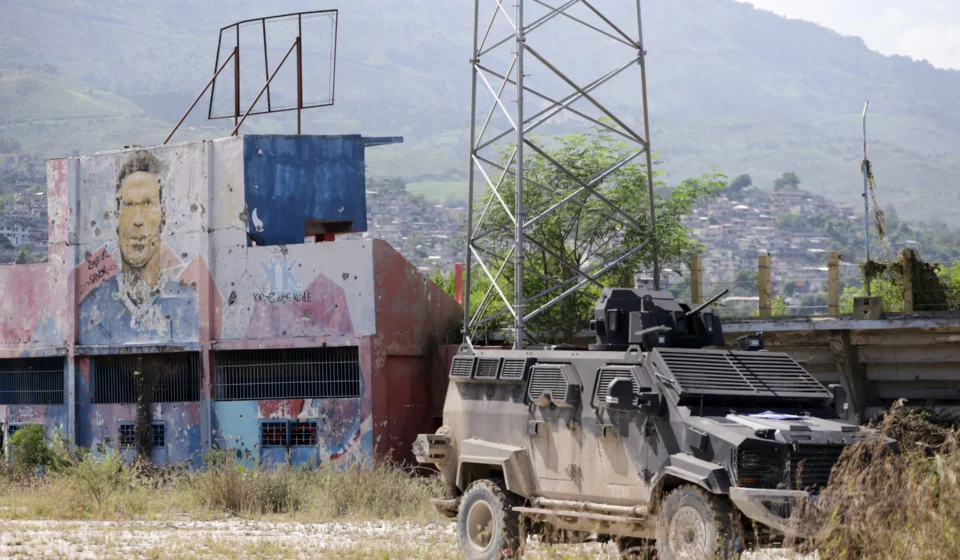
Haiti faces a severe prison crisis of its own. Armed gangs raided the country’s two largest prisons in 2024, freeing thousands of inmates. Overcrowding, inadequate food and water, and poor living conditions have long affected the prison system. Human rights experts have warned of deaths and extreme conditions among detainees.
The proposed facilities are intended to address the country’s shortage of prison infrastructure, although details of their design, capacity and operating arrangements have not yet been announced.
Salvadoran soldiers killed during Haiti deployment
The prison agreement comes as El Salvador expands its security involvement in Haiti. The country’s armed forces said on Friday that two Salvadoran soldiers had been killed and two others injured in an explosion while handling explosives at a camp in Haiti. The injured personnel were receiving medical treatment, but their conditions were not disclosed.
The soldiers were among approximately 2,500 Salvadoran troops deployed by President Nayib Bukele. Their mission is linked to efforts to locate four technicians who disappeared on 18 October after coming under fire from gangs in the Croix-des-Bouquets area, northeast of Port-au-Prince.
The deployment has received public support from some Haitians, but security experts have warned that the operation carries risks for civilians and presents political challenges for Bukele.
The Salvadoran troops are separate from the UN-authorised Gang Suppression Force, which was established to help dismantle armed gangs, protect critical infrastructure and facilitate humanitarian access in cooperation with Haiti’s national police.
The UN-backed force is authorised to deploy up to 5,500 security personnel and has powers to arrest suspected criminals. It replaced the previous Kenya-led multinational security support mission, but has not yet reached its full authorised strength.
Haiti’s wider political and security crisis
Haiti continues to face a prolonged political crisis alongside widespread gang violence. Armed groups are estimated to control around 70% of Port-au-Prince and significant areas of the country’s central region.
The country has had no elected government since President Jovenel Moïse was assassinated in 2021. Elections are scheduled for next year, according to the Associated Press.
The agreement with El Salvador reflects Haiti’s search for additional security and institutional support as it attempts to restore state authority. However, the effectiveness of the prison projects will depend not only on construction but also on funding, management, judicial safeguards and the treatment of detainees.
The arrangement also raises questions about how Haiti will balance its urgent security needs with concerns over prison conditions and human rights, particularly as it looks to a country whose own mass-incarceration policies have attracted international scrutiny.
Sources: Associated Press, Haiti strikes deal with El Salvador to build new prisons after minister visit; Associated Press, Latin America and the Caribbean coverage.