

















Ukraine strikes Russian refinery again, disrupting recovery after September attack
The latest drone assault on the Slavyansk ECO refinery caused major infrastructure damage, fires and an oil spill, raising fresh questions about Russia’s ability to restore its fuel-processing capacity amid Ukraine’s expanding campaign against energy facilities.
A Ukrainian drone attack has inflicted further damage on a major Russian oil refinery in the southern Krasnodar region, disrupting recovery efforts following an earlier strike in September and highlighting the growing pressure on Russia’s energy infrastructure.
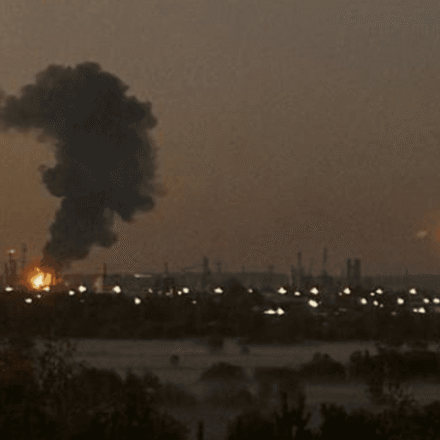
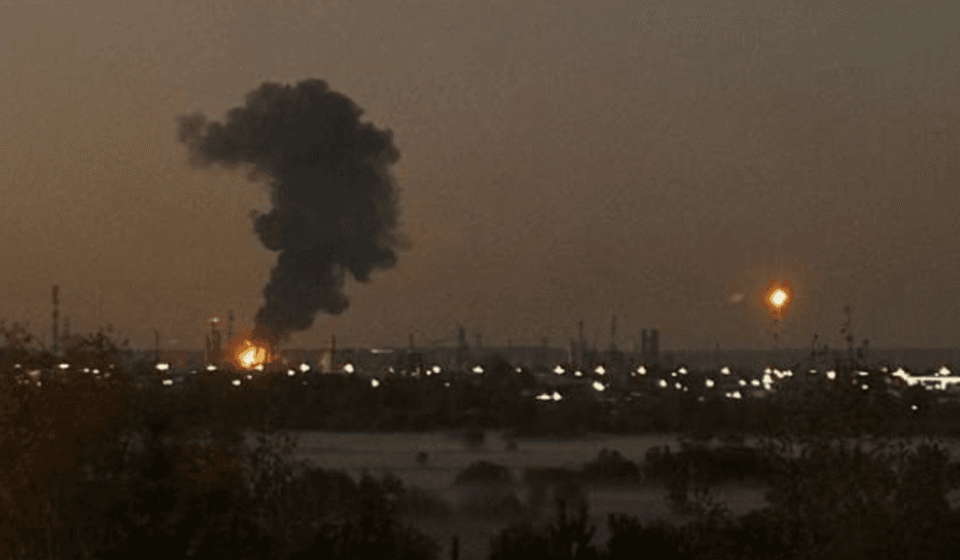
The attack took place overnight on 26 November at the Slavyansk ECO refinery in Slavyansk-on-Kuban, where fires broke out across damaged sections of the facility. The refinery’s operator confirmed that the installation had sustained serious damage while undergoing restoration work following the previous attack.
According to the company, the latest strike damaged crude oil storage tanks, causing an oil spill, while fires broke out at several affected locations. The attack also compounded the disruption at a facility that had yet to resume normal operations after the September incident.
The scale of the damage appears particularly significant because the refinery was already out of operation. Reuters, citing the company, reported that the atmospheric crude oil distillation unit sustained substantial damage. Storage facilities for heavy petroleum products were destroyed, while pipelines carrying heavy petroleum products and gasoline fractions were also damaged.
The refinery has an annual crude-processing capacity of up to 5.2 million tonnes, according to Ukraine’s Defence Intelligence. Its production includes petrol, diesel and fuel oil, making it relevant to both domestic fuel supplies and Russia’s wider wartime logistics. The intelligence agency said its long-range drones struck production facilities, the tank farm and transport pipelines. However, its account of the operation and its military significance has not been independently verified.
The latest attack also reflects a wider pattern of Ukrainian efforts to disrupt Russia’s oil-processing network. Rather than concentrating exclusively on export terminals or crude production sites, Ukraine has increasingly targeted refineries and associated infrastructure that convert crude oil into usable fuels. Damage to distillation units, storage facilities and pipelines can interrupt several stages of the refining process, potentially extending recovery times beyond the immediate aftermath of an attack.
The economic implications could extend beyond the individual facility. Reuters, citing estimates from two industry sources, reported that Ukrainian drone attacks had reduced the combined crude-processing volumes of Russian refineries by 45% since late October. The estimate indicates mounting disruption across the sector, although it should not be interpreted as a permanent loss of refining capacity or attributed to the Slavyansk refinery alone.
The timing is also significant. The latest wave of attacks followed the failure of an energy truce between Moscow and Kyiv, which US President Donald Trump had announced in mid-October. The attempted pause did not prevent renewed strikes on energy infrastructure, with Ukraine stepping up attacks on Russian refineries from late October, according to Reuters.
For the Slavyansk refinery, the immediate challenge is no longer simply repairing damage from a single incident. The September strike had already forced production to stop, and the November attack has damaged infrastructure while restoration was still under way. Repeated strikes on a facility during its recovery can increase repair costs, delay the return to operation and complicate the availability of replacement equipment and technical resources.
The attacks also carry wider environmental and safety risks. Damage to crude oil storage tanks and pipelines can cause spills, while fires at industrial installations threaten surrounding areas. The refinery operator confirmed an oil spill following the latest incident, although the volume released and the extent of any environmental contamination have not been established.
Russia has continued its full-scale invasion of Ukraine since February 2022, regularly striking Ukrainian cities and energy infrastructure. Kyiv has presented its attacks on Russian oil facilities as part of its effort to weaken Moscow’s capacity to sustain the war. The latest strike demonstrates how energy infrastructure has become an increasingly important part of the conflict, with consequences extending from industrial production and fuel logistics to environmental safety. Whether the damage will lead to a prolonged shutdown at Slavyansk remains unclear.
Sources: Reuters – Russian oil refinery in Krasnodar region on fire after drone attack; Militarnyi – Ukrainian Drones Attacked Slavyansk ECO Oil Refinery in Kuban; Ukrinform – Ukraine hits Russian refinery in Krasnodar Krai; The Moscow Times – Ukrainian Drone Strike Sparks Fire and Inflicts Serious Damage at Krasnodar Refinery; Ahram Online – Russian refinery says hit with second drone attack in weeks.