









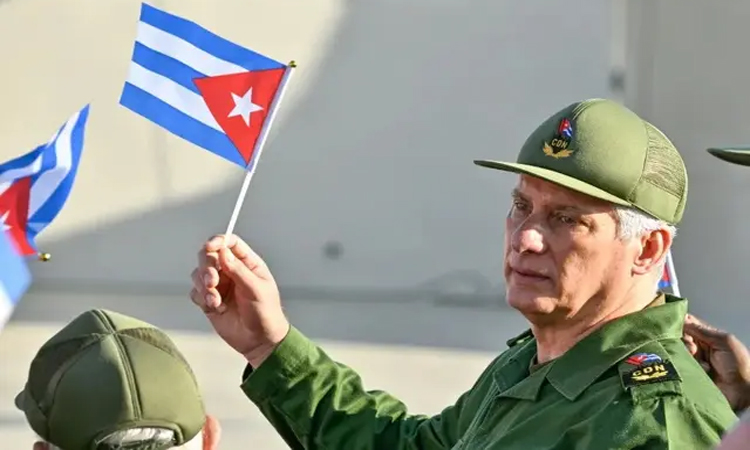
Cuba expands private sector freedoms amid economic crisis
TLE Desk: Cuba’s government has announced a new set of economic reforms aimed at expanding opportunities for private businesses and reducing state control over parts of the economy as the country grapples with a prolonged economic crisis, reports AFP.
President Miguel Díaz-Canel said on Friday that Havana would open additional sectors to private enterprise and accelerate the approval process for new business ventures.
Speaking in a nationally televised address, Díaz-Canel said restrictions on private-sector activities would be significantly reduced.
“For non-state forms of management, the list of prohibited activities will be limited so that their scope of operations is as broad as possible,” the president said.
He added that authorities were working to approve pending business applications as quickly as possible.
The measures form part of broader efforts by the communist government to stimulate economic activity amid mounting financial pressures and ongoing US sanctions.
Private businesses, which were formally authorized in Cuba in 2021 and can employ up to 100 workers, have become an increasingly important part of the island’s economy. Earlier this year, the government also allowed private firms to import fuel, ending a long-standing state monopoly in the sector.
Under the latest reforms, private businesses will be permitted to invest in the economy under conditions similar to those available to foreign investors.
The government is also considering eliminating state intermediaries in import and export operations, a move that could provide greater flexibility for private companies.
Díaz-Canel reaffirmed his administration’s commitment to decentralizing economic management and granting greater autonomy to state-owned enterprises, which still account for roughly 80 percent of Cuba’s economic activity.
He further announced plans to restructure the state bureaucracy by reducing the number of ministries and shrinking the public-sector workforce. The proposal is expected to be submitted to parliament for approval in July.
Despite ongoing economic difficulties, the Cuban leader sought to project confidence in the country’s future.
“The country is not paralyzed; the country is facing this situation intelligently,” Díaz-Canel said, while criticizing what he described as Washington’s “maximum pressure” policy toward Cuba.
The island continues to face severe economic, social and energy challenges, which Cuban authorities say have been exacerbated by US sanctions and the decades-old embargo first imposed in 1962.