









Pakistan’s media tells four different stories: Security, diplomacy and political power
By HAFSA QADRI
The same event can look remarkably different depending on where a reader encounters it.
In Pakistan’s recent news cycle, airstrikes along the Afghanistan border became a story about counterterrorism and civilian casualties. A meeting between Indian and Pakistani officials at the Shanghai Cooperation Organisation (SCO) became either a test of bilateral diplomacy or evidence of Pakistan’s regional leadership. A Pakistani astronaut’s planned mission to China’s space station was presented as both a scientific milestone and a reminder of Islamabad’s dependence on Beijing.
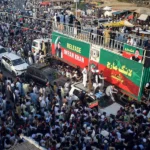
And as Pakistan Tehreek-e-Insaf (PTI) prepared for another protest march, the story changed yet again. For one outlet, it was about political dialogue. For another, the economic cost of blocked roads and stranded cargo. For another, it was a confrontation between a government and an opposition movement.
These differences offer a useful window into how media framing shapes the way audiences understand Pakistan and the region.
The findings come from the first monitoring report prepared for the Regional Media Research Network (RMRN), covering selected Pakistan-related stories between 28 September and 2 October 2026, with earlier background reporting included for the PTI story.
Security through competing narratives
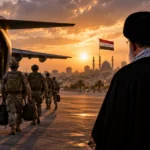
The Pakistan-Afghanistan airstrikes provided perhaps the clearest example of competing narratives.
Reuters’ coverage centred on reported casualties, conflicting claims and the difficulty of independently verifying information emerging from the conflict zone. The Associated Press, meanwhile, placed greater emphasis on allegations by Pakistan’s military that an Afghan Taliban governor had hosted militants involved in planning attacks.
Pakistan’s official narrative was markedly different. Statements reported by Pakistani media and Reuters emphasised counterterrorism, precision strikes and the destruction of militant targets.
The difference is significant.
For an international audience, the principal question is whether the claims can be independently verified and what the human consequences of the strikes were. In the Pakistani official narrative, the emphasis is on the security threat and the state’s justification for military action.
Neither framing exists in isolation from the wider conflict. Pakistan and Afghanistan remain deeply connected by geography, security and trade, yet their competing accounts of cross-border militancy continue to complicate efforts towards cooperation.
For readers, the choice of which facts appear first can influence whether the event is understood primarily as a security operation, a diplomatic crisis or a humanitarian concern.
The SCO: one meeting, two diplomatic meanings
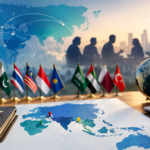
A similar divergence appeared in coverage of the India-Pakistan interaction during the SCO meetings in Islamabad.
Indian Express coverage highlighted New Delhi’s position that meaningful bilateral engagement requires an environment free from terrorism. At the same time, it reported India’s continued participation in the multilateral SCO framework and its interest in regional connectivity, transit and trade.
Pakistani coverage placed greater emphasis on Islamabad’s role as host and chair of the SCO process. The Express Tribune highlighted Pakistan’s institutional leadership and the cordial interaction between Pakistani and Indian officials, while Radio Pakistan presented the country’s chairmanship through the language of an open, inclusive and constructive regional role.
The distinction illustrates a familiar feature of India-Pakistan diplomacy: multilateral engagement can continue even when bilateral relations remain deeply strained.
For Pakistan, the SCO provides a platform through which it can demonstrate regional relevance. For India, participation in the same institution does not necessarily signal a willingness to normalise bilateral relations.
The meeting therefore carries different meanings depending on the national lens through which it is reported.
A space mission — achievement or dependence?
Pakistan’s cooperation with China in space technology provides a less confrontational but equally revealing example.
Reuters framed Pakistan’s planned astronaut mission to China’s Tiangong space station as an example of Chinese space diplomacy while also examining Islamabad’s technological dependence on Beijing. Pakistan does not possess its own independent crewed spacecraft or launch capability, making the partnership both an opportunity and a strategic dependency.
Dawn carried Reuters-syndicated reporting, meaning the article should not automatically be treated as an independent expression of Dawn’s editorial position.
Pakistan’s state news agency, the Associated Press of Pakistan, placed greater emphasis on the upcoming mission, bilateral scientific cooperation and the significance of Pakistani astronauts travelling to China’s space station.
The contrast is subtle but important.
One narrative asks what Pakistan can achieve through international scientific partnerships. The other asks what those partnerships reveal about Pakistan’s technological capabilities and dependence.
For Pakistani audiences, the mission can understandably represent national progress and scientific ambition. For an international audience, it can simultaneously be read as evidence of the deepening strategic relationship between Islamabad and Beijing.
Both can be true.
When politics becomes an economic story
The PTI protest movement produced perhaps the widest range of media framing.
Dawn largely presented the developments through the lens of political negotiations. Its reporting focused on PTI’s willingness to enter talks with the federal government, its demand for access to imprisoned former prime minister Imran Khan, and the government’s decision to pursue dialogue rather than immediately escalate the confrontation.
Reuters approached the same episode from a different direction.
Its report on containers accumulating at Karachi Port shifted attention away from political rhetoric and towards the economic consequences of the confrontation. Restrictions intended to prevent protesters from reaching Islamabad were affecting transport routes, delaying cargo and imposing costs on businesses and drivers.
For transport operators, the political dispute was no longer an abstract struggle between parties. It was a question of whether trucks could move, whether cargo could reach its destination and whether drivers could earn a living.
Al Jazeera, meanwhile, focused more heavily on the confrontation itself — government security preparations, restrictions on movement, PTI mobilisation and the demand for Khan’s release.
The three approaches create three different versions of the same story:
Dawn: Can political dialogue prevent escalation?
Reuters: What is the economic cost of the confrontation?
Al Jazeera: Why is the political conflict escalating?
The differences matter because political unrest rarely remains confined to politics. When roads are blocked and containers remain stranded, a political dispute becomes an economic story. When police and protesters confront one another, it becomes a public-order story. When negotiations begin, it becomes a diplomatic story.
What the comparison tells us
The monitoring exercise suggests that source selection can shape a narrative as much as the event itself.
Official statements tend to give prominence to security rationales, institutional achievements and government positions. Independent or international outlets may place greater emphasis on verification, economic consequences, civilian impact or competing claims. Syndicated material, meanwhile, needs to be distinguished from a publication’s own editorial reporting.
This does not mean that one framing is automatically correct and another is inherently biased.
Rather, each frame brings certain questions to the foreground while pushing others into the background.
A reader encountering the Afghanistan story through an official statement may first ask how Pakistan is responding to militancy. A Reuters reader may first ask whether the reported casualties and military claims can be verified. A reader of the PTI coverage in Reuters may think about the cost to trade and transport before considering the political demands behind the protest.
That is the central lesson for media monitoring: what is omitted can sometimes be as revealing as what is included.
Beyond Pakistan
These patterns are not unique to Pakistan.
Across South Asia, domestic media frequently operate within national political, security and economic contexts, while international organisations tend to approach the same events through broader questions of verification, regional stability, human rights or economic impact.
Understanding those differences is particularly important when regional stories cross borders.
India’s reporting on Pakistan is read differently inside Pakistan. Pakistani reporting on Afghanistan is received differently across the border. Chinese cooperation with Pakistan can be framed as partnership in one country and strategic influence in another.
For journalists and researchers, the challenge is therefore not simply to collect headlines.
It is to ask who is speaking, whose evidence is being used, what context is being prioritised, what is missing, and how the story might appear to an audience on the other side of the border.
That is where media monitoring becomes more than a record of what newspapers published. It becomes a way of understanding how regional narratives are built.
And in a region where politics, security, trade and diplomacy are so closely intertwined, understanding those narratives may be just as important as understanding the events themselves.
