




















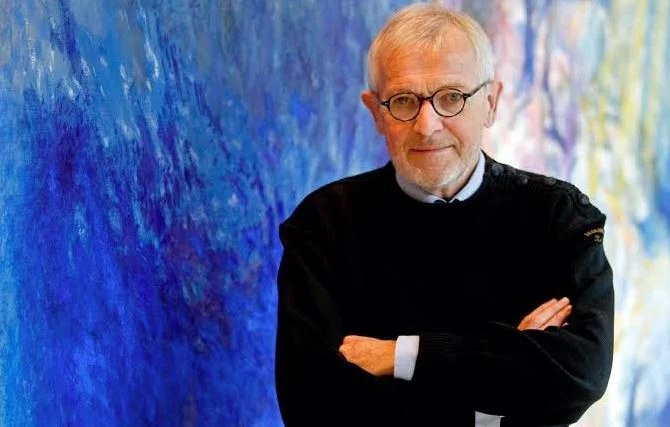
Nobel brings relief to Francis Halzen after years of October disappointment
For decades, October brought a familiar disappointment to physicist Francis Halzen. Each year, as the Nobel Prize announcements approached, the Belgian-born scientist wondered whether his work on one of the world’s most ambitious scientific experiments would finally receive the field’s highest recognition.
This year, the waiting ended.
At 82, Halzen, a professor at the University of Wisconsin-Madison and the driving force behind the IceCube Neutrino Observatory, said the Nobel Prize had brought him a sense of relief after years of what he described as October “misery”.
“It’s a great relief for me,” Halzen told a press conference at the university. Speaking by video from Italy, where he was attending a scientific meeting, he said he had often felt that he had disappointed his collaborators whenever the prize passed him by.
The emotion behind the award reflects the unusually long journey of IceCube. Conceived by Halzen in the late 1980s, the project eventually became a giant telescope buried deep beneath the Antarctic ice, designed to detect neutrinos—extremely elusive particles that interact only rarely with matter.
The scale of the experiment is difficult to imagine. IceCube occupies roughly a cubic kilometre of Antarctic ice, transforming an enormous volume of frozen water into a detector capable of recording fleeting traces left by neutrinos passing through Earth.
Neutrinos are among the most abundant particles in the universe. Around 65 billion neutrinos originating from the Sun pass through an area the size of a human fingernail every second. Most pass through matter without leaving a trace, but high-energy neutrinos arriving from deep space can carry information about some of the universe’s most energetic environments.
That is what makes IceCube more than simply another particle detector. It has effectively opened a new way of observing the cosmos.
Halzen’s crucial insight was to use Antarctic ice instead of liquid water to detect the faint signals produced when neutrinos interact with matter. When a neutrino collides with an atomic nucleus, it can produce a charged particle that travels in approximately the same direction and emits a faint blue flash of light. Sensors buried in the ice can detect that light and reconstruct information about the incoming neutrino.
The idea was technically formidable. The project required drilling deep into Antarctic ice, installing thousands of optical sensors and ensuring that the detector could distinguish extremely rare cosmic signals from background events.
Halzen recalled that the first neutrino images produced by an earlier research-and-development system were among the most exciting moments of his career.
“It was just incredible,” he said, describing the achievement as proof that the concept could actually work.
IceCube became fully operational in 2011. Since then, the observatory has detected high-energy neutrinos associated with sources beyond our solar system, including a distant galaxy and signals from the direction of the Orion constellation. It has also contributed to the detection and study of neutrinos originating within the Milky Way.
The significance of the work extends beyond a single discovery. Astronomy has historically depended on different forms of electromagnetic radiation—visible light, radio waves, X-rays and gamma rays—to observe the universe. Neutrinos offer something fundamentally different because they can travel through dense matter and across enormous cosmic distances with comparatively little interaction.
That creates what scientists describe as a new “window on the universe”.
Halzen himself cautioned against predicting exactly what that window will reveal. Whenever humanity has developed a new way of observing the cosmos, he noted, expectations about what would follow have often proved wrong.
“What this will bring is impossible to predict,” he said, adding that new observational windows had repeatedly produced unexpected discoveries in the past.
The Nobel recognition is therefore also a tribute to a scientific project whose success was far from guaranteed.
Halzen credited around 450 researchers from more than a dozen countries who contributed to turning his original idea into a functioning observatory. He also acknowledged the University of Wisconsin-Madison for accepting considerable risks during the project’s development and the US National Science Foundation for funding a project whose outcome could not initially be guaranteed.
“There were several milestones we had to pass, and at each point, this project could have failed,” Halzen said.
His remarks also underline a broader question facing fundamental science. Large scientific discoveries often require decades of investment before their practical or intellectual returns become visible. IceCube began as a risky idea in an era when its eventual scientific significance could not easily be demonstrated.
That long horizon has become increasingly relevant as governments reconsider funding for basic research. In the United States, the National Science Foundation has faced pressure over its budget and research priorities, while the administration of President Donald Trump has called for deep cuts and a greater emphasis on technology-related priorities.
For Halzen, however, IceCube demonstrates what can emerge when institutions are willing to support a difficult scientific idea before its ultimate value is known.
The Nobel Prize may have ended his annual October anxiety, but the scientific story that produced it is far from over. IceCube has turned a vast section of Antarctic ice into an observatory for particles arriving from some of the most extreme environments in the cosmos.
And the next discovery may be precisely the one that scientists do not yet know how to predict.
That uncertainty, after all, is one of the defining features of fundamental science—and perhaps the reason Halzen believes that opening another window on the universe will once again reveal something unexpected.
