

















Malaysia’s Myanmar dilemma: repatriation, Rohingya safety, ASEAN’s shifting approach
Malaysia is entering a delicate phase in its relationship with Myanmar, as Prime Minister Anwar Ibrahim prepares to receive President Min Aung Hlaing in Kuala Lumpur while thousands of Myanmar nationals are being returned from Malaysia amid warnings from the United Nations and human-rights organisations.
Min Aung Hlaing is scheduled to visit Malaysia on October 7 and 8 for talks with Anwar, with repatriation, bilateral relations and ASEAN’s efforts to address Myanmar’s conflict expected to feature prominently.
The timing is significant.
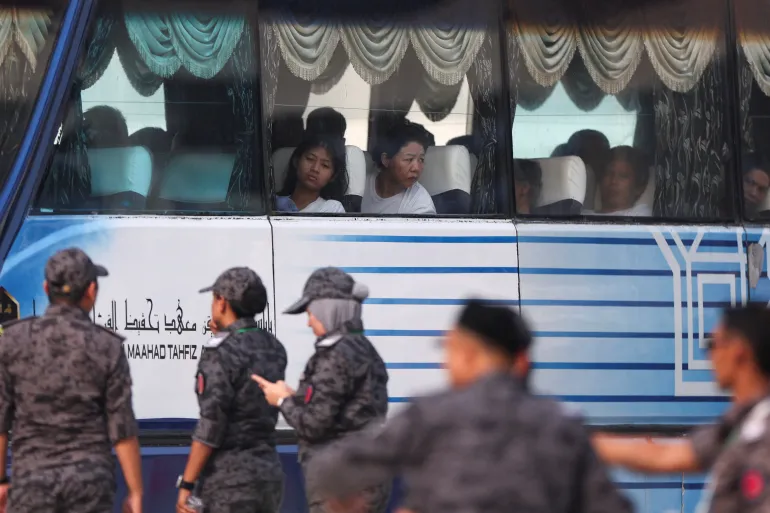
Malaysia says around 10,000 Myanmar nationals have been repatriated since January. Nearly 1,500 were returned by sea in late September, while others were transported on flights arranged by the Myanmar government. Anwar told parliament that Kuala Lumpur had sought assurances that returnees would be treated fairly and would not face abuse, coercion or violations of their rights.
But the issue has become considerably more complicated because of one question: who is being returned, and under what conditions?
The Rohingya question remains at the centre
Anwar said on October 6 that none of the more than 10,000 Myanmar nationals returned so far were Rohingya. Malaysian officials have therefore sought to distinguish the current repatriation programme from the possible forced return of Rohingya refugees.
That distinction is important because the Rohingya do not enjoy full citizenship rights in Myanmar and have faced decades of persecution. Malaysia currently hosts more than 215,000 refugees and asylum seekers registered with UNHCR, including more than 126,000 Rohingya, according to recent Malaysian reporting.
Yet the formal Malaysian-Myanmar arrangement covers Myanmar nationals from all ethnic groups. That leaves open a politically and legally sensitive question over whether Rohingya could eventually be included in future phases.
For now, Anwar’s statement provides a factual distinction: no Rohingya have been returned under the programme so far. But it does not remove the broader concern over how Malaysia will determine who qualifies for protection and who can safely be returned.
The UN is questioning whether the returns are genuinely voluntary
This is where the Malaysian government’s description and the international humanitarian assessment diverge.
Kuala Lumpur says the returns are voluntary. UNHCR, however, said it was not allowed access to the people being returned to determine whether their decisions were genuinely free and informed.
After the return of 1,476 people in September, UNHCR said those individuals had been held in immigration detention and that this raised serious questions about whether their decisions to return could properly be regarded as voluntary.
That concern is not merely procedural.
International refugee protection rests heavily on the principle of non-refoulement — the idea that people should not be returned to a country where they face serious risks of persecution or other grave harm.
UNHCR has warned that some of those returned to Myanmar may require international protection because of the country’s continuing conflict and humanitarian crisis.
Human Rights Watch has gone further, urging Malaysia to halt plans to return Rohingya and others from Myanmar, arguing that returnees could face persecution and other abuses.
The disagreement therefore centres not only on whether people signed up for return, but on whether they had a genuinely meaningful and informed choice.
Myanmar is not a normal repatriation destination
The security environment makes the issue more complicated.
Myanmar has remained embroiled in armed conflict since the military takeover in February 2021. Different armed groups control territory across the country, while the military continues to conduct operations in several regions.
Recent reporting has also highlighted continued violence in Rakhine State, where the Rohingya crisis is particularly acute. An AFP report cited by Malay Mail said 50 people were killed in a military airstrike on a marketplace in western Rakhine State last week.
That creates an unusual contradiction.
Malaysia is negotiating the return of Myanmar nationals with a government that says it can guarantee their safety, while international organisations and rights groups question whether the current security environment makes such guarantees credible.
This is why the word “voluntary” has become central to the diplomatic dispute.
But Malaysia has its own domestic pressures
The Malaysian government’s position cannot be understood solely through the Rohingya crisis.
Malaysia is hosting a very large refugee population without being a party to the 1951 UN Refugee Convention. Registered refugees and asylum seekers therefore exist in a legally complicated position, with Malaysia generally treating refugees as undocumented migrants.
At the same time, immigration enforcement has intensified.
Al Jazeera reported that more than 50,000 refugees were detained in Malaysia during 2026 amid increasing raids on refugee communities.
That domestic pressure helps explain why Anwar’s government is seeking a direct arrangement with Myanmar.
From Kuala Lumpur’s perspective, the problem is not simply humanitarian. It involves immigration enforcement, detention costs, public opinion, labour-market management, bilateral relations and the long-term presence of a large displaced population.
Anwar has also argued that Malaysia cannot indefinitely carry the responsibility of hosting Myanmar nationals without a mechanism for their return.
That makes the government’s policy easier to understand even though human-rights organisations dispute whether current conditions allow safe returns.
Min Aung Hlaing’s Kuala Lumpur visit carries a second message
The visit itself is arguably as important as the repatriation agreement.
Min Aung Hlaing has been politically isolated by much of ASEAN since the 2021 coup. The bloc excluded Myanmar’s top military leadership from its highest-level political meetings after the military failed to make meaningful progress on ASEAN’s Five-Point Consensus.
But the diplomatic environment is changing.
Malaysia’s decision to receive Min Aung Hlaing follows visits or engagements involving other ASEAN states. AFP reported that Malaysia would become the fifth ASEAN member, after Thailand, Laos, Vietnam and Cambodia, to welcome him since the coup.
That does not mean ASEAN has formally abandoned its position on Myanmar.
Malaysia’s Foreign Ministry has said the visit will include discussions under ASEAN mechanisms and continue engagement based on the Five-Point Consensus. Kuala Lumpur has also stressed the need for peace, humanitarian access and regional stability.
But the symbolism is difficult to ignore.
A leader who spent years facing regional diplomatic isolation is now being received by another ASEAN government as a counterpart in negotiations over migration, security and bilateral relations.
Malaysia is pursuing engagement rather than isolation
This is perhaps the most interesting shift in the regional narrative.
Western governments and human-rights organisations have generally placed greater emphasis on accountability, sanctions and political pressure on Myanmar’s military leadership.
Malaysia is pursuing a different mechanism: engagement in exchange for practical outcomes.
Anwar’s calculation appears to be that direct dialogue can produce something tangible — the return of Myanmar nationals, humanitarian access and potentially greater cooperation over the conflict — even if Kuala Lumpur continues to raise human-rights concerns.
His government is therefore trying to occupy two positions simultaneously.
It wants Myanmar to accept its citizens back, but it also says those citizens must be treated humanely.
It wants ASEAN to maintain pressure for peace, but it is willing to receive Min Aung Hlaing.
It wants to protect Malaysia’s sovereignty over immigration policy, but it has historically relied heavily on UNHCR’s refugee-registration infrastructure.
That balancing act explains much of Kuala Lumpur’s current diplomacy.
The regional implications extend to Bangladesh
For Bangladesh, the issue has particular significance because the Rohingya crisis is not confined to Myanmar and Malaysia.
Bangladesh continues to host a very large Rohingya refugee population, while any credible repatriation process ultimately depends on conditions inside Myanmar.
If ASEAN countries increasingly move towards bilateral arrangements with Naypyidaw that prioritise the return of Myanmar nationals, the regional conversation could gradually shift from whether Myanmar is safe for return to how quickly neighbouring countries can facilitate return.
That would be a major change in the politics of the Rohingya crisis.
It would also put greater pressure on countries such as Bangladesh, Malaysia and Indonesia to distinguish between ordinary undocumented migration and people requiring international protection.
The Malaysian case therefore deserves close attention in Dhaka.
If Kuala Lumpur succeeds in obtaining verifiable guarantees on safe, dignified and genuinely voluntary return, it could provide a model for broader regional engagement with Myanmar.
If those guarantees cannot be independently verified, the policy could instead deepen concerns that ASEAN’s emphasis on engagement is moving faster than conditions on the ground.
My view: Malaysia is trying to solve two different problems with one diplomatic channel
My reading is that Malaysia’s policy is driven by two separate but overlapping objectives.
The first is domestic: Kuala Lumpur wants to reduce the long-term burden associated with undocumented Myanmar nationals and strengthen its control over migration and refugee management.
The second is regional: Malaysia wants to keep a direct channel open with Myanmar and use that relationship to pursue practical outcomes within ASEAN.
Those objectives are understandable as matters of state policy.
But repatriation cannot be judged only by the number of people sent home.
The critical measure is what happens after they cross the border.
If returnees are safe, have access to livelihoods and services, are not detained or forcibly recruited and can live without persecution, then the argument for voluntary repatriation becomes considerably stronger.
If people are returned to conflict, persecution or forced military service, then the fact that a government describes the process as voluntary does not resolve the underlying protection problem.
That is why the UNHCR’s lack of access to returnees is so important. Independent verification is not a minor administrative detail; it is the mechanism through which claims of voluntary and safe return can be tested.
ASEAN’s Myanmar policy is entering another phase
The Kuala Lumpur meeting therefore has significance beyond Malaysia and Myanmar.
ASEAN has spent years trying to balance non-interference with the need to respond to one of the region’s most serious humanitarian and security crises.
The bloc’s Five-Point Consensus remains formally important, but member states are increasingly engaging Myanmar through different channels and with different priorities.
Malaysia’s approach is a particularly revealing example.
Rather than waiting for a comprehensive political settlement inside Myanmar, Kuala Lumpur is attempting to extract practical cooperation from the government in Naypyidaw — beginning with migration and repatriation.
That may produce immediate diplomatic gains.
But the longer-term test will be whether engagement can improve conditions for the people affected by Myanmar’s conflict rather than simply improve relations between governments.
For Malaysia, the equation is straightforward: it wants Myanmar to take responsibility for its citizens.
For the Rohingya and other vulnerable groups, however, the more difficult question remains: is there a Myanmar to which they can safely return?
Until that question can be answered with independent evidence rather than diplomatic assurances, the repatriation debate will remain unresolved.
