











Trump to honour Musk and tech chiefs with top US science awards
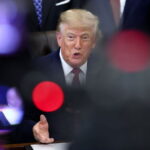
US President Donald Trump is set to honour Elon Musk and several of the world’s most prominent technology executives with the country’s highest scientific and technological awards, bringing some of Silicon Valley’s biggest figures to the White House as his administration pushes a new vision for American research and innovation.
AFP reported that Musk, Google co-founder Sergey Brin, Nvidia chief executive Jensen Huang and AMD chief executive Lisa Su will receive the National Medal of Science at Thursday’s “Science: A New Golden Age” summit. Michael Dell, founder and chief executive of Dell Technologies, and Microsoft CEO Satya Nadella are due to receive the National Medal of Technology and Innovation. Reuters also confirmed the list of recipients.
The National Medal of Science is the US government’s highest recognition for scientists and engineers. The technology medal is the country’s top presidential honour for technological achievement. The awards therefore place the executives at the centre of an administration seeking to link scientific research, artificial intelligence, advanced computing and private-sector innovation more closely to national economic and strategic goals.
The ceremony comes under the banner of “Science: A New Golden Age”, echoing a broader White House effort to reshape the US science and technology system. A July report by the White House Office of Science and Technology Policy argued for major changes to the way federal research is organised, funded and evaluated, with particular emphasis on AI-enabled scientific discovery and greater involvement from private-sector innovators.
The administration has also placed artificial intelligence at the centre of its scientific strategy. Its Genesis Mission is designed to connect national laboratories, computing resources, scientific data and AI systems in an effort to accelerate research across disciplines. The White House has described the programme as a major national initiative for AI-driven scientific discovery.
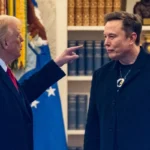
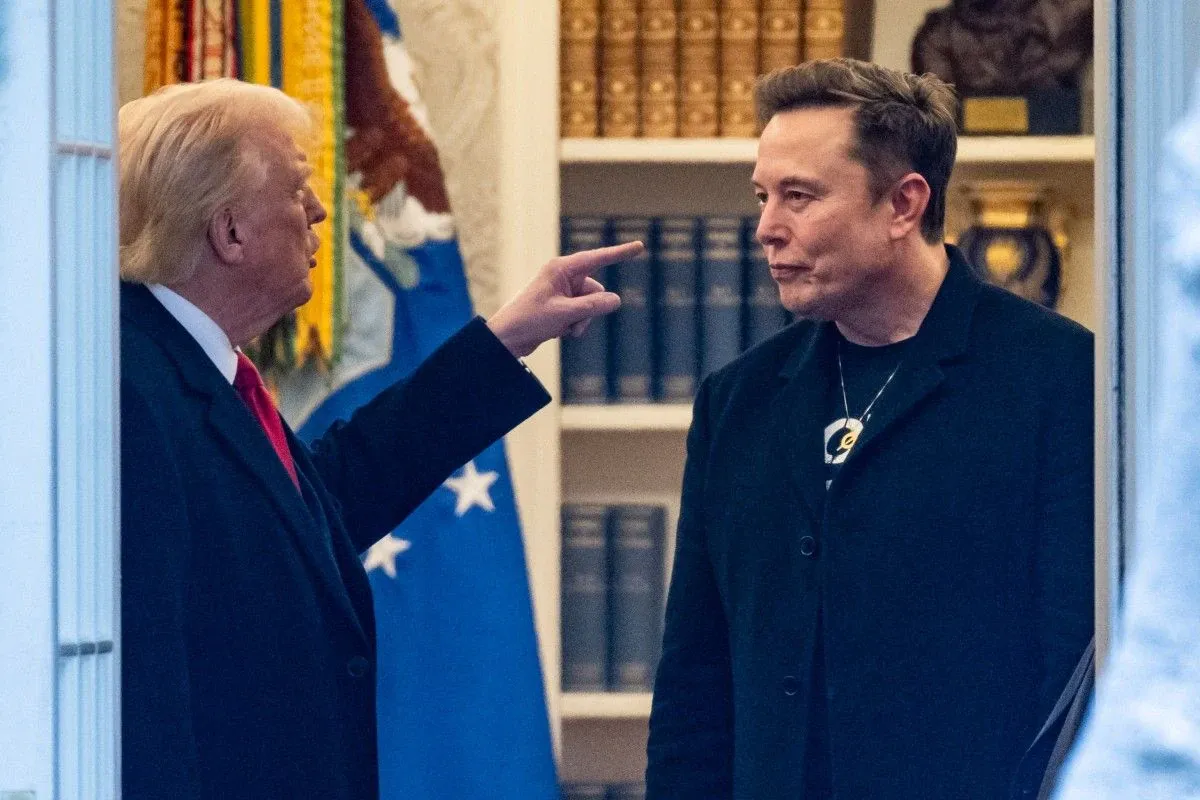
Musk’s presence gives Thursday’s ceremony an additional political dimension. The SpaceX and Tesla chief had a public rupture with Trump last year after serving in the administration’s cost-cutting Department of Government Efficiency, but the two have since resumed a closer relationship.
Musk was also a major financial supporter of Trump’s 2024 presidential campaign. He has subsequently returned to the White House’s technology-policy discussions, appearing alongside other technology executives at meetings focused on artificial intelligence and national innovation.
Huang has likewise become an increasingly visible figure in Washington’s technology discussions, particularly as Nvidia’s chips have become central to the expansion of AI computing. Brin represents one of the foundational figures of the internet era, while Su leads one of the world’s major semiconductor companies at a time when advanced chips have become an important component of US economic and national-security policy.
The choice of recipients consequently reflects the changing meaning of scientific leadership in the United States. Traditional scientific institutions remain central to federal research, but the country’s most consequential technological advances increasingly depend on companies controlling computing infrastructure, semiconductor technology, AI systems and commercial space capabilities.
That shift is consistent with the White House’s July science strategy, which argues that the traditional linear model of government-funded research followed by private-sector commercialisation no longer fully describes how modern scientific innovation occurs. The report explicitly highlights growing private-sector research and new mechanisms for collaboration between government, academia and industry.
The awards also come as Washington seeks to maintain US technological leadership amid competition with China and other major economies. Semiconductor production, artificial intelligence, space technology and advanced computing have increasingly become matters of both economic policy and national strategy.
Trump has presented AI as a central pillar of what he calls a new “Golden Age” for the US economy. At the same time, he has dismissed some warnings about the possibility of AI posing existential risks, favouring an approach focused heavily on technological development and American leadership.
The administration’s science agenda therefore combines two objectives: accelerating innovation and reshaping the institutions that support it. The recognition of private technology leaders at the White House reflects that strategy, but it also raises a broader question about how the US should balance commercial influence with independent scientific research and public-interest priorities.
For Musk, Thursday’s ceremony is particularly notable because it places him back at the White House alongside the president after their highly publicised falling-out. For the administration, however, the event is broader than one political relationship.
It is a public statement about who Washington now sees as central to America’s scientific future — and about an increasingly blurred boundary between government-funded science, private technology companies and national innovation policy.
