


















Trump’s clash with the Fed raises fresh risks for Wall Street
Tariff-driven price pressures, energy-market disruption and rising borrowing costs are complicating US monetary policy, with implications for AI investment, corporate financing and global markets.
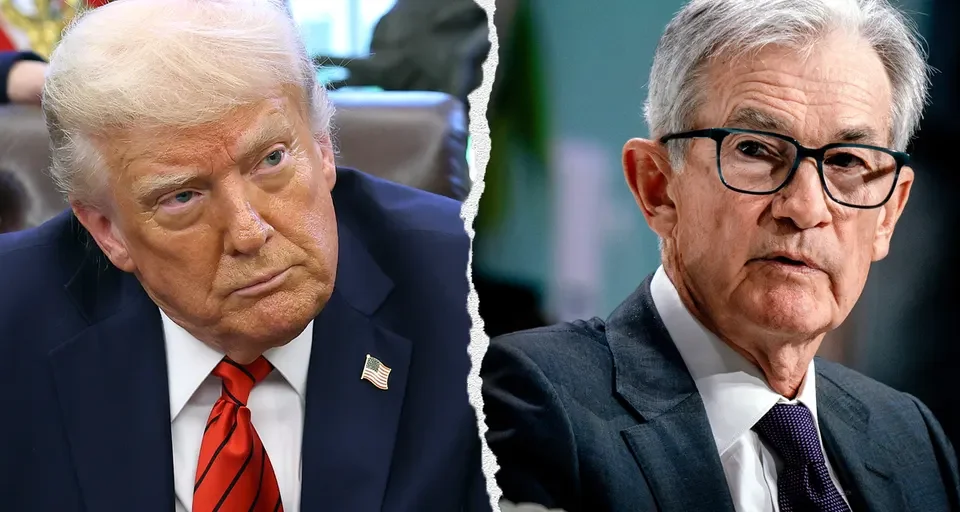
US President Donald Trump’s growing criticism of the Federal Reserve is exposing a central tension in the world’s largest economy: the administration wants cheaper borrowing to support investment and economic growth, while persistent inflation is pushing monetary policymakers towards tighter financial conditions. The dispute has taken on greater significance as the cost of tariffs, the disruption of energy supplies linked to the US-Iran conflict and the financing demands of artificial intelligence infrastructure put pressure on businesses and consumers.
In an article published on 24 October, The Motley Fool reported that Trump had criticised the Federal Reserve’s policy decisions and expressed dissatisfaction with the board’s direction, including the position taken by Kevin Warsh. The report framed the dispute as a potential risk for Wall Street, particularly if interest-rate increases begin to constrain investment in AI data centres and other capital-intensive projects. The broader economic issue, however, extends beyond the president’s relationship with the central bank: it concerns how policymakers balance price stability, borrowing costs and economic expansion when inflationary pressures remain elevated.
The Federal Open Market Committee (FOMC), the Federal Reserve’s monetary policy-setting body, raised its target range for the federal funds rate by 25 basis points on 16 September, taking it to 3.75–4.00 per cent. The committee said economic activity was expanding at a solid pace, domestic spending remained resilient and inflation was still above its 2 per cent objective. The decision reflected the central bank’s assessment that monetary policy needed to restrain price pressures rather than accommodate them through cheaper credit.
Higher interest rates influence the economy through several channels. They increase the cost of financing homes, vehicles, inventories, business expansion and major infrastructure projects. They can also raise the return investors demand from riskier assets, putting pressure on company valuations. For the US government, higher market interest rates can gradually increase the cost of refinancing maturing debt and financing new borrowing, although Treasury yields and federal interest expenses do not move in a simple one-to-one relationship with the federal funds rate.
Trump has repeatedly argued for lower rates, which would make credit cheaper for businesses and households. A lower policy rate could support consumption, investment and equity valuations, particularly in sectors that rely heavily on external financing. Yet the Fed’s mandate requires it to consider inflation and employment rather than set rates primarily to support share prices or reduce the government’s financing costs.
That difference creates the potential for a prolonged institutional dispute. If the administration presses for rate cuts while inflation remains elevated, the central bank must weigh the risk of easing too soon against the possibility that restrictive policy could weaken investment and employment. Public criticism can also create uncertainty about the durability of monetary policy, especially if investors begin to question whether future decisions will be guided by economic data or political pressure.
One of the strongest pieces of evidence in the debate comes from research published by the Federal Reserve Bank of New York on 6 October. Economists Mary Amiti, Sebastian Heise and David E. Weinstein examined how tariffs imposed during 2025–26 passed through to US consumer goods prices.
Their analysis found that, by February 2026, tariffs had contributed an estimated 2.9 percentage points to consumer goods price inflation in the categories studied. The researchers estimated that a 10 per cent increase in tariffs across all imports would raise consumer goods prices by about 2.6 per cent after 12 months. The effect was not limited to imported products: tariffs also raised costs for US manufacturers that rely on imported components and materials, while reducing price competition from foreign goods.
The timing of the impact matters. Import prices can respond quickly when tariffs increase, but domestic producers may adjust their prices more gradually as higher input costs move through production and distribution networks. The New York Fed researchers found that the indirect effect on prices of domestically produced goods takes longer to emerge, meaning the full consumer-price impact may take around a year to materialise.
These findings support the argument that tariffs can complicate the Federal Reserve’s effort to bring inflation back to target. Import duties are collected at the border, but the economic burden may be distributed among importers, retailers, manufacturers and consumers. Some firms may absorb part of the increase through lower margins; others may pass it on through higher prices, change suppliers or reduce investment. The precise outcome varies across products and industries.
The study also requires a qualification. Its 2.9-percentage-point estimate concerns consumer goods categories in the researchers’ sample, not the entire US consumer price index. The authors explicitly caution that their analysis cannot establish how much of broader inflation was caused by tariffs, because economy-wide factors such as wages, demand, exchange rates and monetary policy also influence prices.
For policymakers, the implication is that tariff-related price pressure cannot necessarily be resolved through interest rates alone. Monetary tightening can reduce demand and limit firms’ ability to raise prices, but it does not directly remove import duties or restore disrupted supply. The Fed must therefore judge how persistent these cost increases are likely to be and whether they risk becoming embedded in inflation expectations.
The US-Iran conflict has introduced a separate source of pressure through energy markets. The Motley Fool report cited disruption to oil flows through the Strait of Hormuz, a strategic waterway through which a substantial share of global oil and liquefied natural gas trade normally passes. Any sustained interruption can raise crude prices, shipping and insurance costs, and the price of refined fuels.
Higher energy costs affect the economy well beyond petrol stations. Transport, manufacturing, agriculture and electricity generation can all face higher operating expenses. Businesses may pass these costs on to customers, reduce profit margins or delay expansion. Households, meanwhile, have less income available for other spending when they pay more for fuel, heating, electricity and transported goods.
Energy-related inflation also creates a policy dilemma. If the price increase reflects a temporary supply disruption, aggressive monetary tightening may weaken demand without quickly restoring the missing supply. If elevated energy costs persist and influence wages, service prices or inflation expectations, the central bank may have stronger reasons to maintain restrictive rates.
The duration of the disruption is therefore crucial. Even if shipping conditions improve, production, refining and logistics may take time to recover. The inflationary consequences can continue after the initial supply shock has eased, although the extent and timing depend on how energy markets and global demand evolve.
Artificial intelligence has become a major source of investment in computing infrastructure, data centres, semiconductors, electricity supply and networking equipment. These projects require large upfront spending, and many depend on expectations of future demand and revenue. Changes in financing costs can therefore affect their economics.
When interest rates rise, the cost of borrowing increases and future cash flows are discounted more heavily in investment valuations. Projects with long payback periods may become less attractive, particularly when expected revenues remain uncertain. Companies may postpone some investments, seek additional equity financing or demand stronger evidence that planned infrastructure will generate sufficient returns.
However, higher interest rates do not automatically mean that AI investment will contract. Firms with substantial cash reserves may continue spending, while strategic competition and anticipated productivity gains can sustain investment even when financing becomes more expensive. The effect is likely to vary between established technology companies, smaller developers and businesses building energy-intensive infrastructure.
There is also a wider financing issue. The Federal Reserve’s September meeting minutes noted that heavy private debt issuance to finance AI infrastructure was among the factors contributing to higher Treasury yields and term premiums during the period. This illustrates how AI investment can interact with financial conditions: the sector is affected by interest rates, but its demand for capital can also influence the broader market in which companies and the government raise funds.
The central risk for Wall Street is not simply that borrowing costs rise. It is that valuations may already reflect strong assumptions about future AI-driven earnings. If financing becomes more expensive at the same time that energy, equipment and construction costs increase, some projects may deliver lower returns than investors expect. A reassessment of those expectations could affect technology shares and, through them, broader equity indices.
Trump has also argued that lower interest rates would reduce the cost of servicing US government debt. The underlying concern is substantial: the federal government has more than $40 trillion in gross debt, although the exact total changes over time and gross debt is not the same as debt held by the public.
Lower interest rates can reduce borrowing costs on new debt and on existing obligations that are refinanced at lower yields. But the effect on total interest expenditure is gradual because much of the government’s debt was issued at fixed rates and remains outstanding until maturity. Treasury borrowing costs are also influenced by investors’ expectations for inflation, economic growth, future monetary policy and the supply of government securities.
A central bank that cuts rates primarily to reduce the government’s financing burden could face a credibility problem if inflation remains high. If investors believe monetary policy is becoming less independent, they may demand greater compensation for inflation risk, potentially pushing longer-term yields higher even if the short-term policy rate falls.
This creates a distinction between a lower federal funds rate and cheaper government borrowing across all maturities. Fiscal policy, the maturity structure of public debt and investor confidence all matter. Sustainable debt management cannot rely on monetary easing alone.
US monetary policy has international consequences because the dollar and US Treasury securities play central roles in global finance. Higher US yields can attract capital towards dollar assets, influence exchange rates and tighten financing conditions in economies that rely on external borrowing. The effects vary by country, depending on its foreign-currency debt exposure, reserve position, trade structure and domestic monetary policy.
Emerging economies may face pressure when dollar financing becomes more expensive or when the dollar strengthens against their currencies. A weaker local currency can raise the domestic cost of imported fuel, food, machinery and intermediate goods, potentially adding to inflation. Countries with substantial dollar-denominated liabilities may also find debt servicing more expensive in local-currency terms.
For export-oriented economies, the picture is mixed. A slowdown in US demand could weaken orders for manufactured goods, while a change in the dollar’s value could alter price competitiveness. Higher energy costs would pose an additional challenge for countries that import most of their fuel. At the same time, some exporters could benefit from stronger demand for particular commodities or from shifts in supply chains.
Bangladesh and other import-dependent economies should therefore monitor three channels in particular: the cost of imported energy, changes in dollar funding conditions and any slowdown in demand from major export markets. The impact would depend on the duration of higher US rates, movements in commodity prices, domestic exchange-rate conditions and the resilience of external earnings. A US rate increase does not translate automatically into a particular outcome for Bangladesh, but prolonged financial tightening could make external financing and inflation management more difficult.
The dispute between Trump and the Federal Reserve is ultimately about more than the next interest-rate decision. Central-bank independence helps anchor expectations by allowing monetary policymakers to make unpopular decisions when inflation requires them. It does not mean that the Fed is beyond scrutiny; rather, it means that decisions should be explained through its mandate, evidence and assessment of economic conditions.
Political pressure can create uncertainty if investors believe future policy may be altered to meet short-term political objectives. Conversely, excessive tightening can also carry economic costs if policymakers underestimate the effects on investment, employment and financial stability. The challenge is to balance these risks transparently and consistently.
The New York Fed’s tariff research adds an important distinction to the debate: inflation can be driven by both demand and supply-side forces, and their effects unfold at different speeds. Tariffs may raise prices directly and through domestic production costs, while energy disruptions can affect a wide range of goods and services. Interest rates influence demand and expectations, but they cannot by themselves repair supply chains or reopen a disrupted shipping route.
For investors, the relevant indicators include inflation data, wage growth, energy prices, Treasury yields, corporate borrowing costs and the financing plans of major AI developers. For policymakers, the central questions are whether inflation is becoming persistent, how much tighter financial conditions are affecting activity, and whether fiscal and trade policies are amplifying price pressures.
The outlook remains uncertain. A sustained easing of energy disruption and slower tariff pass-through could reduce inflation pressure, allowing the Federal Reserve to reconsider its stance if economic data support that move. If price increases remain persistent, however, further tightening could weigh on credit-sensitive sectors and increase the risk of a correction in markets priced for strong earnings growth.
The decisive factor will be the interaction of policy and evidence. If the Fed maintains credibility while inflation eases, markets may adjust without a major disruption. If inflation remains elevated while political pressure intensifies, the United States could face a more difficult combination of high borrowing costs, uncertain investment conditions and questions over monetary-policy independence—with consequences extending well beyond Wall Street.
Sources: The Motley Fool — Trump’s criticism of Kevin Warsh and the risks for Wall Street, Federal Reserve — FOMC statement, 16 September 2026, Federal Reserve — Minutes of the September 2026 FOMC meeting, Federal Reserve Bank of New York — How Fast Do Tariffs Pass Through into Consumer Prices?.
