








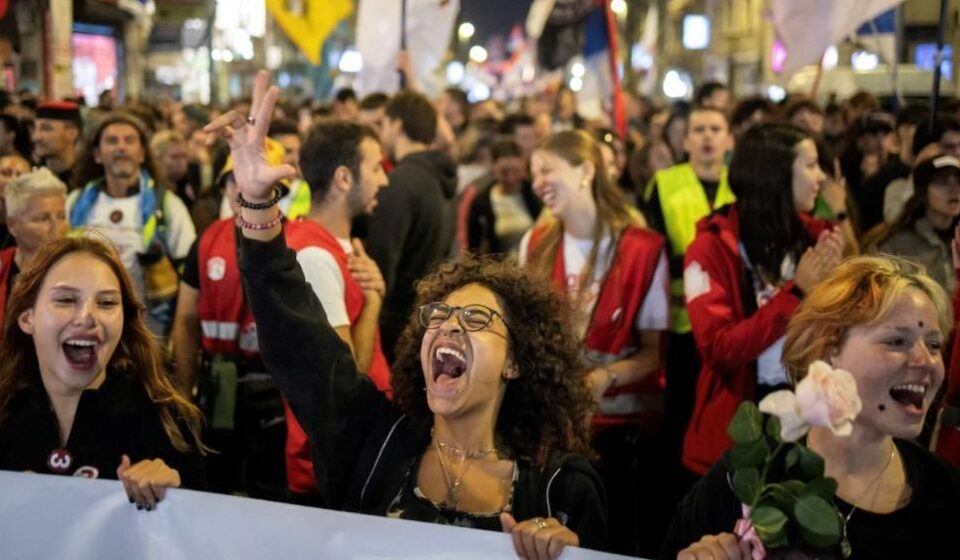
Serbia’s student movement challenges a decade of Vučić’s political dominance
A student-backed electoral list is projected to win a parliamentary majority after record voter participation, creating an opening for political change while leaving Serbia’s institutional reforms and foreign-policy direction uncertain.
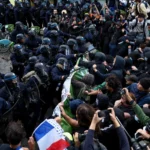
Serbia is facing a potential political turning point after Aleksandar Vučić conceded defeat in Sunday’s snap parliamentary election, acknowledging that a student-led movement had outperformed his Serbian Progressive Party (SNS) in a contest shaped by nearly two years of anti-government protests.
Preliminary estimates cited by Reuters and other international media put the Student List on course to secure between 135 and 140 seats in the 250-member parliament, compared with approximately 105 for Vučić’s political camp. The projections were based on samples rather than final official results, so the precise distribution of seats remained subject to confirmation.
The outcome represents a substantial setback for a political establishment that has dominated Serbia for more than a decade. It also demonstrates how a protest movement initially organised around demands for accountability can develop into a nationwide electoral challenge.
The scale of the shift is significant, but the election does not automatically settle whether Serbia’s political institutions will become more independent or whether the incoming parliamentary majority can deliver the reforms its supporters expect.
The movement traces its origins to November 2024, when a concrete canopy collapsed at the railway station in Novi Sad, killing 16 people. The disaster prompted widespread anger and student demonstrations demanding accountability, transparent investigations and answers about construction standards and alleged corruption.
What began as a response to the tragedy expanded into a broader challenge to the government. Students received support from sections of civil society, including teachers, farmers, academics and other citizens dissatisfied with the direction of the country.
According to reporting by Deutsche Welle and Al Jazeera, the protests became one of the most consequential challenges to Vučić’s political position since he first became prime minister in 2014 and later president in 2017. Critics have accused his government of concentrating power, weakening independent institutions and exerting influence over the media. Vučić and his party have rejected allegations of wrongdoing.
The student movement eventually translated its street mobilisation into an electoral platform, putting forward candidates from professional and civic backgrounds rather than relying exclusively on established party figures. Its campaign focused on corruption, institutional accountability and the restoration of citizens’ rights.
The governing party, meanwhile, campaigned on its record and promises involving pensions and public-sector salaries. Vučić also presented himself as a leader capable of maintaining Serbia’s relationships with the European Union, Russia and China amid international uncertainty.
Voter participation was unusually high. CeSID and IPSOS estimates cited by The Guardian put turnout at 67.6% by 7pm local time, a level reported as the highest since the breakup of Yugoslavia in 1992. Other outlets also described participation as exceptionally high, although the final official figure should be distinguished from polling-day estimates.
The turnout suggests that the election mobilised voters well beyond the student movement’s original base. It also gave the result wider political significance at a time when public trust in Serbia’s institutions and electoral environment has been under scrutiny.
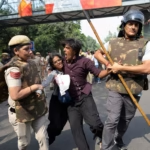
However, election monitors reported concerns about voting conditions. The Guardian cited independent monitoring groups that recorded alleged ballot photographing, pressure on voters, attempted vote-buying and carousel voting. Earlier reporting by the Associated Press also highlighted concerns about election fairness, media bias, surveillance of activists and campaign-related violence.
These reports warrant scrutiny, but allegations of irregularities should not be treated as proof that the overall result was invalid. Their significance depends on the evidence, the number and distribution of affected votes, and the response of the relevant electoral authorities.
Vučić’s concession reduced immediate uncertainty over whether he would acknowledge the preliminary outcome. The next stage will require the publication and examination of official results, alongside appropriate procedures for resolving any formal complaints.
For the Student List, winning parliamentary seats is different from building a government capable of implementing its promises. A broad movement united by opposition to the incumbent must now address questions of leadership, policy priorities and internal coordination.
Its agenda is likely to face pressure over judicial independence, corruption investigations, public-media governance and the accountability of officials. The demand for responsibility over the Novi Sad disaster has been central to the protests, but meeting public expectations will require transparent procedures and evidence-based investigations rather than political retaliation.
The economic challenge is equally important. Serbia has recorded growth in nominal output, attracted foreign investment and expanded its transport infrastructure during Vučić’s years in national politics. Yet aggregate economic indicators do not fully capture household purchasing power, the cost of living, public debt or the distribution of economic gains. A new administration would need to address these issues while maintaining economic stability.
Foreign policy could prove another difficult test. Serbia is an official candidate for European Union membership but has maintained close relationships with Russia and China. Relations with Brussels, the rule of law and the unresolved question of Kosovo are likely to remain important issues. The student movement’s broad coalition may not have a single settled position on every one of these questions, making its eventual programme and government composition consequential.
The result is being watched across Europe, where youth-led demonstrations and public dissatisfaction with established political parties have become recurring features of political debate. Serbia offers a notable case of a student movement attempting to convert sustained civic mobilisation into electoral power.
But the outcome should not be interpreted as proof that one election can dismantle an entrenched political system. Control over institutions, the independence of the judiciary, media pluralism and the enforcement of accountability depend on decisions and reforms made after election day.
For Serbia, the immediate milestone is Vučić’s acknowledgement that his political camp has lost the vote according to preliminary estimates. The longer-term test will be whether the new parliamentary majority can establish credible institutions, investigate allegations fairly and turn the movement’s demands into workable policies.
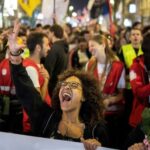
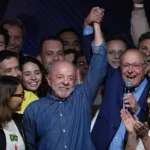
The election has opened a new political chapter. Whether it becomes a lasting institutional transformation will depend on what follows the celebrations.
Sources: Reuters — Vučić concedes defeat to student-led movement; Associated Press — Serbia’s election marks a major political shift; Radio Free Europe/Radio Liberty — Electoral defeat and Serbia’s future relations with the West; Deutsche Welle — Vučić concedes defeat to student-led movement; Euronews — Student List’s projected election victory; ABC News — Serbia election results and Vučić’s concession; The Guardian — Celebrations in Belgrade after Vučić’s defeat.
