




















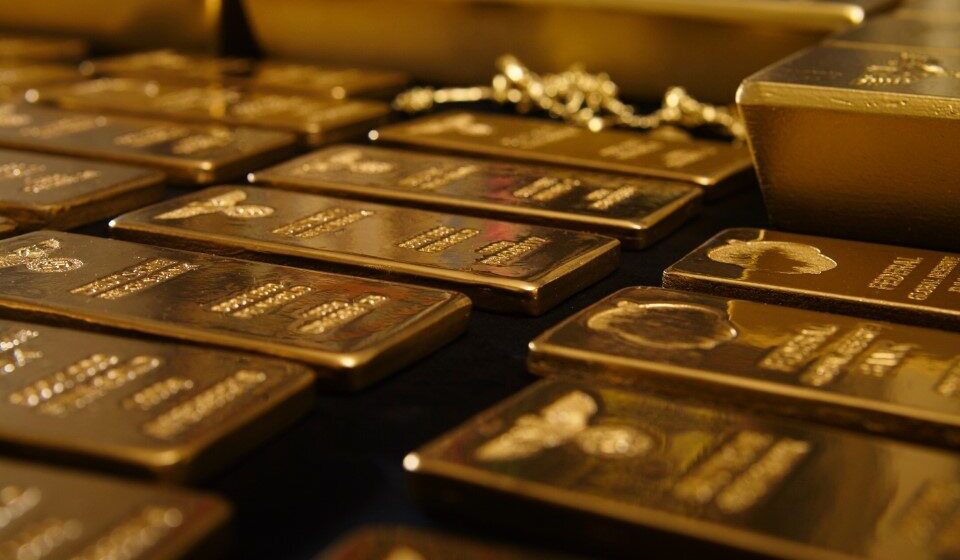
Gold reclaims $4,000 as oil retreat offers relief, but Fed risks persist
Bullion rebounds from a three-month low as energy prices ease, yet the outlook for US interest rates and persistent geopolitical risks leave the recovery exposed to renewed volatility.
Gold returned above $4,000 an ounce on Monday as falling oil prices eased some inflation concerns, offering a tentative recovery after bullion suffered its steepest weekly decline since June. But the rebound has done little to settle the broader market debate: whether easing energy prices will give central banks room to relax monetary policy or whether persistent inflation will keep borrowing costs elevated for longer.
Spot gold rose 0.5% to $4,014.49 an ounce by 0924 GMT, while US gold futures for December delivery gained 0.5% to $4,028.40, according to Reuters. The recovery followed Friday’s fall to $3,975, the lowest level since 20 July. The previous week’s decline of about 4% highlighted how quickly sentiment can turn when expectations for monetary policy shift.
The $4,000 threshold is therefore more than a psychological milestone. It has become a focal point for investors assessing whether the latest sell-off has created a buying opportunity or exposed a deeper vulnerability in gold’s recent price trajectory. UBS analyst Giovanni Staunovo told Reuters that the level had previously provided technically significant support. However, a price rebound alone cannot establish that a durable recovery is under way.
Crude oil has emerged as a critical variable in the near-term outlook. Brent futures fell around 2% to approximately $114 a barrel in Reuters’ morning update, retreating from a six-month high reached the previous week. The decline offered some relief to markets concerned that energy-driven inflation could force central banks to maintain restrictive monetary policies.
The relationship between oil and gold, however, is more complicated than a straightforward inverse correlation. Higher energy prices can increase inflation expectations and encourage investors to seek protection through precious metals. But if the same price shock prompts central banks to raise interest rates or delay rate cuts, gold can lose its relative appeal because it does not generate interest income.
Lower oil prices can reverse part of that pressure by reducing the risk of a prolonged energy-led inflation shock. Yet the benefit to bullion depends on whether the decline reflects a durable improvement in supply conditions or merely a temporary pause in a geopolitical rally.
The Associated Press reported on Monday that global oil prices were retreating after reaching their highest levels in more than four years, while supply disruptions associated with the US conflict with Iran continued to weigh on the market. Its later snapshot put Brent at $109.86 a barrel, below Reuters’ earlier quotation. The difference illustrates the speed of intraday price movements and the importance of identifying the time attached to commodity-market data.
For gold investors, the key question is not simply whether oil falls, but why it falls. A sustained easing of geopolitical tensions could reduce both inflation pressure and safe-haven demand. Conversely, renewed supply disruptions could lift energy prices again, reviving inflation concerns even as investors seek protection against geopolitical uncertainty.
The next major catalyst is the US Federal Reserve’s two-day policy meeting on 27–28 October. The official Federal Reserve calendar confirms that the meeting concludes on Wednesday, 28 October, when policymakers are scheduled to hold their press conference.
Reuters reported that traders were assigning approximately a 9% probability to an interest-rate increase at this week’s meeting and an 80% probability to a December increase, according to the CME FedWatch Tool. These are market-implied expectations, not commitments by policymakers, and they can change as new economic information becomes available.
The distinction between the immediate decision and the longer-term outlook matters for bullion. A decision to hold rates steady would not necessarily support gold if policymakers signal that another increase remains likely. Conversely, a less restrictive outlook could help bullion even without an immediate rate cut.
The mechanism is straightforward. Gold offers no coupon or dividend, so its opportunity cost rises when investors can earn more from interest-bearing assets. Higher US yields can also support the dollar, making dollar-denominated bullion more expensive for buyers using other currencies. Both channels can limit international demand for gold, although their influence varies with market conditions.
Investors will also examine the US Personal Income and Outlays report, scheduled by the Bureau of Economic Analysis for 29 October. The release includes the Personal Consumption Expenditures price index, the Federal Reserve’s preferred measure of inflation. The report will provide another indication of whether price pressures are moderating or remaining persistent enough to complicate the policy outlook.
The timing makes the coming days particularly important. The Fed’s decision will establish the immediate policy signal, while the inflation report may influence expectations about what comes next. A combination of a restrictive central-bank message and persistent inflation could be especially challenging for gold because it would reinforce the prospect of elevated borrowing costs without resolving the underlying price pressures.
The broader precious-metals market offered no uniform confirmation of a new rally. Reuters reported that spot silver rose around 0.2% to $53.99 an ounce, while platinum declined 0.3% to $1,547 and palladium fell 0.1% to $1,043.47. The mixed performance suggests that the latest move should not automatically be interpreted as a broad-based shift in investor positioning across metals.
Gold also faces competing sources of demand. Geopolitical instability can strengthen its safe-haven appeal, while uncertainty about inflation, interest rates and the dollar can change the relative attractiveness of holding bullion. These forces do not always move in the same direction, which helps explain why gold can retreat during periods of heightened risk or rise when immediate inflation concerns ease.
The latest rebound therefore presents two competing interpretations. Investors who view $4,000 as a technically important level may regard the recovery as evidence that buying interest is returning. Those focused on monetary policy may see a temporary reprieve ahead of a potentially restrictive Fed signal. Neither interpretation is conclusive without further confirmation from prices, yields, currency movements and incoming economic data.
The distinction is important for market analysis because a recovery from a recent low is not equivalent to a reversal of the underlying trend. Gold’s next move will depend on whether lower energy prices persist, whether inflation data change expectations for US monetary policy and whether geopolitical risks continue to support safe-haven demand.
For now, the return above $4,000 represents a recovery under pressure rather than a confirmed new upward trend. A sustained decline in oil prices combined with a less restrictive Fed outlook could help bullion consolidate its gains. Renewed energy-supply disruptions, persistent inflation or stronger expectations of higher interest rates could quickly undermine the rebound. The coming policy decision and inflation release will help determine which of these competing forces gains the upper hand.
Sources:
Reuters, Gold gains as oil slide cools some inflation concerns, 26 October 2026: https://www.reuters.com/world/india/gold-gains-softer-oil-prices-fed-decision-focus-2026-10-26/
Associated Press, World shares mostly advance after a decline on Wall Street, and oil prices fall more than 1%, 26 October 2026: https://apnews.com/article/be3a56f58a77c5be863f0289d280be92
Federal Reserve, October 2026 calendar and FOMC meeting schedule: https://www.federalreserve.gov/newsevents/2026-october.htm?view=calendar
US Bureau of Economic Analysis, Official release schedule: https://www.bea.gov/news/schedule/full
MarketScreener, Reuters report, Gold gains as oil slide cools some inflation concerns, 26 October 2026: https://www.marketscreener.com/news/gold-gains-as-oil-slide-cools-some-inflation-concerns-ce785cdcd88ff125
