


















Lula’s election victory triggers market turmoil as Trump questions Brazil vote
The defeated Bolsonaro camp has recognised the result despite calls for clarification, while Brazil’s currency and equities suffer steep losses as investors reassess the country’s fiscal outlook and political direction.
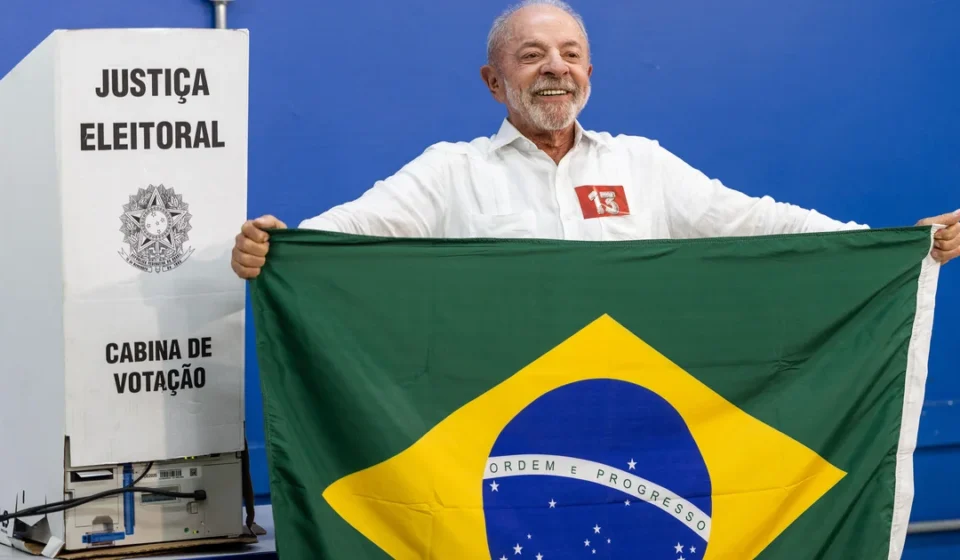
Brazil’s presidential election has triggered a political dispute and a sharp financial market reaction after incumbent Luiz Inácio Lula da Silva defeated right-wing challenger Flávio Bolsonaro. US President Donald Trump questioned the legitimacy of the result without presenting evidence of fraud, while Bolsonaro’s Liberal Party subsequently acknowledged Lula’s victory, leaving the defeated candidate’s challenge unresolved.
Lula won by more than four million votes, according to Reuters’ reporting on Monday. Flávio Bolsonaro had initially refused to concede, arguing that the Supreme Court’s decision to extend voting by two hours warranted an annulment of the result. The party’s later statement recognised the outcome but maintained that the concerns raised during the election needed clarification.
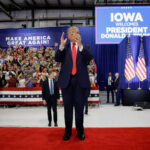
Trump told reporters that the election “looked like another rigged election”, without providing evidence to support the allegation. Brazilian Vice-President Geraldo Alckmin rejected the remarks as unfounded and defended the country’s electoral system. The distinction is important: questioning an election is not evidence that its result was manipulated.
The controversy centres on a two-hour extension to voting, ordered amid transport-related problems in some areas. An analysis of electoral records by Insper professor Pedro Burgos, cited by Reuters, found that fewer than 35,000 votes—around 0.03% of the total—were cast during the additional period.
That figure does not by itself resolve every question raised about the voting process, but it places the extension in context against Lula’s margin of victory. Overturning the result would require a substantiated legal challenge capable of demonstrating grounds for annulment, rather than an allegation alone.
The dispute also has an international dimension. Trump did not formally endorse Flávio Bolsonaro before the election, although Reuters reported that officials from his administration’s State Department had led a campaign to return the Bolsonaro family’s political movement to power. Trump’s public remarks have now brought the Brazilian contest into a wider debate over political legitimacy and relations between Washington and governments in Latin America.
Flávio Bolsonaro also said he would comply with a federal police order to surrender his passports after visiting his father, former president Jair Bolsonaro, who is under house arrest. He denied planning to flee Brazil. The developments add to uncertainty surrounding the opposition’s next steps, even as its party has formally recognised the election result.
The most immediate economic consequences emerged in Brazil’s currency and equity markets. The Brazilian real fell 8.1% against the US dollar on Monday, its largest one-day decline since 2002, while the benchmark stock market recorded its steepest daily fall since 2020, according to Reuters.
Brazil’s state news agency, Agência Brasil, reported that the dollar closed at 5.403 reais, up 8.21%, while the Ibovespa index dropped 13.88%. Trading was temporarily halted after a sharp decline triggered the exchange’s circuit-breaker mechanism.
The sell-off reflected a reversal of positions built around expectations that Flávio Bolsonaro would win and pursue a more restrictive fiscal policy. Investors had responded positively after his strong performance in the first round, anticipating measures to restrain public spending and improve the outlook for borrowing costs. Lula’s victory overturned that expectation, prompting investors to reassess the likely direction of government spending, debt and economic policy.
The reaction should not be interpreted as a direct verdict on the election’s legitimacy. Financial markets respond to expected policy changes, risk premiums and investor positioning. A sudden reversal in those expectations can produce sharp price movements even when the electoral outcome itself is clear.
Analysts told Reuters that the initial sell-off could moderate as election-related positions unwind, but investors would look for credible fiscal commitments before increasing their exposure to Brazilian assets. That places pressure on Lula’s incoming administration to explain how it intends to finance social programmes while addressing debt and fiscal sustainability.
Lula’s victory gives him an unprecedented fourth presidential mandate, but it does not guarantee an easy path for his legislative agenda. Congress has shifted further to the right, with Bolsonaro allies and other conservative lawmakers holding substantial influence.
That political configuration could constrain proposals involving public expenditure, taxation, social programmes and state intervention in the economy. Lula’s ability to negotiate with legislators will therefore be as important as his electoral mandate in determining the direction of economic policy.
The result also interrupts a recent sequence of right-wing electoral gains in Latin America. Lula’s campaign emphasised his record on poverty reduction and inequality, alongside claims of progress on employment and deforestation. Higher turnout and a more effective social media operation were among the factors identified in reporting on his comeback after trailing in the first round.
For international investors, the central question is not simply whether Lula’s government will spend more, but whether it can establish a credible medium-term fiscal framework while maintaining its social commitments. Markets will watch appointments to key economic posts, budget decisions and signals about debt management for evidence of the administration’s priorities.
The election has thus produced two distinct tests. Brazil’s electoral institutions face scrutiny over claims that have not been substantiated with evidence, while the incoming government must convince investors that its economic strategy can operate within the country’s fiscal constraints. The market turmoil reflects uncertainty about that second test; it does not establish the first allegation as fact.
Sources: Reuters on Brazil’s market sell-off and investor concerns, Associated Press on Lula’s victory, the election challenge and voter mobilisation, Moneycontrol on Trump’s allegation and the disputed voting extension, UOL/Reuters on Brazil’s stock-market plunge, Investing.com/Reuters on Trump’s remarks, and Associated Press on the official election result and its regional implications.
