















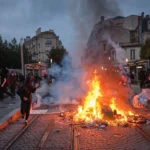

When protest becomes the only way to be heard
Editorial By Shamorita Barua
For 71 years, Maricarmen Abascal lived in the same Madrid flat. On 23 September, at the fourth attempt, police removed her from it. She was 87. Two weeks later she was dead. A deal that would have let her return home had been reached, but the Madrid Tenants’ Union said it came too late.
In just days, thousands marched through Madrid with the slogan, ‘We are all Maricarmen’. Then came the vote. On 2 October the Spanish Congress rejected two emergency housing decrees, one of which would have frozen evictions of vulnerable tenants until 2030. Three days later Pedro Sánchez called a general election for 29 November.
Imagine this to someone who is 25 and does not have the money to travel away from her parents’ home. No one needs to remind her of the failure of politics. She saw her grandmother’s house being taken away, and then she saw her Parliament reject the solution.
This is the thread of the protests this autumn. Students in Tirana, Paris, and Delhi are angry about different things, and that’s not so important as what happened after. Governments did answer in places, but late, in part, and often with the police first. What young people might be learning is a pricey lesson a democracy has to pay: Speak up only when it’s loud.
What the surveys show
According to the OECD’s 2025 trust survey published in June, 43% of its member countries’ residents had low or no trust in their national governments, while 40% had high or moderately high trust. This is not a collapse, as trust has stabilized since a recent drop, but it is less among younger adults. A previous OECD survey, conducted in 2023, reveals what appears to be most important: 69% of individuals who felt they had a say in government decisions trusted their government, while 22% did not.
These are correlations, and trust can make people feel heard, as much as it makes them feel the other way. The averages also obscure the differences between the nations and provide little information about any of the places mentioned here. But the trend is to the streets: people are more critical about governments than what they’re given, and more critical about being taken seriously.
At the point where the answer splits
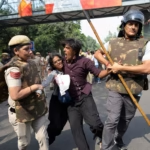
India demonstrates the diminishment of authority for a procedure. Over 130 million names have been dropped from electoral registers in a state by state process that started in 2025, reports say. The Election Commission says it is clearing dead, duplicate and ineligible entries and denies bias. Opposition parties and the youth-led Cockroach Janta Party say eligible voters have been struck off, and want the chief election commissioner to resign. One or both may have some degree of truth. The acceptance of the list is determined by whether an ordinary voter can find an error and correct it. Following protests and hundreds of detentions, the commission made announcements that it would change the way it collected documents, allow some states to have extended deadlines, and instructs to register voters who are omitted. That’s an answer, but it only came after the backlash started.
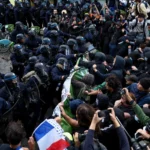
In France, there are complaints about teacher shortages and substandard school facilities, which can be addressed through budget and negotiation. Then it was time to talk about the police. The Justice Ministry said on 9 October that 6,877 people had been held in custody, 86% of them minors, and about a third of those held have been prosecuted. Custody does not equal conviction, and authorities cite hundreds of wounded cops and arson. Prime Minister Sébastien Lecornu rejects the charge that police acted on political instructions to repress pupils. Despite this, the most obvious answer to adolescents is a police cell, and the underlying question is whether adolescents are listened to or controlled.
No representation is Spain. The decrees fell to the votes of the People’s Party, Vox and Junts, and there is a genuine policy debate, with Junts arguing that the measures would shrink housing supply. Sánchez’s election call does not prove the protests caused it, since his Socialists also trailed in nearly every poll. It does show where such pressure eventually lands.
A case of grievances that have no door: in Albania. Students began with complaints about university conditions, grants and jobs, then joined the Flamingo movement, which started against a coastal resort linked to an investment company founded by Jared Kushner and now demands the resignation of Prime Minister Edi Rama over alleged corruption, which his government rejects. The protests turned violent, with a fire at the Education Ministry and rubber bullets from police. When they lose elections it is not because they are absent, but because they feel there is no progress between them.The problem is not that they are not there, but the Socialists of Rama won comfortably in 2025 and they will be there again in 2025.
In Argentina it’s about compliance. Congress overrode President Javier Milei’s veto of a university funding law, and the government then suspended it by decree. On 6 October a federal judge declared that decree unconstitutional. The government says the law names no funding source, which the judge rejected, and local media report that it will appeal. Winner or Not, institutions can be on paper and ineffective in practice.
Protest is NOT rejection!
None of this is evidence of young people “revolting against” democracy, and much of it argues in its favor. Students also joined cost-of-living protests in Italy, where a march in Milan ended in rioting, and in Belgium, where French-language tuition has risen for most students from €835 to €1,194 and more than 100 people were arrested in Liège. Not all movements are youth-led and not all demands are the same. Most of this activity is democratic in form: challenging an election commission, going to court and pressing parliament are ways of insisting that institutions do their job. Brazil makes the point from the other side. Before the 25 October runoff, thousands of students marched in Rio against the prospect of a Flávio Bolsonaro presidency and for public education. This is not revolution against the electoral process, but electoral politics.
There is a limit to this reasoning, though. Protest is the expression of the voice of the people who are still alive.
The danger of quiet
High noise can be easily detected. The more difficult to identify is the young person who remains at home. Some who keep silent are content. Others have determined that it is not worth their while to say anything and the two from the outside seem alike. Consequently, the number of people and the concession area are inadequate indicators. A concession can quash one grievance and leave the rents and classrooms the same and an election can change a leader, and leave the rents and classrooms exactly as they were. A government which finds quiet streets to be a solved problem is likely missing the worst warning of all.
What an answer should be like
It’s easy to say what will be considered an answer, and it varies from location to location. In India, a voters’ list which can be verified and corrected by a common man. In France, an open inquiry into every serious injury and a timetable for the school money that started the protests. In Spain, a housekeeping measure which is approved by a vote, regardless of who proposes it. In Albania, a reply to the corruption allegations that is not an accusation that the opposition is hijacking the protests. None of this ensures trust. A crowd-generated concession isn’t a free concession and the giver can tell the difference.
The Spanish authorities will not get to see Maricarmen Abascal. The young people who marched under the banner ‘We are all Maricarmen’ will. It’s up to them to hear whether this autumn was a time of policy battles or when a generation finally felt no one cared.
