




















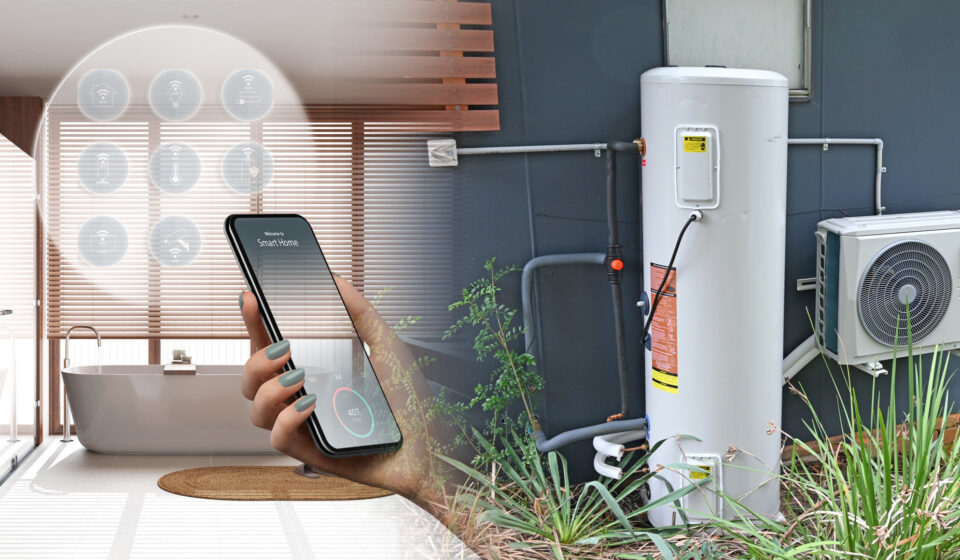
Smart heat pump water heaters offer a route to lower household emissions
A Boston startup is combining predictive software, leak detection and heat-pump technology to make domestic water heating more efficient, although electricity prices and installation costs can limit household savings.
Water heating is emerging as another frontier in household electrification, as startups seek to reduce energy consumption through more efficient appliances and software that anticipates demand. In the United States, Boston-based Reservoir is developing internet-connected heat pump water heaters designed to cut wasted energy, monitor plumbing problems and potentially help balance electricity demand.
The company attracted attention after raising $8 million in seed funding in August to expand its business beyond the Boston area. According to its announcement, Reservoir had installed nearly 100 units in homes across the Boston metropolitan area and planned to expand into additional markets. Its longer-term ambition is to coordinate connected water heaters so they can store thermal energy when electricity is cheaper or renewable generation is plentiful.
Unlike conventional electric resistance heaters, heat pumps transfer heat from surrounding air into water rather than generating heat directly. This can substantially reduce electricity consumption, although performance depends on the equipment, installation conditions and household usage. Reservoir adds predictive software that learns a household’s hot-water patterns and adjusts heating accordingly. Its systems also offer app-based controls and sensors intended to identify plumbing leaks.
The technology’s commercial proposition rests on combining equipment, installation and monitoring into a single service. In a report published on 28 October, The Boston Globe described a homeowner’s experience replacing a gas-fired tank with a Reservoir unit. The reported package price was $4,450 for the Core model after a Massachusetts utility rebate, with a higher-priced Max version offering additional hot-water capacity. The company also provides a 10-year warranty, although its relatively short operating history leaves questions about long-term support if the startup were to close.
The homeowner’s experience illustrates why energy savings are not automatic. After switching away from natural gas, the household’s gas bill fell sharply, but its electricity bill increased. The reporter estimated that the water heater was roughly breaking even on operating costs and might save $50–$150 annually when winter gas prices rise. Those figures reflect one home’s circumstances and should not be treated as a universal estimate. Local electricity and gas prices, climate, household demand and installation expenses can all change the financial outcome.
The broader opportunity extends beyond individual bills. If utilities can coordinate large numbers of connected heat pump water heaters, they could potentially shift some electricity consumption away from peak periods and absorb surplus renewable power. The stored heat would then supply hot water later, reducing the need to consume electricity at the moment of use. Reservoir’s chief executive has described this as a potential virtual power plant, subject to homeowners’ consent and suitable utility partnerships.
However, the concept remains dependent on deployment at scale, reliable controls and commercial arrangements that reward households for participating. Connected appliances also require dependable internet access and monitoring, while customers must weigh data sharing and the durability of a relatively new supplier against the benefits of its technology.
For the wider energy transition, the lesson is that electrification is not simply a matter of replacing gas appliances with electric alternatives. Equipment efficiency, upfront affordability, electricity pricing and grid management all influence whether households reduce emissions without increasing costs. Smart heat pump water heaters offer one possible way to bring these factors together, but their long-term value will depend on performance across different homes and energy markets.
Sources: The Boston Globe — Reservoir heat pump water heater case study, Reservoir — expansion into Maine, Reservoir — technology and product information, Reservoir — $8 million funding announcement, TechCrunch — smart water heaters and grid flexibility, Fast Company — water heaters as thermal batteries, Mass Save — heat-pump water-heater rebates, and Journal of Energy Storage — smart water-heater management research.
