










Iran-US deal remains elusive, Qatar steps up mediation amid fresh strikes
Washington and Tehran continue reviewing proposals to end their war, but disagreements over the Strait of Hormuz, sanctions and nuclear negotiations remain unresolved. Limited US strikes on Iran’s Qeshm island and renewed military warnings add to concerns over a wider escalation.
Efforts to secure an agreement between the United States and Iran remain stalled despite intensified diplomatic engagement led by Qatar, with a senior Iranian official telling Reuters on Tuesday that the two sides remain far from a deal to end their war.
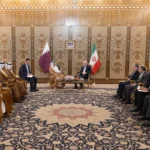
Qatar has stepped up mediation to narrow differences between Washington and Tehran, as regional governments seek to prevent a renewed escalation following the US midterm elections. The latest diplomatic initiative involves a revised draft agreement that has been under discussion for more than a week.
A senior Iranian official told Reuters that mediators were working to bridge the gaps but warned that Tehran would not accept what it considers excessive US demands. The official also maintained that Iran’s conditions must be met before the Strait of Hormuz can be reopened.
Qatar’s Foreign Ministry spokesperson Majed al-Ansari confirmed that both countries were reviewing proposals submitted by mediators. He said a Qatari delegation that travelled to Tehran had returned to Doha, but discussions were continuing. An official briefed on the negotiations expected responses from Washington and Tehran within 36 hours.
The diplomatic push has coincided with renewed military activity. The United States carried out what an American official described as defensive strikes on Iran’s Qeshm island overnight, targeting surface-to-air missile systems allegedly used against US assets.
Another US official described the operation as limited and said it did not indicate a return to large-scale combat. However, the strikes demonstrate that military action remains a possibility even as negotiations continue.
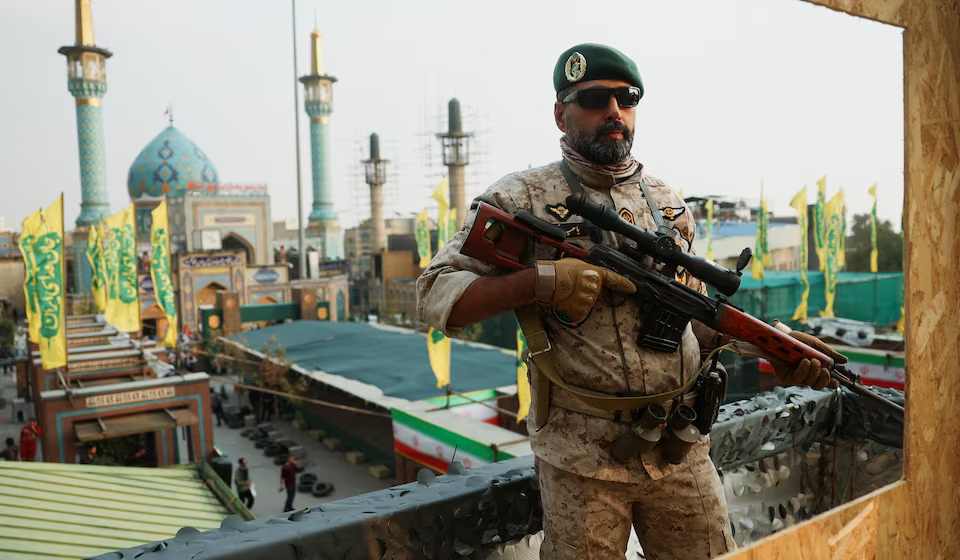
Iranian officials warned that any further US attacks would prompt a forceful response. A senior Iranian official told Reuters that retaliation could extend across the region and beyond.
The Islamic Revolutionary Guard Corps also said it had shot down a US MQ-9 drone and two Lucas drones near the Strait of Hormuz. These claims were not independently verified in the Reuters report.
Iranian Parliament Speaker Mohammad Baqer Qalibaf said Tehran had delivered what he described as a strong and rational response to Washington’s proposals, arguing that the next move rested with the United States.
President Donald Trump, however, struck a less confrontational tone on Monday. Asked whether he was considering renewed strikes after the midterm elections, he answered no, adding that he believed Iran wanted an agreement and that a deal could be reached.
The contrasting statements illustrate the uncertainty surrounding Washington’s approach: diplomatic negotiations remain active, but neither side has ruled out further military confrontation.
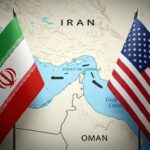
The future of the Strait of Hormuz is one of the principal issues separating the two sides. The waterway is a critical route for international energy shipments, and restrictions on navigation have disrupted regional trade and heightened concerns about global oil and gas supplies.
Tehran has made reopening the strait conditional on meeting its demands. The Iranian official told Reuters that nuclear negotiations could begin only after those conditions were fulfilled.
The sequencing is significant. Washington and Tehran have yet to agree on whether maritime access, sanctions relief and security arrangements should be addressed before nuclear negotiations or incorporated into a broader settlement.
For energy markets, continued uncertainty around the waterway represents a major supply risk. Oil prices rose by approximately 1.3% on Tuesday after falling by more than 7% in the previous session amid hopes that diplomatic progress was possible.
The price movement reflects how sensitive energy markets remain to developments in the negotiations. Even limited military activity or renewed restrictions on shipping could reverse recent gains in confidence.
Diplomatic engagement is also expanding beyond the direct US-Iran channel. Qatar is working to keep negotiations alive, while Saudi Arabia, Turkey and Pakistan have been involved in regional discussions with Iranian officials.
Iranian Foreign Minister Abbas Araqchi said on Tuesday that talks with Saudi Arabia were continuing, with the aim of developing new regional security arrangements that would exclude foreign military involvement.
Senior officials from Saudi Arabia, Turkey and Pakistan met their Iranian counterparts in Tehran last week. Reuters described the meetings as the first high-level contacts of this kind since August.
These discussions reflect concerns among regional governments that a renewed US-Iran confrontation could spread beyond the immediate conflict zone, threatening energy infrastructure, aviation, shipping and regional security.
The conflict has also intensified on the Arabian Peninsula’s southern maritime corridor. Yemen’s Iran-aligned Houthi movement has increased attacks on Saudi Arabia, including strikes targeting oil facilities and airports.
Reuters reported that Houthi forces had advanced towards the Bab el-Mandeb Strait, a strategically important shipping route connecting the Red Sea with the Gulf of Aden. Saudi air strikes in Yemen followed attacks that disrupted flights and oil exports, including activity affecting Riyadh’s international airport.
The Strait of Bab el-Mandeb and the Strait of Hormuz are geographically separate but strategically connected through their importance to international shipping and energy trade. Disruption to both routes would increase pressure on supply chains and raise the cost of transporting goods and fuel.
The widening regional dimension makes a negotiated settlement more complicated. Any agreement limited to Washington and Tehran may not fully address the security concerns of neighbouring states or the activities of armed groups operating across the region.
Iranian military officials have warned that Tehran is updating its target lists to include US and Israeli assets and would respond immediately to any perceived threat. The hardline newspaper Kayhan has also suggested that US facilities in several European countries could be targeted in the event of renewed conflict. These statements reflect warnings and positions expressed by Iranian sources, rather than confirmed operational plans.
For Qatar and other mediators, the immediate challenge is to turn the latest proposals into an agreement that both governments can accept before military tensions escalate further. The expected responses from Washington and Tehran over the coming 36 hours could indicate whether the revised initiative has sufficient support to move forward.
Yet the core disagreements remain substantial. Iran wants its conditions on the Strait of Hormuz addressed before nuclear talks begin, while the United States has not publicly accepted Tehran’s demands. The limited US strikes on Qeshm island further complicate efforts to build confidence.
The negotiations therefore remain active but fragile. Whether diplomacy can prevent another phase of military escalation will depend on the ability of both governments to narrow their differences on maritime security, sanctions and the sequencing of nuclear discussions.
Sources: Reuters — Iran-US deal still out of reach despite diplomatic push, Iranian official says; Reuters — Iran says contacts over ending war continue after talks finish with no breakthrough; Associated Press — Iran and US continue efforts to end war as regional tensions persist.
