



















Vance blames Iran war for Republican defeat
The US vice president’s public criticism has exposed divisions over the conflict’s political and economic costs. But voter research points to a broader backlash against inflation, fuel prices and the administration’s economic record.
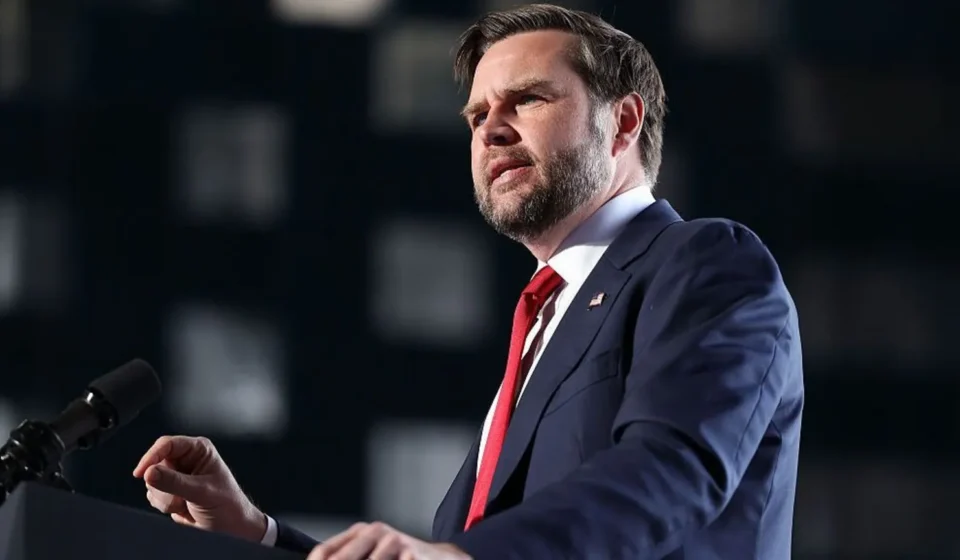
US Vice President JD Vance has made the war with Iran a central explanation for the Republican Party’s defeat in the midterm elections, publicly challenging the political rationale for a conflict that has become increasingly costly for American households. His intervention came as Democrats secured control of both chambers of Congress, delivering a major setback to President Donald Trump and leaving the administration facing a more difficult political environment for its foreign and domestic agenda.
In a post on X on Wednesday, Vance declared that the war was the reason Republicans had lost, arguing that voters who supported the Trump–Vance ticket in 2024 had switched to Democratic candidates. He also questioned whether the conflict was worth the political price of losing the Senate, whose members serve six-year terms. The remarks represented a sharper criticism than Trump’s own assessment. The president acknowledged that the war had contributed to the defeat but maintained that the decision to launch military action was justified. Reuters reported that Vance had also described earlier advice to end the conflict as sound, suggesting that the disagreement concerns not merely electoral messaging but the strategic direction of US policy. Reuters reported on Vance’s intervention and the political implications.
The political significance of Vance’s comments lies in the connection between foreign policy and the cost of living. The conflict has disrupted energy supplies and raised the cost of fuel, adding pressure to an economy in which voters were already expressing dissatisfaction with prices and their financial circumstances. For households, the consequences of military decisions are often experienced not through diplomatic statements or battlefield developments, but through petrol bills, transport costs, food prices and household energy expenses.
The election evidence, however, requires a more careful reading than Vance’s claim that the war alone caused the defeat. CBS News exit polling found that the Iran war was unpopular, with most respondents considering the decision to take military action wrong. But the same polling indicated that the conflict was a less significant voting factor than the cost of living. Inflation and economic conditions were central concerns across party lines, while voters who were particularly worried about the cost of petrol were also more likely to oppose the decision to attack Iran. CBS News’ 2026 exit-poll analysis provides a more differentiated picture of the electorate’s concerns.
A separate survey by the Pew Research Centre, conducted among 5,062 US adults between 28 September and 4 October, found that 74 per cent were very concerned about the price of petrol and energy. Only 21 per cent described national economic conditions as excellent or good, while 65 per cent said Trump’s economic policies had made conditions worse. These findings pre-date the election and measure public attitudes rather than the reasons behind individual votes, but they help explain the economic environment in which the Republican campaign unfolded. Pew Research Center’s October economic assessment documents the depth of that dissatisfaction.
The Associated Press’ voter-poll analysis also found that inflation, tariffs and the Iran war had contributed to perceptions that the administration had worsened the economic situation. Nearly two-thirds of voters said Trump’s policies had made the economy worse, according to the report. Taken together, the evidence suggests that the war amplified an existing problem: voters were judging the administration not only on its foreign-policy decisions, but also on whether it had delivered the economic relief promised during the 2024 campaign. The Associated Press’ analysis of the 2026 midterm electorate examines how those concerns translated into electoral change.
Financial markets reacted sharply to the election outcome and the prospect that a Democratic-controlled Congress could constrain the administration’s options in the Middle East. Brent crude fell 8.7 per cent on Wednesday to settle at 94.62 dollars a barrel, while US West Texas Intermediate declined 8.3 per cent to 88.12 dollars. Both benchmarks recorded their lowest settlements since 31 August, according to Reuters.
The movement reflected expectations that the new political balance could make a negotiated exit from the conflict more attractive and reduce the likelihood of renewed large-scale military operations. Investors also weighed the possibility that congressional scrutiny and restrictions on military spending could complicate any escalation. The decline should not, however, be interpreted as evidence that the supply disruption has ended or that a peace agreement is imminent. Oil prices respond to expectations, risk assessments and trading positions as well as physical supply. A change in the perceived probability of escalation can therefore move prices substantially before any diplomatic settlement is reached. Reuters’ oil-market report records the settlement prices and the market’s interpretation of the election result.
There is also a wider economic consequence. Lower crude prices can ease pressure on fuel costs and reduce some inflationary risks, offering relief to consumers and businesses that depend on energy-intensive transport and production. But the benefit is conditional. If the conflict resumes or shipping through the Strait of Hormuz remains exposed to attacks and restrictions, the risk premium in energy markets could return quickly. The political change in Washington does not, by itself, restore disrupted trade routes or guarantee the security of regional energy infrastructure.
Vance’s intervention also carries implications for the Republican Party beyond the immediate debate over Iran. The vice-president has previously expressed scepticism about US military intervention abroad. By placing responsibility for the election defeat squarely on the war, he has positioned himself within an internal debate over the party’s foreign-policy direction and the political costs of Trump’s decisions.
The comments may also be read in the context of the Republican Party’s future leadership, although they do not establish that Vance has formally begun a campaign for the 2028 presidential election. His public criticism creates distance between himself and a conflict that has become unpopular, while allowing him to argue that the party must respond to voters’ economic concerns. Reuters noted that the remarks could complicate Trump’s deliberations over whether to resume major combat operations.
For Trump, the challenge is more immediate. A Democratic majority in the House and Senate will have greater capacity to scrutinise the administration, contest funding decisions and investigate the conduct of the war. Congress does not automatically control every presidential military decision, and the president retains significant executive authority. Nevertheless, the political cost of escalation is likely to be higher when the administration faces opposition control of both chambers.
The election has therefore changed the political context in which the conflict is being managed, even if it has not settled the strategic dispute with Tehran. Vance’s comments indicate that the war is now being contested inside the Republican leadership as well as across the political divide. The administration must weigh military objectives against energy-market instability, public opposition and the practical limits imposed by a Congress it no longer controls.
The central lesson of the midterm result is not that one foreign-policy decision alone determined the outcome. Rather, the conflict appears to have intensified a wider loss of confidence over the economy, prices and the administration’s priorities. The distinction matters: ending or de-escalating the war may ease one source of pressure, but it will not automatically resolve inflation, restore household purchasing power or rebuild confidence in economic management.
For global markets, the immediate decline in oil prices offers some relief, but the durability of that response depends on developments beyond Washington. For the Republican Party, the debate is now about whether its leaders interpret the result as a demand to change course on Iran, reconsider the administration’s economic priorities, or both. For the White House, the cost of continuing the war is no longer measured only in military resources and regional instability. It is also being counted in domestic political support.
