









Strikes on Qeshm Island draw Iranian fire on Bahrain, Kuwait
In the pre-dawn hours on Wednesday, air-raid warnings sounded across parts of the Gulf for what residents of Bahrain and Kuwait need no telling is a familiar sequence. Both states said they had intercepted retaliatory fire from Iran following a United States strike on Qeshm Island in the Strait of Hormuz. The exchange is a reminder that the ceasefire diplomacy of recent months has not stopped the region from sliding back towards confrontation.
The immediate chain of events can be traced fairly clearly. According to CBS News, a US military official described Tuesday’s strikes on an Islamic Revolutionary Guard Corps missile site on the island as an act of self-defence, a response to Iranian aggression against American personnel and assets. By that account, the action followed hours after Tehran said it had targeted a US radar installation in Bahrain, the third such attempt in under a week. American officials say every one of those attempts was intercepted. Iran, for its part, played down the damage, with a provincial official insisting no residential, commercial or infrastructural areas had been hit.
Tehran’s answer came quickly. The Iranian army said its drones had gone after Patriot air-defence batteries and launch platforms at Ali Al-Salem Air Base in Kuwait, while Kuwait’s military said it was responding to hostile drone threats. Kuwait’s foreign ministry called the attacks a dangerous escalation that undermines diplomatic efforts, a pointed phrase given that negotiators from Washington and Tehran are reported to be deadlocked over the future of the strait itself.
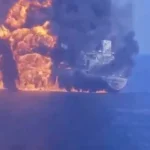
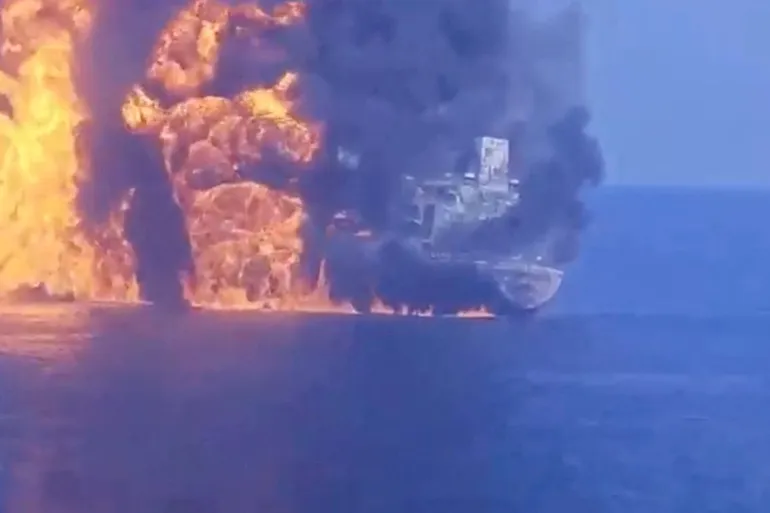
The human cost is already visible at sea. A vessel belonging to the UAE’s state oil company, ADNOC, was struck in the Strait of Hormuz on Tuesday night. One crew member is missing and eleven were injured, with search and rescue still underway. Monitoring agencies, according to the reports, now log attacks on shipping in or near the waterway almost daily. Iran says it targets vessels passing without its permission, while the US has said it has struck ships it considers in breach of its naval blockade of Iranian ports. Seafarers, who have no stake in either claim, are left to navigate between the two.
Analytically, the striking feature of this episode is how much it resembles earlier ones. The US also described its strikes on Qeshm as self-defence in early June, when CENTCOM said missiles fired at Kuwait fell short or broke apart and those aimed at Bahrain were intercepted. In July, Iran again responded to fresh US strikes with attacks on Bahrain, Kuwait, Qatar, Jordan and Oman. Each round appears to follow the same logic: a maritime incident, a limited American strike, a regional Iranian response that Gulf air defences mostly absorb. That pattern keeps the confrontation below the threshold of full-scale war, but it also puts Gulf states, which have no wish to be belligerents, repeatedly in the line of fire. Tehran has openly said it holds Kuwait and Bahrain responsible for allowing their territory to be used, a warning that makes their position more delicate with every cycle.
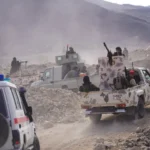
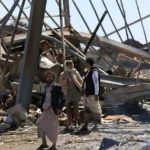
Other developments in the same briefing show the wider economic pressure. Iraq has resumed pumping oil to Turkey through a long-idle pipeline, starting at 120,000 barrels a day with a stated aim of 500,000, a modest figure beside Saudi Arabia’s East-West pipeline, which has a capacity of 7 million barrels a day. Separately, a Saudi-led coalition says air strikes across Houthi-held Yemen destroyed 60 military targets, while the Houthi-run health ministry says at least 17 people died, including 15 at a factory in Hodeida. Casualty figures and claims of “legitimate military targets” come from the parties themselves and have not been independently confirmed.
A note on verification: the core sequence, the US strikes on Qeshm, the interceptions in Bahrain and Kuwait, and the damaged ADNOC ship, is reported consistently in CBS News’s live coverage, but many details, including what was actually hit and the extent of damage, rest on official statements from the combatants, which are naturally interested. The Iraqi pipeline and Yemen items were not independently corroborated in my searches, so they should be treated as attributed claims rather than established fact. Figures may change as the situation develops.
Sources: CBS News live updates (https://www.cbsnews.com/live-updates/iran-war-us-gulf-retaliation-strikes-strait-of-hormuz/); Washington Examiner on the June strikes (https://www.washingtonexaminer.com/policy/defense/4592316/us-self-defense-strikes-iran-qeshm-island/); TradeArabia on CENTCOM’s June statement (https://www.tradearabia.com/News/463247/Iran-missiles-target-Bahrain-Kuwait-as-US-strikes-Qeshm-Island); PBS NewsHour and AP on the July escalation (https://pbs.org/newshour/world/u-s-strikes-iran-over-latest-ship-attack-and-tehran-responds-by-hitting-arab-states); Al Jazeera on earlier Hormuz strikes (https://www.aljazeera.com/news/2026/6/10/us-bombs-iran-after-trump-threat-tehran-closes-hormuz-strait-to-all-ships).