









Europe fears Trump-Putin-Xi summit could reshape Ukraine peace negotiations
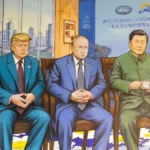
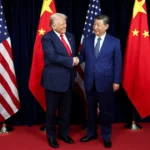
European officials are expressing concern ahead of an unprecedented meeting between US President Donald Trump, Russian President Vladimir Putin and Chinese President Xi Jinping in Shenzhen, China, warning that discussions between the three leaders could have serious consequences for European security and the future of Ukraine.
The trilateral meeting, scheduled for Thursday, comes amid continuing wars in Ukraine and the Middle East, strained relations between Washington and European allies, and growing competition among major powers. Although nuclear non-proliferation has been identified as a central issue, the agenda remains uncertain.
According to a CNN analysis by Nick Paton Walsh, Trump has also raised the possibility of discussing Iran, Ukraine and Nvidia, while suggesting a potential meeting with North Korean leader Kim Jong Un.
The absence of a clearly defined agenda has added to European concerns about what might be negotiated behind closed doors.
Europe worries about being sidelined
European officials fear that the meeting could strengthen Putin’s international standing while leaving Ukraine and its European supporters with limited influence over decisions affecting their security.
One European official told CNN that Trump’s tendency to be influenced by the last person he speaks with could shape his position during the summit. A European diplomat described the prospects for European security as difficult to assess, while another senior official expressed concern about the political symbolism of the three leaders meeting without European participation.
For Moscow, the summit offers an opportunity to return to the centre of international diplomacy alongside the leaders of the United States and China. Putin’s participation could help project Russia as a major global power despite the continuing costs of its invasion of Ukraine.
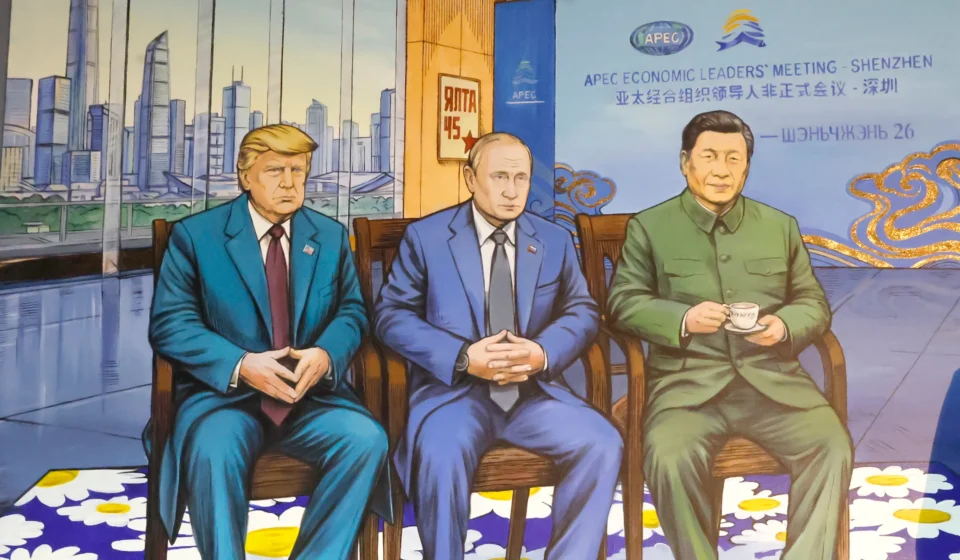
The political significance may extend beyond any formal agreement. Images of Trump, Putin and Xi standing together could reinforce perceptions of a changing international order in which major powers increasingly determine security arrangements through direct negotiations.
Ukraine remains at the centre of the dispute
The most immediate concern for European governments is the possibility that Trump could accept elements of Moscow’s interpretation of the war or support a settlement that places greater pressure on Kyiv to make concessions.
Trump has repeatedly expressed frustration with Ukraine’s resistance to a hurried peace agreement. His recent remarks about the monthly military losses in the conflict have also drawn attention to his approach towards the war.
CNN reported that recent US diplomatic initiatives have raised further concerns in Europe and Ukraine. These include discussions involving Trump’s son-in-law Jared Kushner and special envoy Steve Witkoff, as well as changes to intelligence-sharing and Starshield services that Ukraine relies on for its defence against Russian attacks.
Ukrainian President Volodymyr Zelensky has also said that discussions have included the possibility of security guarantees similar to NATO protection in exchange for Ukraine surrendering the remaining parts of the Donbas region.
Such proposals have heightened concerns that Kyiv could face pressure to accept territorial compromises without receiving sufficiently credible long-term security guarantees.
China’s role complicates the diplomatic picture
Some European officials hope Beijing could use its influence over Moscow to encourage a settlement. China has at times urged restraint over nuclear threats and has not openly provided the full-scale military support to Russia that would fundamentally alter the character of its involvement in the conflict.
However, the prospect of China acting as a neutral mediator remains uncertain.
Beijing has strategic reasons to avoid a Russian defeat that could weaken an important international partner. China also has its own geopolitical interests in its competition with Washington and may view developments in Ukraine through the wider context of its relationship with the United States.
The summit therefore brings together three leaders whose interests overlap in some areas but diverge sharply in others. China’s role may be particularly important in determining whether the meeting produces meaningful diplomatic progress or primarily serves political and strategic objectives.
Not another Yalta, but a significant geopolitical signal
The meeting has inevitably invited comparisons with the 1945 Yalta Conference, where the leaders of the United States, Soviet Union and Britain discussed the post-war international order.
However, the political and historical circumstances are substantially different. The Shenzhen summit does not involve the same wartime settlement or the formal division of territories among victorious powers.
Nevertheless, its symbolism is significant. Three leaders representing countries with enormous military, economic and technological influence will meet at a time when the international order is under considerable strain.
The concern in Europe is not necessarily that the three leaders will formally divide the world, but that bilateral understandings could weaken existing alliances, undermine Ukraine’s negotiating position and reduce Europe’s influence over its own security arrangements.
A meeting with consequences beyond Ukraine
The outcome of the summit remains uncertain. No agreement has been confirmed, and the meeting’s broad agenda leaves considerable room for diplomatic manoeuvring.
For Europe, the central challenge is ensuring that decisions about Ukraine’s future and continental security are not made without meaningful participation from Kyiv and its European partners.
For Washington, the summit presents an opportunity to engage directly with Moscow and Beijing. For Putin, it offers international recognition and a chance to influence the direction of negotiations. For Xi, it provides an opportunity to position China as a central actor in discussions about global security.
The wider significance of Shenzhen may therefore lie less in any immediate agreement than in what the meeting reveals about the changing balance of power — and whether Europe’s security interests can remain central to negotiations increasingly dominated by Washington, Moscow and Beijing.
Sources: CNN — Nick Paton Walsh’s analysis, “Europe fears what Trump, Xi and Putin might discuss behind closed doors in China” (17 November 2026); Axios — European and US allies’ concerns ahead of the trilateral summit (17 November 2026); Reuters — analysis of the competing interests of Trump, Putin and Xi (14 November 2026); Associated Press — background on China’s confirmation of discussions for a historic trilateral meeting; The Washington Post — summit plans and their geopolitical significance (14 November 2026); and Le Monde — China’s diplomatic positioning ahead of the meeting (18 November 2026).