










UK Premier Burnham says Brexit failed, govt prepares to reset EU relations
British Prime Minister Andy Burnham has said that Brexit has failed to deliver its promised benefits and that the United Kingdom needs a closer relationship with the European Union, reopening a politically sensitive debate ahead of a major UK-EU summit in Brussels.
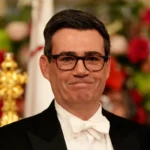
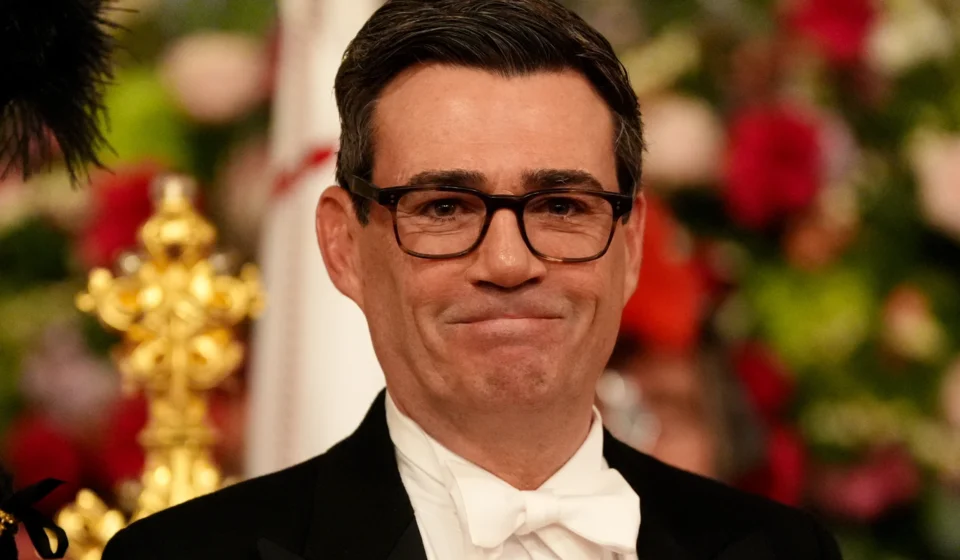
Speaking at the Lord Mayor’s Banquet in London on Monday, Burnham compared the outcome of Brexit to Hans Christian Andersen’s tale The Emperor’s New Clothes, suggesting that political leaders had been reluctant to acknowledge its shortcomings.
“The Brexit we were given has not worked. We have lost more than we gained,” he said.
His remarks mark a significant intervention in Britain’s post-Brexit debate, nearly a decade after the 2016 referendum and six years after the country formally left the European Union.
A push to reverse years of strained relations
Burnham argued that Brexit contributed to a wider international shift towards isolationism and protectionism, weakening cooperation among European countries.
He also linked the UK’s departure from the EU to Russia’s strategic interests, arguing that Moscow wanted to see greater divisions within NATO and a weaker Europe.
The prime minister made the comments ahead of Friday’s UK-EU summit in Brussels, which is expected to advance several agreements aimed at improving practical cooperation between Britain and the 27-member bloc.
The proposed arrangements include a trade agreement covering food and drink, cooperation on energy and emissions trading, and a scheme allowing young people to work for limited periods in the UK and EU.
The summit is part of Burnham’s broader commitment to reset relations with Brussels and improve economic and diplomatic cooperation.
Economic consequences remain central to the debate
Burnham argued that the central promise of the pro-Brexit campaign — to take back control of Britain’s borders, laws and economy — had not been fulfilled.
He said trade with EU countries had fallen sharply and cited estimates suggesting that Brexit’s economic impact could amount to between 4% and 8% of the UK’s gross domestic product.
The economic consequences of leaving the EU have remained a contentious issue in British politics. While many economists argue that Brexit has harmed the UK economy, political leaders have often avoided reopening the debate because of the divisions created by the 2016 referendum.
That vote resulted in 52% supporting departure from the EU and 48% favouring continued membership.
Burnham has indicated that he intends to move beyond the immediate summit discussions. He plans to launch a national conversation about Britain’s long-term relationship with the bloc after the Brussels meeting.
His spokesperson, Tom Wells, said no particular outcome was being assumed and that the British public would determine the direction of any future decision.
Political limits on closer integration
Despite Burnham’s criticism of Brexit, his government remains constrained by existing political commitments.
Until the next national election, he is bound by the Labour Party’s pledge not to rejoin the EU customs union or the single market, which would involve deeper economic integration and arrangements concerning the movement of goods, services and workers.
Any attempt to abandon that commitment could revive the political divisions surrounding the referendum.
Former Conservative Prime Minister Boris Johnson, a prominent supporter of Brexit, criticised the prospect of Britain moving towards EU membership again. He argued that voters would oppose such a move.
The debate therefore presents Burnham with a difficult political balance: pursuing closer European cooperation while respecting commitments that rule out some of the most significant forms of integration.
A wider question about Britain’s place in Europe
The coming summit is an important test of how far Britain and the EU can rebuild their relationship without reopening the question of full membership.
Agreements on trade, energy, emissions and youth mobility could provide practical benefits while leaving the central political question unresolved.
Burnham’s planned national conversation suggests that the government intends to examine Britain’s long-term position in Europe more openly. However, the scope of any future change will depend on political support, negotiations with the EU and public opinion.
Almost ten years after the referendum, Britain’s relationship with Europe remains a defining issue for its economy, foreign policy and international position. The Brussels summit may not settle that debate, but it could establish the direction of the next phase of UK-EU relations.
Sources: Associated Press, Jill Lawless, UK leader Andy Burnham says Brexit hasn’t worked ahead of a reset summit with the EU, 17 November 2026; Reuters, Britain sets out scope of UK-EU summit package ahead of Friday talks, 17 November 2026; Euronews, UK leader Andy Burnham says Brexit hasn’t worked ahead of reset summit with EU, 17 November 2026; The Guardian, New UK-EU youth mobility scheme may not fully launch until 2030, 17 November 2026.