











Drone warfare deepens Sudan’s civilian crisis
Overnight attacks hit residential areas and a humanitarian facility in Sudan’s capital, highlighting the growing threat posed by long-range drones as the country’s warring factions intensify their military campaigns.
A series of drone strikes across Sudan’s capital region has damaged residential properties and a United Nations facility, exposing civilians and humanitarian workers to further danger as the country’s nearly four-year conflict increasingly shifts towards unmanned aerial warfare.
The attacks took place in the early hours of Sunday, with explosions reported around Khartoum International Airport and several other parts of the capital between approximately 2am and 4.30am local time. Residential areas in Khartoum, neighbouring Omdurman and Jebel Aulia, south of the capital, were among the affected locations.
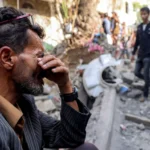
At least four people were reported killed and nine injured in the attacks, according to local reports cited by Al Jazeera. Three people died when a drone struck a house in northern Omdurman, while a child was killed in a separate incident south of the capital. Witnesses also reported damage to homes and attempts by residents to rescue family members trapped beneath the rubble.
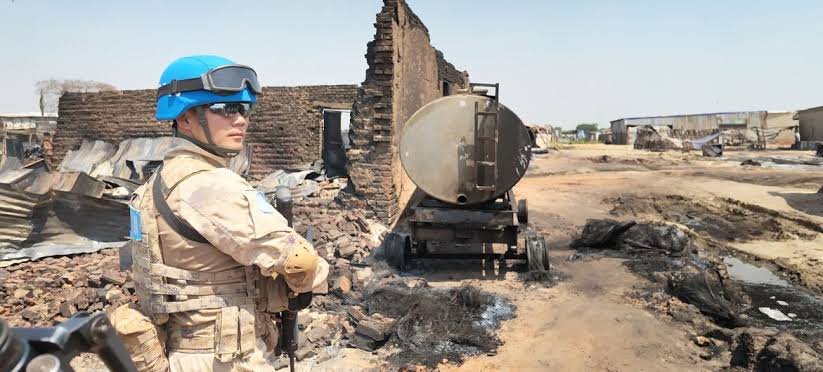
The United Nations confirmed that one of its premises was damaged while UN personnel were inside the building. The facility was located in a civilian neighbourhood, according to the organisation’s humanitarian coordinator in Sudan, Denise Brown.
In a statement on Sunday, Brown condemned the incident and warned against the growing danger facing humanitarian personnel working in the country. She stressed that civilians and humanitarian assets are protected under international humanitarian law, describing the exposure of UN workers to such risks as unacceptable.
The incident comes at a particularly difficult time for humanitarian operations in Sudan. Aid organisations continue to work amid insecurity, restricted access and the destruction of infrastructure essential to delivering food, medical supplies and other emergency assistance. Attacks affecting humanitarian facilities can also undermine the ability of international organisations to maintain a presence in areas where civilian needs remain acute.
Responsibility for Sunday’s strikes has not been independently established. Local reports cited by Al Jazeera blamed the paramilitary Rapid Support Forces (RSF), which has been fighting Sudan’s regular army since April 2023. Separately, a Sudanese military source told AFP that the drones had been launched from Ethiopia’s Bahir Dar airport. The allegation could not be independently verified, and Ethiopia has previously denied accusations that it allows its territory to be used for attacks against Sudan.
The accusation introduces a wider regional dimension to the conflict. Sudan’s military has repeatedly accused Ethiopia of facilitating drone operations against its territory, while Addis Ababa has rejected claims of involvement. Sudan has also raised the issue with the United Nations Security Council and the African Union. However, the latest incident has not established Ethiopia’s involvement in the attacks.
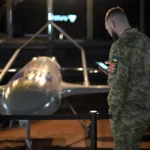
Beyond the immediate destruction, the growing reliance on drones is changing the nature and geographical reach of the war. Both the Sudanese Armed Forces and the RSF have increasingly used unmanned aircraft capable of striking targets far beyond conventional front lines. This has expanded the risks faced by communities previously considered distant from active fighting.
Recent UN findings illustrate the scale of the threat. According to the UN Human Rights Office, at least 1,390 civilians were killed between January and June 2026, with more than 80 per cent of those deaths attributed to drone strikes. A further 840 civilians were killed between July and October, including nearly 520 in drone attacks. By the end of October, the UN had confirmed more than 2,230 civilian deaths during 2026, of which over 1,630 were caused by drones. The actual figures are likely to be higher.
The impact extends beyond direct casualties. The UN documented drone strikes against markets, hospitals, schools, civilian vehicles, fuel facilities and water sources. Such attacks threaten the systems on which civilians depend for survival, particularly in areas already experiencing food shortages and limited access to healthcare.
The consequences have been especially severe in the Kordofan region, which accounted for more than two-thirds of the civilian casualties documented by the UN during the first half of 2026. Drone attacks on electricity facilities and fuel stations have also caused widespread power disruptions, affecting medical services, water supplies and food production.
The expanding use of drones has also raised concerns about accountability and compliance with international humanitarian law. The UN Human Rights Office has warned that attacks on civilians and civilian infrastructure may constitute serious violations of the laws of war and, in some circumstances, amount to war crimes. Establishing responsibility remains essential, particularly where competing military claims and limited independent access make verification difficult.
Sudan’s conflict, which erupted in April 2023 following a power struggle between army chief General Abdel Fattah al-Burhan and RSF commander Mohamed Hamdan Dagalo, has developed into one of the world’s most severe humanitarian emergencies. Fighting has displaced millions of people, disrupted essential services and contributed to widespread hunger and famine conditions in parts of the country.
The latest attacks in Khartoum demonstrate that the relative return of civilian life to areas previously affected by fighting has not guaranteed lasting security. The damage to a UN facility while staff were present also raises concerns about the safety of humanitarian operations beyond the country’s traditional front lines.
As both sides continue to rely on increasingly sophisticated aerial weapons, the challenge for Sudan extends beyond territorial control. Protecting civilian populations, maintaining access for humanitarian organisations and ensuring accountability for attacks on protected facilities will remain central to any effort to prevent the conflict from producing an even greater humanitarian catastrophe.
Sources: BSS/AFP – Drone strikes hit homes, UN building in Sudan’s capital, 23 November 2026; United Nations in Sudan – Statement by UN Resident and Humanitarian Coordinator Denise Brown on drone strikes in Khartoum, 22 November 2026; UN Human Rights Office – Report details deadly civilian impact of surge in drone strikes, 17 November 2026; Reuters – Drones account for nearly three-quarters of Sudan war deaths this year, UN says, 17 November 2026; Al Jazeera – Drone attacks kill four near Sudan’s capital, damage UN building, 22 November 2026; ABC News Australia – Drone strikes kill four in Khartoum and damage UN building, 23 November 2026; UN Security Council – Letter from Sudan concerning alleged drone attacks originating from Ethiopia, 4 November 2026.